

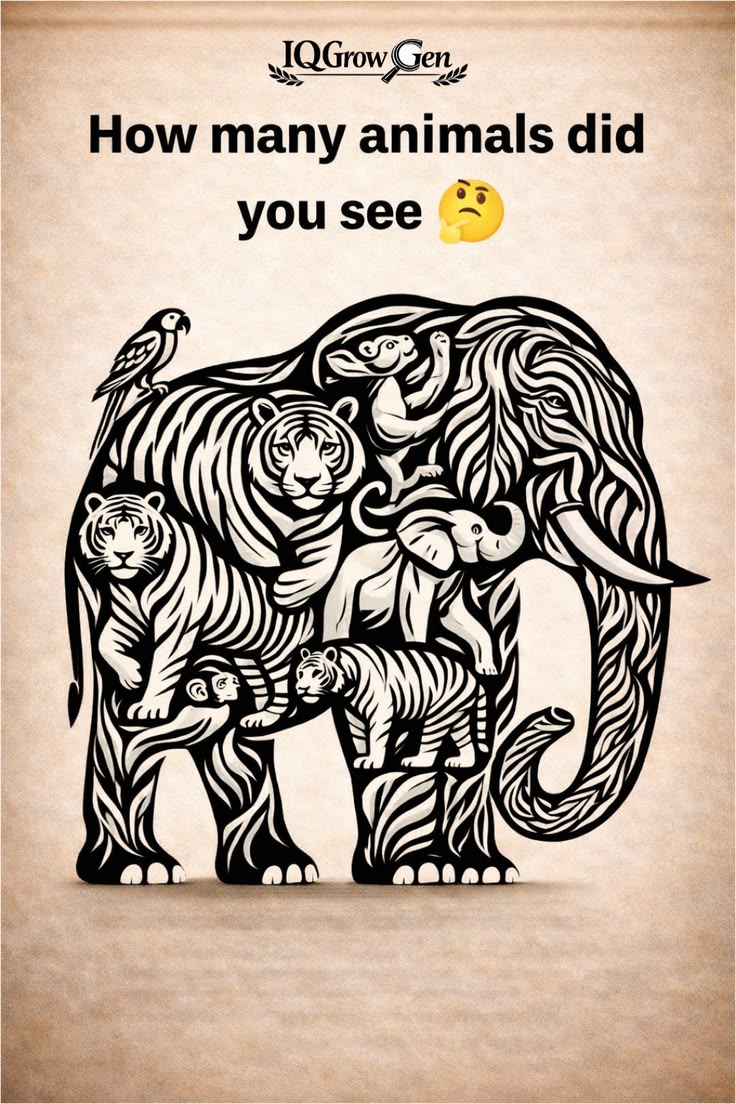

Analyze Strategic Engagement: Understand how open-ended puzzle questions are tailored to trigger comment section activity and maximize post reach.Enjoy Cognitive Stimulation: Use visual search puzzles as brief, harmless exercises to challenge pattern recognition and focus during digital breaks.Key TakeawaysPerceptual Processing: Embedded visual puzzles challenge figure-ground segregation in the brain’s visual cortex.Eight Embedded Creatures: Careful inventory reveals 1 outer elephant, 1 parrot, 3 tigers, 2 monkeys, and 1 baby elephant.Algorithmic Engagement: Open-ended puzzle graphics leverage user curiosity to drive comments, dwell time, and viral distribution.ConclusionUnraveling embedded visual puzzles offers a quick, fun workout for your brain’s pattern recognition system! Recognizing the dual nature of these posts—as both clever artistic illusions and effective engagement tools—lets you appreciate the skill behind them while enjoying a brief mental challenge.Frequently Asked Questions (FAQ)How many total animals are actually in this visual ?A detailed inventory reveals 8 distinct animals: the overarching large elephant, 1 parrot on the back, 3 tigers (top center, middle left, bottom right), 2 monkeys (top center climbing, bottom left seated), and 1 smaller baby elephant in the right-center.
Why do visual go viral so easily on social media?Visual puzzles create an instant “curiosity gap.” Because viewers naturally want to confirm their answer against others, they leave comments and stay on the post longer, prompting platform algorithms to show the image to a wider audience.Do optical illusions measure actual intelligence (IQ)?No. While visual search puzzles test focal attention and pattern recognition, formal IQ tests measure a much broader suite of cognitive abilities, including fluid reasoning, working memory, and verbal comprehension under standardized conditions.