
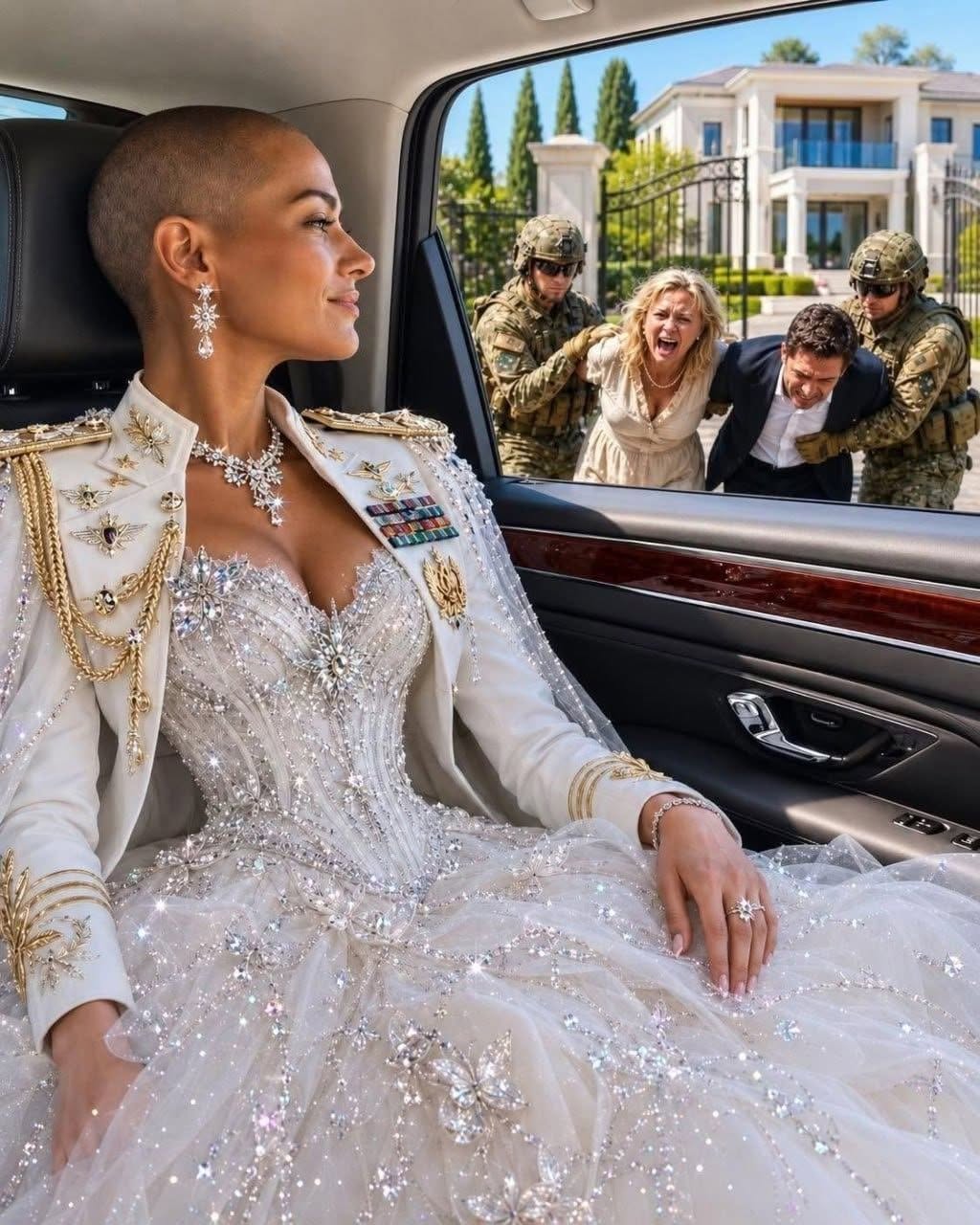


In recent years, hyper-realistic, AI-generated images featuring dramatic storylines, opulent fashion, and intense conflicts have flooded social media feeds. One common example is a striking image showing a shaved-headed woman in an ornate, military-style white gown looking out a luxury car window while armed soldiers apprehend a distressed couple outside a mansion.
Understanding how generative AI models create these vivid scenes, why dramatic visual storytelling captivates audiences, and how to spot synthetic imagery helps users navigate modern digital media critically.
Deconstructing the Image: Key AI Artifacts and Features
While generative artificial intelligence tools (such as Midjourney, Stable Diffusion, and DALL-E) produce astonishingly detailed graphics, close observation often reveals telltale signs of synthetic generation:
| Scene Element | Visual Observation | Telltale AI Indicators |
| Central Figure & Attire | Woman in heavily embellished white dress with military epaulets and medals | Unnatural sparkle overlays, hyper-symmetrical jewelry patterns, and floating fabric details. |
| Background Drama | Armed tactical personnel restraining a shouting couple | Distorted facial features under tactical gear, unnatural hand positioning, and blending uniforms. |
| Lighting & Composition | Cinematic depth of field and dramatic contrast | Perfectly polished, studio-style lighting that defies natural sunlight directions. |
Why AI-Generated Drama Goes Viral
Visuals that depict sudden shifts in power, high luxury, and intense emotion naturally hook social media users for several key reasons:
1. High Emotional Resonance
Images showing extreme contrasts—such as extreme wealth versus distress, or elegance alongside armed force—spark immediate curiosity, prompting users to stop scrolling and check the comments for context.
2. Micro-Storytelling
A single frame that hints at a larger narrative (a betrayal, a royal takeover, or a sci-fi storyline) encourages users to imagine the backstory and share their theories, boosting post engagement algorithms.
How to Spot AI-Generated Images Online
When browsing social media, keep these practical visual check-points in mind:
                      [ Analyze Suspicious Image ]
                                    |
     +------------------------------+------------------------------+
     |                                                             |
[ Inspect Fine Details ]                                 [ Check Lighting & Texture ]
 - Look closely at hands, fingers, & ears                 - Observe unnatural skin smoothness
 - Check text on signs, badges, or uniforms               - Look for inconsistent light source angles
 - Inspect background faces for distortion                - Notice overly glossy/sparkly overlays
-
Examine Hands and Accessories: AI often struggles with rendering realistic knuckles, overlapping fingers, fine rings, or intricate jewelry connections.
-
Inspect Background Figures: Secondary characters in AI images frequently display warped facial features, unnatural limb angles, or blended clothing textures.
-
Analyze Text and Badges: Synthetic images rarely produce legible, meaningful text on military badges, uniforms, or street signs, often generating garbled symbols instead.
Key Takeaways and Conclusion
Synthetic artwork generated by AI offers fascinating artistic possibilities and creative storytelling. By learning to identify minor visual inconsistencies and understanding the emotional cues used to drive social media engagement, online audiences can better appreciate digital art while maintaining critical media literacy.
Frequently Asked Questions (FAQ)
Is this image real or AI-generated?
This image is completely AI-generated. The hyper-polished lighting, intricate fantasy clothing, and distorted background details are characteristic of modern text-to-image AI generators.
Why do AI generators frequently create images with military or high-fashion themes?
AI models are trained on vast datasets containing fashion photography, cinematic movie stills, and dramatic art, allowing them to fuse complex styles like military uniforms and haute couture seamlessly.
How can I verify if an image on social media is authentic?
You can use reverse image search tools, inspect fine details like hands and background text, or look for digital watermarks and metadata to determine an image’s origin.