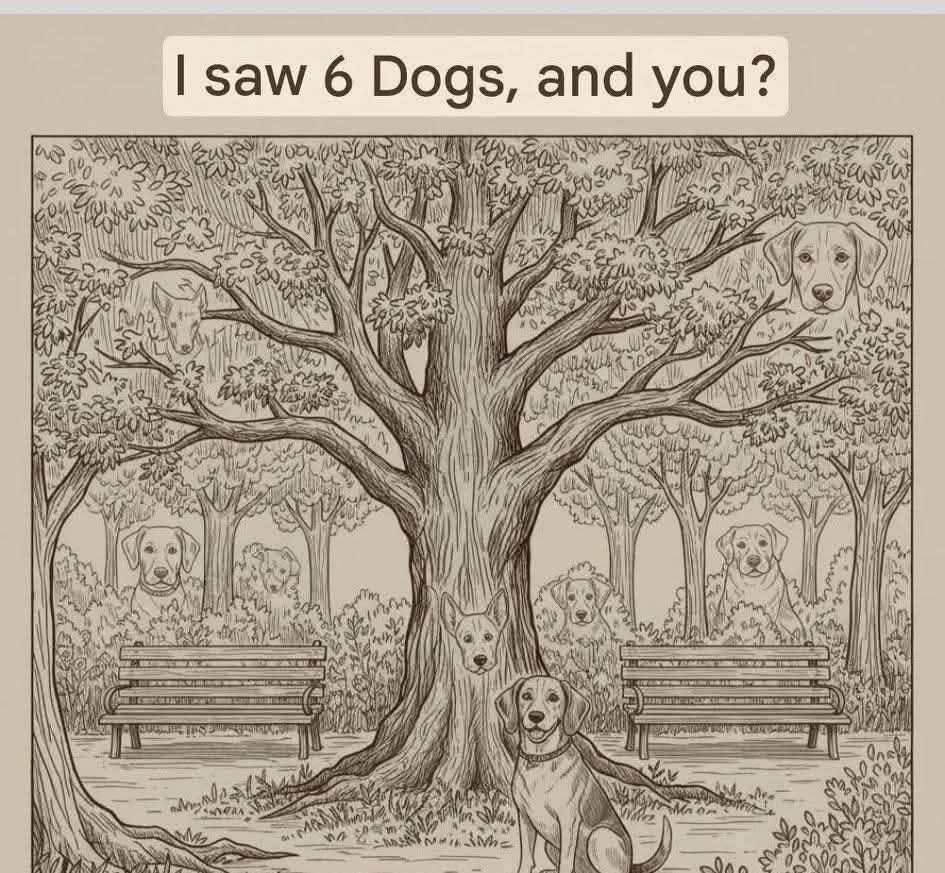


[ GESTALT PERCEPTUAL PATTERNS ] [ DIGITAL ENGAGEMENT METRICS ]
• Figure-Ground Organization segregates shapes • Comment section debate boosts algorithm signals
• Pareidolia & contour completion fill gaps • High dwell time increases post reach
• Visual clutter creates cognitive puzzle • Standardized puzzle templates drive shares
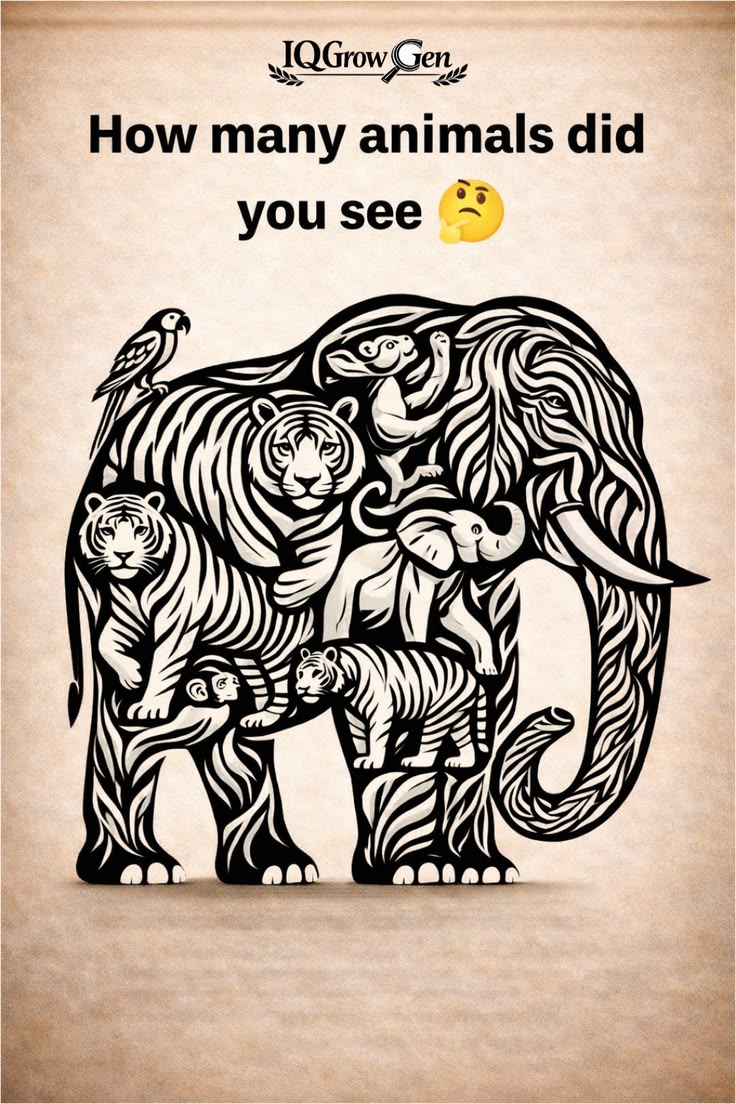
1. The Visual Neurobiology of Embedded IllusionsFigure-Ground Segregation: The human primary visual cortex (V1 through V4) relies on contour detection and contrast boundaries to separate a focal object (“figure”) from its background (“ground”). When an artist deliberately aligns inner contours to form secondary figures (such as tigers and monkeys integrated into an elephant’s torso), it creates visual ambiguity that forces the brain into active scanning mode.Pareidolia and Pattern Recognition: The brain is evolutionary hardwired to identify biological forms—especially animal and facial structures—within complex textures. Visual puzzles exploit this innate perceptual bias by embedding distinct animal profiles into decorative, flowing linework.2. The Mechanics of “Comment Harvesting”Driving Algorithmic Signals: Social media distribution algorithms heavily weigh comment volume and post dwell time. By leaving the total count unstated or ambiguous, the graphic prompts users to post their answers in the comments, debate discrepant numbers with others, and re-examine the image, signaling high engagement to the platform.
Complete Animal Inventory MatrixAnimalLocation / Visual PositionIdentification DetailsLarge ElephantMacro silhouette / Overall framing structureForms the outer contour, trunk, legs, and overall body outlineParrot / MacawTop left, resting on the elephant’s backClear profile showing beak, eye, and tail feathersTiger (Upper Center)Upper torso of the elephantFrontal face and striped upper body facing forwardTiger (Middle Left)Lower left flank / Rear leg areaFull body tiger standing in profile facing leftTiger (Lower Right)Bottom center, near the elephant’s bellySmaller tiger walking toward the left in profileMonkey (Top Center)Upper interior, near the elephant’s head/earsClimbing pose with raised arms and distinct tail curveMonkey (Bottom Left)Bottom left leg / Flank junctionSmall monkey head and upper torso nestled beneath the left tigerBaby ElephantRight-center torso, behind trunkClear profile of a smaller elephant facing rightTotal Distinct Identifiable Animals: 8 (1 Large Elephant, 1 Parrot, 3 Tigers, 2 Monkeys, 1 Small Elephant).4 Guidelines for Evaluating Social Media Puzzle ContentCount Systematically: Scan visual puzzles using a structured grid approach (top-to-bottom, left-to-right) rather than random focal jumping to identify hidden elements accurately.Distinguish Art from IQ Tests: Recognize that informal social graphics (“IQGrowGen”) are designed for casual entertainment and engagement rather than validated cognitive assessment.