

Find the Different One: The Ultimate Emoji Spot-the-Difference Puzzle Solved
Visual search puzzles, emoji hidden-object games, and grid-based brain teasers are a massive viral trend across social media feeds. They test our visual processing speed, attention to detail, and pattern recognition by hiding a single subtle anomaly within a sea of identical graphics.
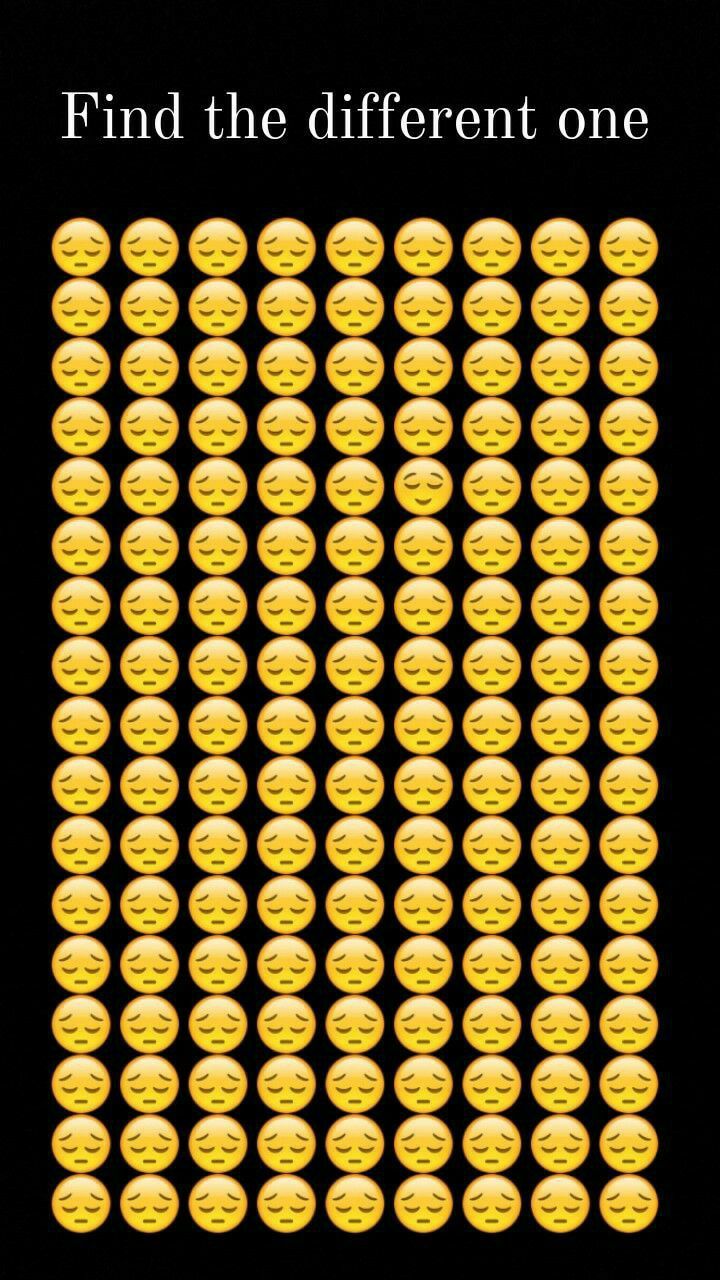
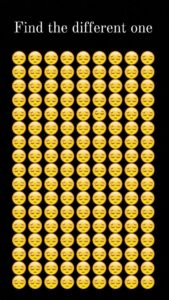
One popular brain teaser features a dark background filled with neat rows and columns of pensive face emojis, accompanied by a simple challenge:
“Find the different one”
At first glance, every single emoji looks completely uniform. However, tucked away in the grid is one subtle imposter with a slightly altered facial expression!
In this full guide, we explore how to tackle visual search grids, examine the neuroscience behind how our brains process repetitive visual patterns, and reveal where the hidden emoji is located.
Deconstructing the Image: The Emoji Grid Layout
The puzzle consists of a structured matrix of identical yellow face emojis set against a black backdrop.
[Row 1]  😊 😊 😊 😊 😊 😊 😊 😊 😊
[Row 2]  😊 😊 😊 😊 😊 😊 😊 😊 😊
[Row 3]  😊 😊 😊 😊 😊 😊 😊 😊 😊
   ...      (Uniform Pattern Rows)
[Row X]  😊 😊 😊 [ 🔍 DIFFERENT ] 😊 😊 😊
   ...      (Uniform Pattern Rows)
[Last]   😊 😊 😊 😊 😊 😊 😊 😊 😊
The Visual Trap
When human eyes scan a uniform grid of repeating shapes, the visual cortex quickly establishes a baseline expectation. Because all the surrounding emojis share the exact same eyes, eyebrows, and mouth shape, your brain begins to gloss over them as background data, making the unique anomaly blend right in.
Finding the Odd One Out: Search Strategies
If you are scanning the image and struggling to locate the different emoji, try using these proven visual scanning techniques:
1. The Systematic Grid Sweep
Instead of staring passively at the center of the image, break the grid down into vertical columns or horizontal rows. Scan methodically from top-left to bottom-right, focusing your gaze on individual facial features (like the mouth or eyes) rather than the whole face shape.
2. Peripheral Vision Soft-Focus
Gently unfocus your eyes slightly while slowly moving your phone or screen back and forth. Often, a subtle change in symmetry or contrast will cause the odd emoji to “pop” out due to peripheral motion and pattern disruption.
Comparing Visual Search Strategies
| Strategy | Best For | Potential Drawback |
| Random Scanning | Quick, casual glances | Easy to miss subtle anomalies |
| Row-by-Row Sweep | Thorough, methodical searches | Takes slightly longer to complete |
| Feature Isolation | Finding micro-expression changes | Requires high visual concentration |
The Neuroscience of Visual Search
Why do grid puzzles make our eyes tired so quickly?
1. Serial vs. Parallel Processing
When searching for a unique item among identical distractors, the human brain uses a combination of parallel processing (scanning everything at once) and serial processing (inspecting items one by one). When the distractor shares 95% of its visual features with the rest of the group, parallel processing fails, forcing your brain to switch to exhausting serial inspection.
2. Visual Adaptation and Fatigue
Staring at a repeating pattern for too long causes retinal adaptation, where photoreceptor cells temporarily reduce their sensitivity to unchanging stimuli, making it even harder to spot small differences.
Practical Tips for Solving Emoji Puzzles Faster
-
Zoom In: Increase your screen magnification so each emoji is large enough to inspect individual details clearly.
-
Tilt Your Screen: Changing the viewing angle can alter screen glare and highlight subtle pixel variations in modified emojis.
-
Take Breaks: If your eyes start blurring, look away at a blank wall for 10 seconds to reset your focus before trying again.
Conclusion
The “Find the different one” emoji puzzle is a fantastic mental workout that tests your patience and visual acuity. Whether you spotted the hidden emoji instantly or had to scan every single row, these quick brain teasers are a fun way to keep your mind sharp while scrolling!
Frequently Asked Questions (FAQ)
What makes the hidden emoji different?
The odd-one-out emoji features a subtle micro-change in its facial expression (such as a slightly different mouth curve or eye angle) compared to the rest of the grid.
Why are emoji search puzzles so hard to solve?
Because our brains naturally group identical objects together to save cognitive energy, minor variations in repetitive patterns blend into the background.
What is the best way to solve visual search puzzles quickly?
Breaking the image down into distinct columns or rows and scanning systematically is much more effective than random gazing.