


Optical illusions have fascinated the human mind for centuries. From ancient visual tricks to modern viral social media tests, these compelling images do far more than simply entertain us—they offer a unique window into how our brains process sensory information. The way your mind interprets an ambiguous visual stimulus can reflect subconscious priorities, dominant cognitive styles, and deeply ingrained personality traits.
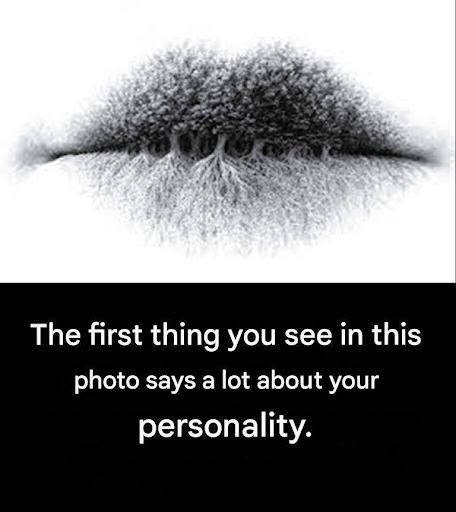
When looking at ambiguous figures, your visual cortex immediately begins making split-second decisions. It prioritizes certain elements based on your focus, brain chemistry, and underlying perceptual tendencies. Take a moment to examine the image closely: did your eyes instantly register a pair of soft lips, or did you immediately spot a dense line of trees with intricate root systems stretching across the frame?
Below, we break down what each visual interpretation says about your character, how cognitive psychology explains figure-ground perception, and how training your mind can improve overall mental acuity.
The Psychology Behind Visual Illusion Personality Tests
To understand why two people can look at the exact same photo and see two entirely different objects, we must look into the principles of visual perception. Our brains process roughly 11 million bits of information every second, but our conscious mind only actively handles a tiny fraction of that data. To prevent information overload, the brain relies on shortcuts known as heuristics.
Figure-Ground Perception
One of the fundamental principles of Gestalt psychology is the figure-ground relationship. This cognitive process allows human vision to separate a main object (the figure) from its surrounding background (the ground).
-
Top-Down Processing: When your brain relies on past experiences, expectations, and subconscious mood to interpret a vague visual stimulus, it engages in top-down processing.
-
Bottom-Up Processing: When you construct an image piece by piece based purely on sensory data—such as raw lines, contrast, and shading—your brain is using bottom-up processing.
Depending on whether your brain leans toward top-down holistic interpretation or bottom-up analytical detail gathering, your immediate reaction to an optical illusion will shift dramatically.
What Seeing the Lips First Means
If your gaze immediately locked onto a pair of full lips, your brain recognized the macro image before analyzing individual details. This holistic visual processing style correlates with specific psychological and behavioral characteristics.
1. Honest and Straightforward Nature
People who see lips first tend to value clarity and simplicity in life. You likely prefer direct communication over passive aggression, and you rarely enjoy playing mind games. You hold a grounded, practical view of the world and are often sought out by friends for straightforward, sensible advice.
2. High Emotional Intelligence and Empathy
Lips are a primary hub of human communication and emotional expression. Automatically prioritizing a mouth in an image suggests a strong subconscious orientation toward social connection, interpersonal harmony, and reading emotional cues in others.
3. Flexibility and Adaptability
Rather than getting stuck on minor complications, you generally step back to evaluate the bigger picture. You possess an adaptable mindset, preferring to go with the flow rather than forcing situations to fit rigid, artificial expectations.
What Seeing the Trees First Means
If your attention was immediately drawn to the vertical lines, forest aesthetic, and intricate root structures nestled within the shape, your brain prioritized detail analysis over big-picture grouping.
1. Keen Attention to Detail
Seeing the trees first indicates that you are naturally analytical and observant. You rarely accept things at face value; instead, you examine fine print, subtle shifts in tone, and underlying structures. In work and personal life, this makes you exceptional at problem-solving and detecting subtle errors that others overlook.
2. Strong Intuition and Ambition
Trees, roots, and forests are classical symbols of deep thinking, stability, and growth. You likely possess high personal ambitions and set long-term goals for your career, health, and financial security. You trust your instincts because they are backed by quiet observation and continuous internal reflection.
3. Independent Thinking
You do not easily succumb to peer pressure or follow the crowd. You prefer gathering evidence, weighing possibilities, and coming to your own well-reasoned conclusions. People who see trees first often excel in fields requiring analytical precision, such as strategic investment, legal analysis, research, and technical consulting.
Practical Tips to Sharpen Your Brain and Focus
Regardless of whether you saw lips or trees, engaging in perceptual puzzles is an excellent way to maintain cognitive agility. Boosting your brain health, memory, and cognitive reserve pays lifelong dividends for your personal and professional productivity.
-
Practice Mindfulness and Meditation: Spending just ten minutes a day meditating improves your visual processing speed and mental clarity by reducing stress-induced cognitive fatigue.
-
Engage in Novel Problem Solving: Regularly challenge your brain with logic puzzles, lateral thinking riddles, and visual perception exercises to create new neural pathways.
-
Prioritize Sleep and Physical Health: Quality sleep is critical for memory consolidation and neural repair. Pair sound sleep with regular exercise and balanced nutrition to boost brain performance.
-
Learn a Complex New Skill: Studying a foreign language, picking up a musical instrument, or mastering an analytical topic like personal investment strategies keeps your mind resilient as you age.
Fascinating Facts About Human Perception
-
The Speed of Sight: The human brain can process an entire image seen for as little as 13 milliseconds, long before you become consciously aware of what you are viewing.
-
Pareidolia: The psychological phenomenon where the brain sees familiar patterns—such as human faces, animals, or objects—in random visual patterns (like clouds or rock formations) is known as pareidolia.
-
Brain Fuel Consumption: Although the brain accounts for only about 2% of your total body weight, it consumes more than 20% of your body’s daily energy and oxygen supply.
Conclusion
Optical illusion personality tests offer a fascinating, playful look at how our minds interpret the world. Whether your visual system prioritized the big-picture silhouette of the lips or the detailed, interconnected branches of the trees, both outcomes highlight unique cognitive strengths. By recognizing how your mind processes visual information, you can leverage your natural analytical or empathetic skills to make smarter decisions in every aspect of life.
Frequently Asked Questions (FAQ)
Can an optical illusion test definitively diagnose my personality?
No. Visual perception tests are entertaining self-reflection tools grounded in perceptual psychology, but they are not formal clinical psychological evaluations.
Why do two people look at the same image and see completely different things?
Because every individual’s brain uses distinct visual processing pathways, past memories, and subconscious filters to interpret visual stimuli in a fraction of a second.
Is it possible to see both the lips and the trees at the same time?
Yes! While your brain initially picks one dominant image, once both shapes are recognized, your visual cortex can rapidly toggle back and forth between the two interpretations.