
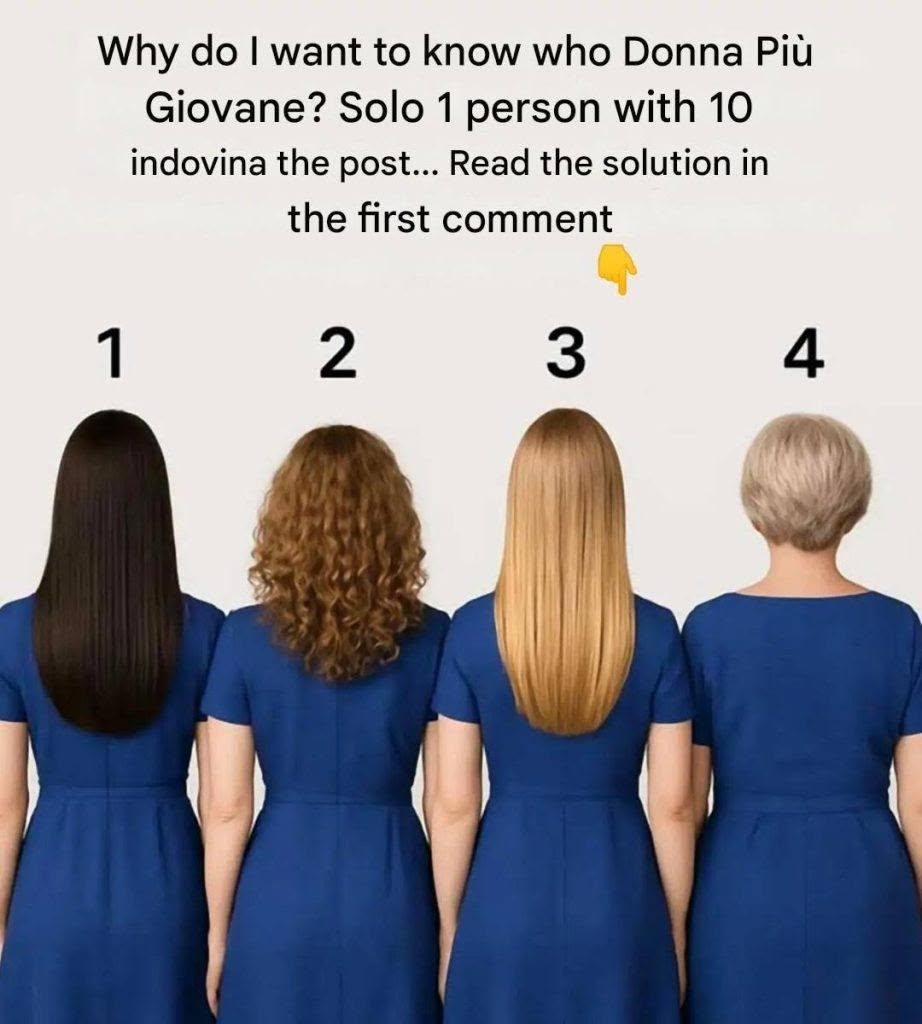


Human beings make instantaneous judgments about the people they see every single day. Within a fraction of a second, our brains process subtle visual information to estimate a person’s age, mood, energy level, and health status. Visual perception riddles—such as identifying the youngest woman in a group viewed purely from behind—tap directly into this involuntary cognitive process. When facial features are completely hidden, our mind relies on secondary visual indicators: hair color, texture, body posture, shoulder alignment, and clothing style.
At first glance, guessing who is the youngest among four women lined up side by side seems like a simple game of observation. However, the science behind how we perceive age and youth is far more complex than meets the eye. Biological factors, lifestyle habits, genetic predispositions, and even social styling choices all play pivotal roles in how youthful an individual appears from behind.
Below, we break down the clues in this viral visual puzzle, explore the biological mechanisms of aging, and share expert-backed strategies for maintaining lifelong health and vitality.
Deconstructing the Visual Riddle: Hair, Posture, and Silhouette
When evaluating an image where individuals have their backs turned toward the viewer, the brain loses access to key facial landmarks such as eye wrinkles, jawline firmness, and smile lines. Consequently, cognitive visual processing shifts entirely to non-facial cues.
Hair Length, Texture, and Pigmentation
Hair is one of the primary features people use to gauge age and vitality from a distance.
-
Hair Thickness and Volume: In general, human hair follicles tend to shrink over time, leading to thinner hair strands and decreased overall density as part of the natural aging process. Fuller, thicker hair often signals youthfulness and optimal nutrient absorption.
-
Pigmentation and Greying: Melanocytes within hair follicles gradually reduce melanin production over time, resulting in grey or silver strands. While young adults can prematurely grey due to genetics or stress, lighter or grey short hair cuts are statistically associated with older age demographics.
-
Texture and Shine: Healthy, hydrated hair with natural shine reflects optimal sebum production, which typically peaks during young adulthood.
Posture and Muscle Tone
A person’s standing posture provides immediate information regarding spinal health, core strength, and muscle tone. Younger individuals typically exhibit firm shoulder symmetry, erect spinal alignment, and balanced weight distribution without conscious effort.
Style and Dress Choice
Clothing cuts and fashion choices subtly communicate generation and personal lifestyle. Matching tailored dresses across a group removes clothing bias, forcing observers to focus strictly on physical silhouette, neck contour, and hair presentation.
The Biological Science Behind Aging and Youthful Appearance
What actually determines how young or old a person looks? Age perception is rooted in cellular biology. While exterior appearance is often what we notice first, true youthfulness is driven by internal systemic health.
1. Collagen Production and Skin Elasticity
Collagen is the primary structural protein in the body, providing strength, firmness, and elasticity to the skin and connective tissues. Beginning in our mid-twenties, natural collagen synthesis decreases by approximately 1% per year.
-
Dermal Structure: High collagen density gives skin a plump, firm appearance around the neck and shoulders.
-
Hydration Levels: Hyaluronic acid molecules in young skin hold vast amounts of moisture, maintaining smooth skin texture.
2. Cellular Aging and Telomere Length
At the microscopic level, aging is linked to telomeres—the protective caps at the ends of our chromosomes. Each time a cell divides, its telomeres become slightly shorter.
When telomeres reach a critically short length, cells enter a state of senescence, where they cease dividing and secrete inflammatory signals. Maintaining long, healthy telomeres through stress management, anti-inflammatory nutrition, and quality sleep directly supports youthful cellular function.
3. Hormonal Dynamics and Metabolism
Hormones govern metabolic rate, skin thickness, hair growth cycles, and body composition. Peak levels of growth hormone and thyroid hormones during early adulthood foster lean muscle retention and rapid tissue repair. As hormone levels fluctuate with age, maintaining balance through healthy lifestyle choices becomes essential.
How to Maintain Vibrant, Youthful Health as You Age
While genetic factors establish a baseline for how we age, epigenetic factors—including daily choices, environment, and wellness routines—exert profound control over how youthful we look and feel.
1. Optimize Daily Nutrition and Hydration
A nutrient-dense diet acts as the cornerstone of metabolic longevity and skin health:
-
Antioxidant-Rich Foods: Berries, leafy greens, nuts, and green tea contain polyphenols that neutralize free radicals, protecting cells from oxidative stress.
-
Essential Fatty Acids: Omega-3 fatty acids found in wild salmon, flaxseeds, and walnuts nourish the skin barrier and support cardiovascular wellness.
-
Adequate Hydration: Drinking sufficient water throughout the day keeps body tissues hydrated, aids kidney detoxification, and supports healthy skin elasticity.
2. Strengthen Musculoskeletal Health
Regular physical exercise maintains muscle mass, bone density, and posture:
-
Resistance Training: Lifting weights or practicing bodyweight exercises stimulates osteoblast activity, preserving bone strength and preventing age-related stooping posture.
-
Flexibility and Core Mobility: Yoga and Pilates strengthen deep core muscles, maintaining an upright, confident posture that projects youth and vitality.
3. Preventative Medical Care and Health Insurance
Investing in preventative medical check-ups allows healthcare professionals to detect metabolic shifts, nutrient deficiencies, or hormonal imbalances early. Securing comprehensive health insurance coverage ensures seamless access to specialized dermatology, preventative screenings, and wellness consultations without financial strain.
Psychological Insights: Why Riddles Captivate Our Brains
Image-based logic puzzles and perception tests regularly go viral across digital platforms. Understanding why these visual challenges hold our attention offers interesting insights into human psychology.
Dopamine Rewards and Problem-Solving
When faced with an ambiguous visual prompt, the brain experiences a surge of curiosity. Solving the puzzle or verifying whether our guess was correct releases dopamine—a neurotransmitter associated with pleasure, reward, and motivation.
Cognitive Training for Brain Longevity
Engaging in regular visual discrimination tasks, lateral thinking puzzles, and memory games stimulates neural plasticity. Keeping the mind active builds cognitive reserve, protecting brain function and mental sharpness well into senior years.
Practical Tips for Radiant and Youthful Vitality
If your goal is to look and feel your best at any age, incorporate these actionable habits into your daily life:
-
Apply Broad-Spectrum Sunscreen Daily: UV radiation is responsible for up to 80% of visible skin aging. Protect your neck, chest, hands, and face every day.
-
Prioritize Restorative Sleep: Aim for 7 to 9 hours of uninterrupted sleep each night to maximize cellular repair and growth hormone secretion.
-
Manage Chronic Stress: Practice daily stress-reduction techniques like deep breathing, outdoor walking, or meditation to keep cortisol levels balanced.
-
Invest in Personal Growth and Education: Continual learning keeps your mental outlook fresh, curious, and energized.
Fascinating Facts About Human Perception and Aging
-
Rapid Visual Assessment: Studies show that human observers can accurately estimate a person’s age within a margin of 3 to 5 years after viewing them for less than 100 milliseconds.
-
The Posture Connection: Good posture can instantly make an individual appear up to 5 to 10 years younger and several pounds leaner in visual evaluations.
-
Hair Growth Cycle: On average, human head hair grows about half an inch per month, with individual hair strands living for 2 to 7 years before naturally shedding.
Conclusion
Determining who is the youngest woman in a visual riddle forces our brain to analyze subtle physical details from hair texture to spinal posture. While visual puzzles provide a fun way to test our observational skills, true youthfulness is far deeper than surface presentation. By prioritizing balanced nutrition, strength training, stress management, and preventative health care, anyone can cultivate vibrant energy, health, and confidence at every stage of life.
Frequently Asked Questions (FAQ)
Which woman is typically revealed as the youngest in this viral test?
In most variations of this specific visual puzzle, Woman #1 or Woman #3 is identified as the youngest based on hair density, smooth neck contours, and upright spinal posture, though visual puzzles often depend on specific context clues provided in the full answer key.
Why does posture affect how young a person appears?
Strong posture reflects active muscle tone, strong spinal support, and high energy levels—traits naturally associated with youth and physical fitness.
What is the single most effective way to slow down visible skin aging?
Dermatologists agree that daily application of broad-spectrum sunscreen, combined with consistent skin hydration and non-smoking habits, is the most effective way to prevent premature skin aging.