

Cat Tail Speak: Decoding Your Feline’s Hidden Body Language
Cats are renowned for their mysterious, independent personalities, but they are constantly communicating with us—we just need to learn how to read their signals. While dogs often express their feelings through enthusiastic vocalizations and whole-body wiggles, cats rely heavily on subtle physical cues. Among these, a cat’s tail is one of the most expressive indicators of its emotional state, mood, and intentions.
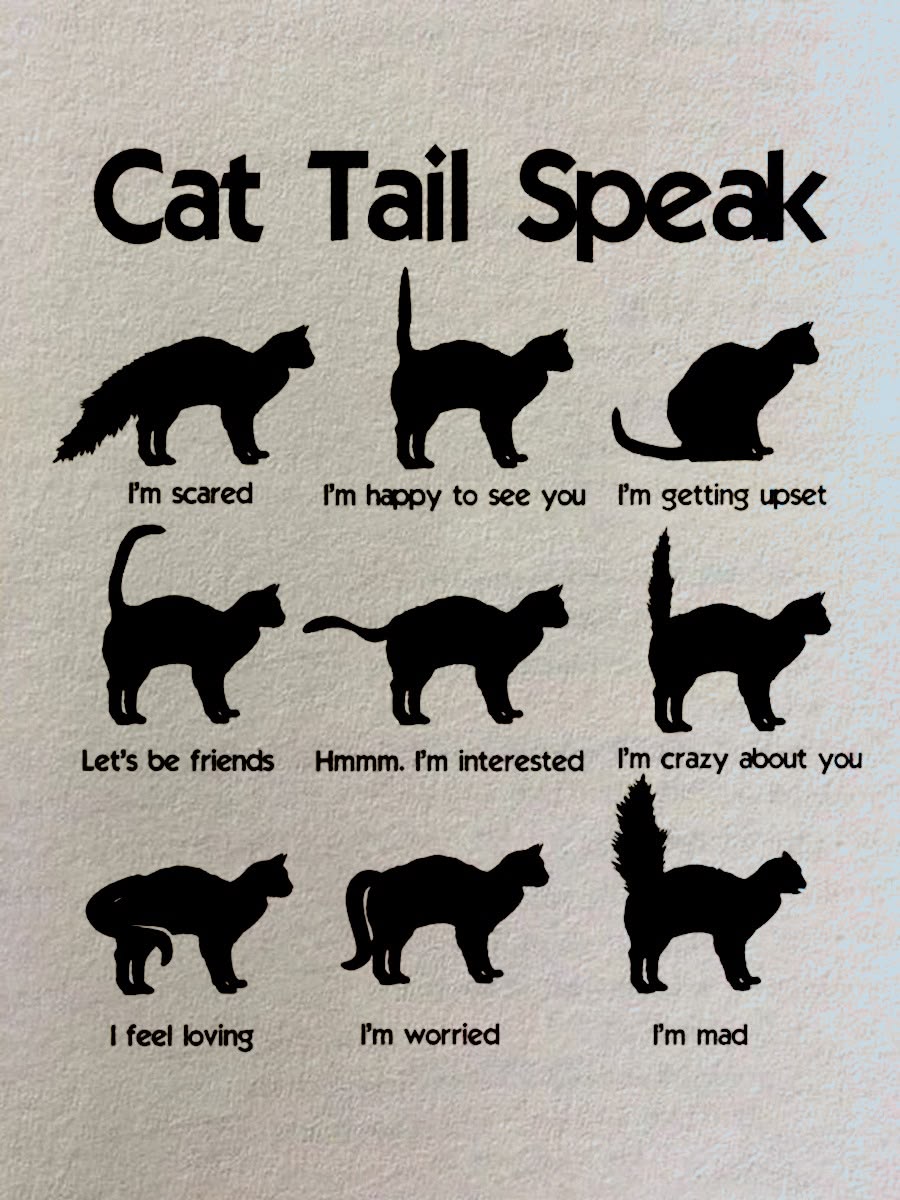
An informative visual guide titled “Cat Tail Speak” illustrates nine distinct tail positions and movements, decoding what your feline friend feels in various situations—ranging from affection and curiosity to fear and agitation. Understanding these feline signals allows cat parents to respond appropriately, deepen their bond with their pets, and prevent unnecessary stress or scratches.
In this ultimate guide to feline communication, we break down each tail position shown in the graphic, explore the science of cat body language, provide practical advice on pet care, and share tips for maintaining your pet’s health and happiness.
Deconstructing the Image: Decoding the 9 Tail Signals
Here is a full breakdown of the tail language chart shown in the visual guide, ordered row by row from top to bottom.
1. Top Row: Basic Mood Indicators
-
Puffed and Arched Tail (“I’m scared”): When a cat arches its back and fluffs out its entire tail, it is attempting to make itself look as large as possible to intimidate a perceived threat.
-
Straight Upright Tail (“I’m happy to see you”): A tail held high in the air with a relaxed stance shows confidence, contentment, and a friendly greeting toward owners or familiar animals.
-
Low Horizontal Tail with Curved Tip (“I’m getting upset”): Positioned while sitting or crouching with a slight upward curve at the end, this signals rising irritation or caution.
2. Middle Row: Social & Curiosity Signals
-
Question Mark Curve (“Let’s be friends”): A tail held up with a distinct hook or curve at the tip indicates an approachable, playful, and friendly mood.
-
Extended Horizontal Tail (“Hmmm. I’m interested”): Held out straight behind the body, this neutral-to-curious posture signals that the cat is assessing its environment or exploring something new.
-
Quivering Straight Tail (“I’m crazy about you”): Held vertically erect with a slight vibrating motion at the base or tip, this expresses intense excitement and affection toward a favorite human.
3. Bottom Row: Vulnerability & Agitation
-
Tucked Between Legs (“I feel loving / Submissive”): A tail tucked beneath or close to the belly often indicates vulnerability, submission, or a desire for gentle reassurance.
-
Low Curved Droop (“I’m worried”): A tail drooping low toward the ground indicates uncertainty, anxiety, or defensive caution.
-
Puffed Straight Up (“I’m mad”): A completely puffed-out, bristled tail held straight up or angled backward signals intense anger, aggression, or a severe threat response.
The Science of Feline Body Language
To truly understand your cat, it helps to look at how tail movements fit into broader feline communication systems.
Combining Tail and Ear Signals
A cat’s tail rarely acts in isolation. For an accurate read on your cat’s emotional state, always evaluate the tail in combination with ear positioning, eye dilation, and vocal cues:
-
Relaxed Ears + Upright Tail: Happy, friendly, and open to play or pets.
-
Flattened Ears + Puffed Tail: Highly agitated, terrified, or aggressive. Give the cat space immediately.
-
Dilated Pupils + Twitching Tail Tip: Focused on prey, highly stimulated, or preparing to pounce during playtime.
Practical Tips for Cat Owners
Understanding your cat’s emotional signals leads to a happier, healthier home environment for both you and your pet.
| Tail Position | Emotional State | Recommended Owner Response |
| Upright / Hooked | Friendly & Confident | Great time for affection, treats, or playtime. |
| Horizontal / Twitching | Curious / Alert | Observe quietly; let the cat explore at its pace. |
| Tucked Under | Anxious / Submissive | Speak in a soft tone and offer a quiet, safe space. |
| Puffed / Bristled | Scared / Angry | Avoid touching or cornering the cat; allow room to calm down. |
Long-Term Pet Care and Wellness
Decoding your cat’s mood is just one aspect of responsible pet ownership. Ensuring your furry companion lives a long, healthy life requires a proactive approach to wellness and routine care:
-
Regular Veterinary Check-ups: Preventive care, routine vaccinations, and annual dental checks help catch health issues early before they affect your pet’s behavior.
-
Proper Nutrition and Hydration: Providing balanced, high-protein food and ensuring constant access to fresh water supports active energy and healthy coat condition.
-
Pet Health Insurance and Financial Planning: Veterinary care for unexpected injuries or chronic illnesses can be costly. Securing pet insurance or maintaining a dedicated emergency savings fund ensures your pet gets top-tier care without financial strain.
Conclusion
The “Cat Tail Speak” chart provides an intuitive, practical entry point into understanding your cat’s unspoken language. By learning to recognize signals like the happy “question mark” tail or the defensive “bristled puff,” you can communicate more effectively with your pet, build deeper trust, and create a harmonious home environment.
Frequently Asked Questions (FAQ)
Why does a cat’s tail twitch or thump?
A twitching or thumping tail usually signals annoyance, frustration, or intense focus during hunting/play. If the thumping becomes rapid, it is best to give your cat some space.
What does it mean when a cat wraps its tail around your leg?
When a cat wraps its tail around your leg or arm, it is the feline equivalent of a hug or a handshake. It is a sign of affection, trust, and scent-marking to claim you as family.
How can I tell if my cat is scared or angry?
A scared cat will typically arch its back, fluff its tail, and try to look larger or hide. An angry cat will flatten its ears against its head, puff its tail vertically, growl, or hiss.