


Iron and Rust: How Your Mindset Shapes Your Internal Strength
Inspirational quotes, psychological philosophy, and self-improvement graphics perform exceptionally well across social media platforms like Facebook. By drawing parallels between natural physical phenomena and human psychology, these posts inspire readers to evaluate their mental habits, self-talk, and personal resilience.
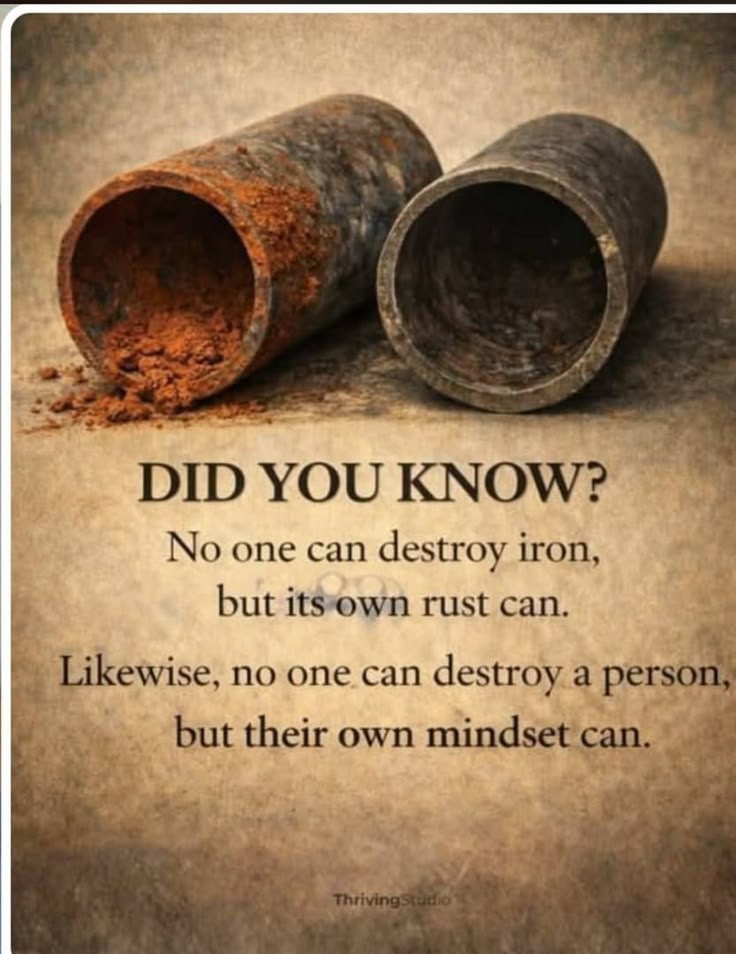
A vintage-style graphic features two industrial iron pipes resting side-by-side—one heavily corroded and crumbling into reddish-brown rust, and the other smooth and intact. Below the visual, structured wisdom text reads:
“DID YOU KNOW? No one can destroy iron, but its own rust can. Likewise, no one can destroy a person, but their own mindset can.”
In this guide, we break down the metaphor of iron and rust, examine the science of self-sabotage, and share practical ways to build an unbreakable growth mindset.
Visual Metaphor Breakdown
The graphic illustrates internal vulnerability versus external strength through a physical analogy:
                      [ THE METAPHOR OF INTERNAL CORROSION ]
                                         |
      --------------------------------------------------------------
     |                                                              |
 [ EXTERNAL FORCES (HARDNESS) ]                   [ INTERNAL RUST (MINDSET) ]
 • Iron resists external pressure                 • Rust develops from within the metal
 • Tough exterior facing environment              • Gradually weakens structure over time
 • Represents external hardships                  • Represents negative self-talk & limiting beliefs
1. The Nature of Iron and Rust
Iron is renowned for its strength, durability, and structural reliability. However, when exposed to oxygen and moisture, it undergoes oxidation—producing rust from within its own substance. Left unchecked, rust eats through metal until it crumbles under its own weight.
2. The Mindset Parallel
Similarly, a person can endure intense external challenges, criticism, and difficult circumstances. However, when internal negative patterns—such as self-doubt, cynicism, or persistent pessimism—take root, they corrode confidence and mental well-being from the inside out.
External Challenges vs. Internal Self-Sabotage
Understanding the source of mental fatigue helps build long-term emotional resilience:
| Factor | External Challenges (Environment) | Internal Corrosion (Negative Mindset) |
| Origin | Outside events, critics, or difficulties | Thoughts, self-talk, and core beliefs |
| Impact | Temporary obstacles that build strength | Continuous erosion of confidence and motivation |
| Control | Often beyond personal control | Fully manageable with awareness and practice |
3 Ways to Protect Your Mindset from “Rust”
-
Practice Mindful Self-Talk: Catch negative thoughts as soon as they arise. Replace internal criticism with constructive, solution-focused reasoning.
-
Cultivate Continuous Learning: Keep your mind active and adaptable. A fixed mindset creates stagnation, while a growth mindset keeps your mental foundation strong.
-
Audit Your Environment: Just as iron rusts in damp environments, a mind constantly surrounded by negativity and toxic influences degrades faster. Surround yourself with supportive communities and uplifting content.
Conclusion
The message “No one can destroy a person, but their own mindset can” serves as a timeless reminder that true strength comes from within. By protecting your thoughts and nurturing a positive outlook, you remain resilient against any external pressure.
Frequently Asked Questions (FAQ)
What is the origin of the quote “No one can destroy iron, but its own rust can”?
This quote is widely attributed to the famous industrialist and philanthropist Ratan Tata, emphasizing self-belief and internal character as the ultimate determinants of success.
How do I stop negative thoughts from ruining my mindset?
Implement cognitive restructuring: recognize negative triggers, challenge irrational assumptions, and reframe worries into actionable steps toward growth.