

🎨 Analysis of Uniform Options (1 to 6)
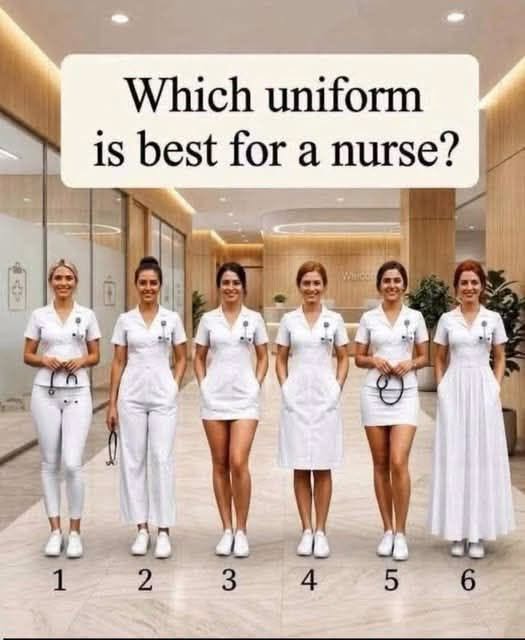
The featured designs range from modern to classic, each presenting a different vision for a nurse’s uniform:
Option (1) – Tight Trousers with a Collared Shirt:
Analysis: This option displays a modern and highly practical look. The trousers offer great freedom of movement during emergencies, though some might find them a bit too fitted for grueling field work that demands even greater flexibility.
Option (2) – Wide-Leg Jumpsuit:
Analysis: An innovative design that blends elegance with comfort. The wide legs ensure freedom of movement and breathability during long shifts, though it may prove somewhat impractical when needing to take quick staff breaks.
Option (3) – Very Short Dress (Above the Knee):
Analysis: This design aligns more with old stereotypes or promotional ads and is completely impractical in a real-world medical environment. It limits a nurse’s ability to bend or move quickly to care for patients without embarrassment.
Option (4) – Classic Knee-Length Dress:
Analysis: Reflects the elegant, traditional uniform worn by nurses in past decades. It offers a professional and respectful appearance, yet it provides less flexibility compared to modern pants during fast-paced emergency situations.
Option (5) – Short Skirt with a Shirt:
Analysis: Much like Option (3), this outfit lacks the functionality and professionalism required in hospital settings, failing to provide sufficient comfort or protection during active shifts.
Option (6) – Long Loose Dress:
Analysis: An excellent choice for nurses who prefer modest and full-coverage attire. While comfortable, the length of the loose dress could pose a slight tripping hazard when rushing through hospital hallways or risk touching contaminated floors and surfaces.
💡 What is the Best and Most Suitable Uniform for a Nurse?
The scientifically and practically agreed-upon answer in the modern medical sector is that the ideal nursing uniform isn’t just about aesthetic appeal; it is grounded in strict criteria, including:
1. Comfort and Freedom of Movement: The profession demands standing for long hours, bending, and walking quickly.
2. Safety and Infection Control: The uniform must be made from easily sanitized fabrics, without dangling elements that could contact contaminants.
3. Modesty and Professionalism: To maintain patient trust and ensure the nurse’s comfort while working.
Conclusion:
Option (1) or (2) (with a slight modification to be looser and more flexible, akin to modern medical “Scrubs”) is the best and most suitable choice for a healthcare environment. It offers full protection, facilitates movement, and preserves the nurse’s professional dignity away from designs that hinder her humanitarian work.