



6 Ways to Deal with Pain: How to Move from Suffering to Transformation
Pain—whether emotional, physical, or psychological—is an inescapable part of the human experience. However, while pain itself is inevitable, the way we internalize, process, and carry that pain determines whether it breaks us or builds us into stronger individuals.
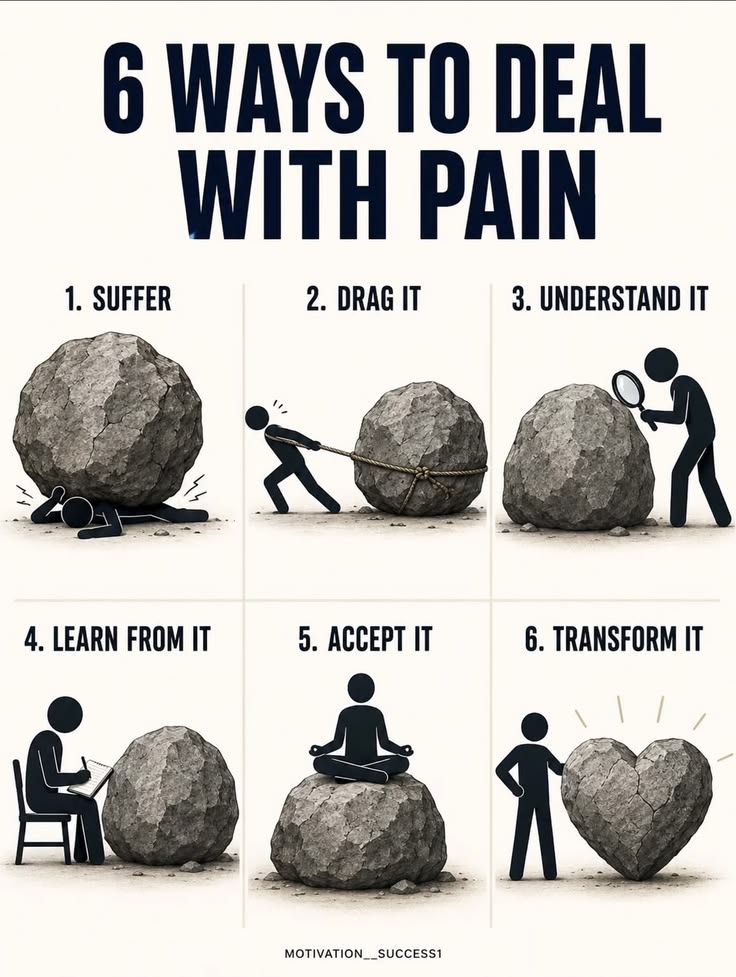
A popular viral infographic titled “6 WAYS TO DEAL WITH PAIN” illustrates the six distinct stages or approaches people take when facing major life hardships, represented by a massive stone:
-
Suffer: Crushed under the weight of the stone.
-
Drag It: Pulling the heavy stone behind on a rope, taking the burden everywhere.
-
Understand It: Examining the stone closely with a magnifying glass.
-
Learn From It: Sitting beside the stone taking notes in a journal.
-
Accept It: Sitting atop the stone in a calm, meditative pose.
-
Transform It: Sculpting the rough stone into a polished, shining heart.
Below, we break down each of these six coping mechanisms, explore why moving past passive suffering is essential, and share strategies to transform life’s heaviest obstacles!
Breakdown of the 6 Coping Stages
How we interact with personal adversity evolves as our emotional intelligence and coping strategies mature.
1. Suffering (Passive Victimhood)
In this phase, the weight of the hardship feels completely overwhelming. A person feels crushed, helpless, and paralyzed by circumstances beyond their control.
2. Dragging (Carrying the Burden)
Here, the individual moves forward, but carries the unresolved trauma or bitterness everywhere they go. The burden slows progress, drains energy, and acts as a constant physical and mental strain.
3. Understanding (Introspection & Analysis)
Instead of reacting blindly, the person begins inspecting the issue objectively. They ask critical questions: “Why did this happen? What triggered this pain? What factors contributed to this situation?”
4. Learning (Extracting Wisdom)
Analyzing transitions into active reflection. The individual documents lessons, identifies patterns, and extracts valuable insights to prevent similar situations in the future.
5. Acceptance (Making Peace)
Rather than fighting reality or letting it weigh them down, the person acknowledges the situation as it is. By practicing mindfulness and radical acceptance, they sit atop the rock, unbothered by its presence.
6. Transformation (Post-Traumatic Growth)
The final step is converting past hardship into purpose, compassion, and strength. The rough, painful obstacle is sculpted into something meaningful that helps the individual and inspires others.
Comparison Matrix: Passive Pain vs. Active Transformation
| Approach | Passive Handling (Stages 1–2) | Active Processing (Stages 3–6) |
| Mindset | Reactive, burdened, overwhelmed | Reflective, constructive, empowered |
| Energy Impact | Severe burnout and chronic fatigue | Energy restored through resolution |
| Internal Growth | Stagnant; pain remains an obstacle | High; turns trauma into emotional maturity |
| Ultimate Outcome | Extended suffering and frustration | Resilience, peace, and personal evolution |
3 Steps to Transform Pain into Strength
-
Shift from “Why Me?” to “What Now?”
Focusing strictly on why unfair things happen keeps you stuck under the rock. Redirecting your focus toward constructive action allows you to take control.
-
Journal for Processing
Writing down your thoughts, triggers, and lessons helps externalize emotional pain, making it easier to analyze objectively rather than feeling overwhelmed internally.
-
Use Your Experience to Help Others
One of the most effective ways to transform personal hardship is by offering guidance, empathy, or support to others navigating similar challenges.
Conclusion
Pain is a powerful teacher. While it is natural to feel crushed or to carry heavy burdens temporarily, real healing begins when we choose to examine, accept, and transform our struggles into lasting strength!
Frequently Asked Questions (FAQ)
What is Post-Traumatic Growth (PTG)?
Post-Traumatic Growth is a psychological phenomenon where individuals experience positive personal development, increased appreciation for life, and stronger resilience following significant life adversity.
How does radical acceptance help with emotional pain?
Radical acceptance involves completely acknowledging reality without judgment or resistance. By stopping the fight against what has already happened, you free up mental energy to focus on moving forward.