

Bleach stains on your clothes? No need to throw them away: here’s the solution.
How to do it safely (with exact amounts)
Pre-wash (mandatory)
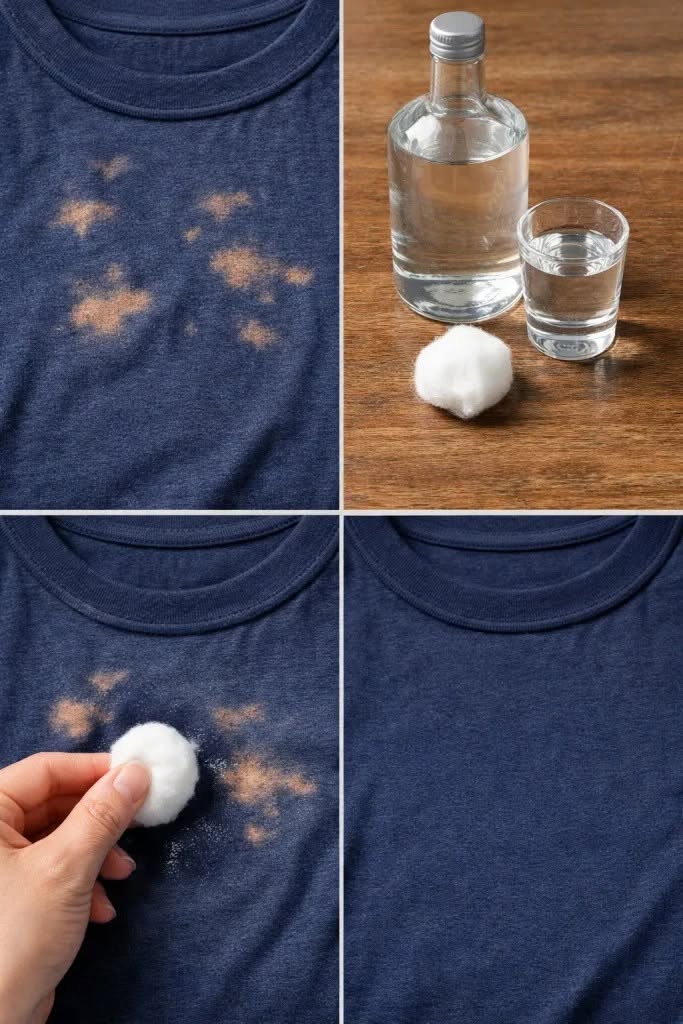
Rinse the stained area under cool or lukewarm running water for at least 2 minutes, gently massaging the fabric between your fingers to remove any remaining bleach.
Gently squeeze out excess water, without wringing.
Working conditions
Find a well-ventilated area (open window). Lay the garment flat on a clean towel.
Amount of alcohol
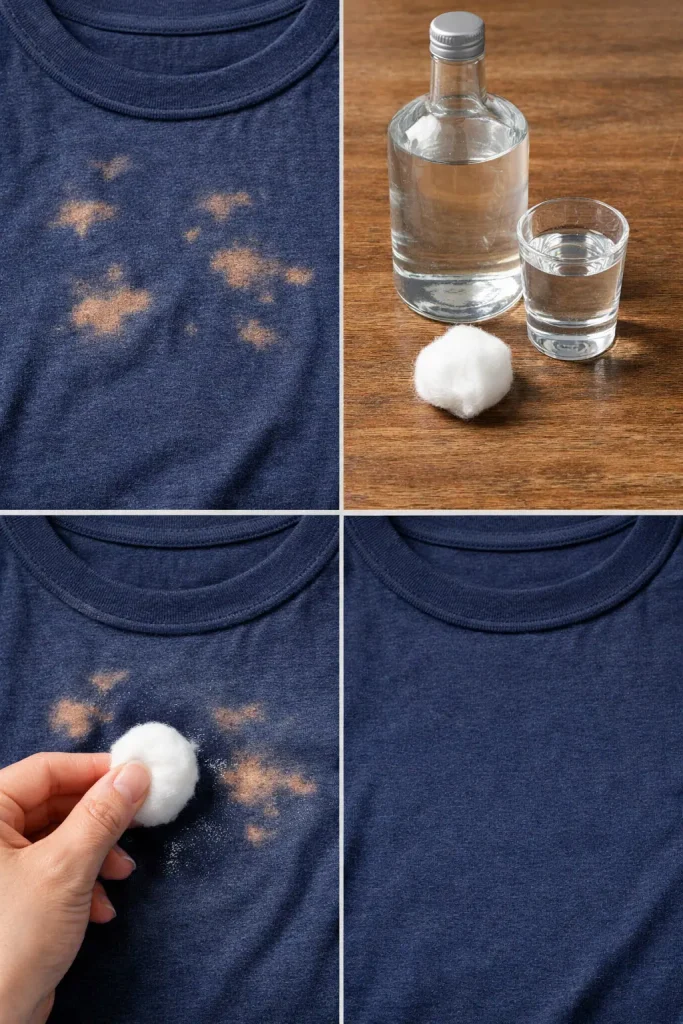
Pour 5 ml of clear alcohol (approximately one teaspoon) into a small container.
Specific application
Soak the cotton ball with a maximum of 2 to 3 ml of alcohol (it should be damp, not dripping).
Gently dab the discolored area for 30 to 60 seconds, without rubbing.
Time of action
Leave on for 2 minutes and then immediately rinse the area with clean water for 1 minute.
Repeat (if necessary)
The operation can be repeated only once, with another 2 to 3 ml of alcohol, if the reduction is visible but insufficient.
Final wash
Wash the garment immediately, at the temperature indicated on the label, with your usual detergent.
Use a makeup remover pad or cotton ball.
The total amount of alcohol should not exceed 10 ml per garment.
Never apply to wool, silk, viscose, or delicate fabrics.
Always rinse thoroughly before using alcohol (bleach + alcohol = danger).
This method does not remove the stain; it only lightens it, especially on dark fabrics.
Never mix bleach with alcohol. Be sure to rinse the fabric thoroughly before attempting this method, and never try it on delicate fabrics.
When the stain persists: smart solutions
If the discoloration is too pronounced, don’t panic. Here are some alternatives that are often the solution:
Textile dyeing: ideal for plain garments, allows you to achieve a uniform color.
Textile felt: perfect for small localized stains and discreet touch-ups.
Deliberate design: embroidery, patch, flocking… transforming the accident into a stylish detail.
Tie-dye: what if this stain became the starting point for a trendy look?
The right steps to avoid disaster.
Remove clothing before using bleach.
Always dilute the product well and handle it carefully.
Opt for gentler alternatives for everyday laundry.
A bleach stain may seem irreversible, but with a little knowledge (and a lot of care), it can often be minimized or cleverly disguised, proving that when it comes to laundry, a bleach stain doesn’t always mean a ruined garment.