

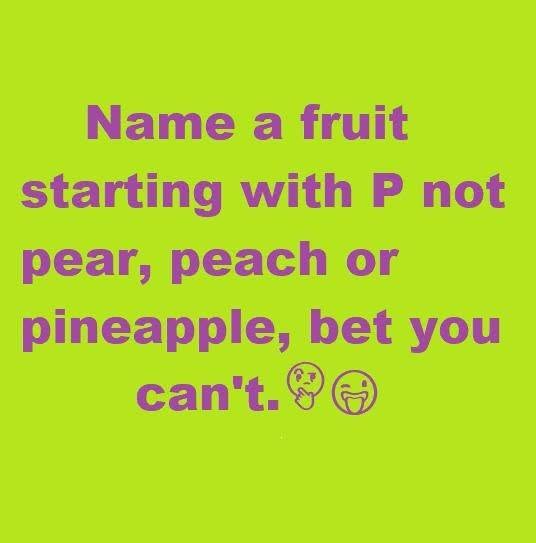


Simple word games are a staple of social media engagement. Posts with prompts like “Name a fruit starting with P not pear, peach or pineapple, bet you can’t” are engineered to spark immediate replies in the comment section by challenging the viewer’s memory under artificial constraints.
While the prompt claims it’s almost impossible, the English language actually features dozens of common fruits starting with the letter “P” outside of the three excluded options.
The Answer: Fruits Starting with “P” (Besides Pear, Peach, or Pineapple)
Here is a list of popular, delicious, and exotic fruits that easily prove the riddle wrong:
| Common Everyday Fruits | Tropical & Exotic Fruits | Unique & Regional Varieties |
| Plum | Papaya | Persimmon |
| Pomegranate | Passionfruit | Pawpaw |
| Plumcot / Pluot | Pitaya (Dragonfruit) | Plantain |
| Prune | Physalis (Cape Gooseberry) | Pomelo |
The Social Media Psychology Behind “Bet You Can’t” Riddles
Why do simple vocabulary posts go viral across platforms like Facebook and Instagram?
                    [ The Viral Engagement Loop ]
                                   |
     +-----------------------------+-----------------------------+
     |                                                           |
[ Artificial Limitation ]                              [ Psychological Challenge ]
 - Excludes the top 3 most common answers               - "Bet you can't" phrasing triggers competitive drive
 - Forces the brain to dig deeper                       - Viewers comment instantly to "prove it wrong"
-
The Competitive Impulse: Phrasing the prompt as a challenge (“bet you can’t”) triggers a natural desire to respond and prove the poster wrong.
-
Algorithmic Boosts: Every time a user types a one-word answer like “Plum” or “Papaya”, the platform’s algorithm registers high user activity, pushing the post into the newsfeeds of thousands more users.
Key Takeaways and Conclusion
Word teasers that claim to be “unsolvable” are rarely difficult—they are simply designed to start conversations and boost post reach. Next time you see a prompt excluding pear, peach, and pineapple, you have plenty of answers like papaya, pomegranate, plum, and passionfruit ready to go!
Frequently Asked Questions (FAQ)
What are fruits starting with P besides pear, peach, and pineapple?
Popular examples include plum, papaya, pomegranate, passionfruit, persimmon, plantain, and pomelo.
Why do social media posts use “bet you can’t” in their captions?
It is a psychological tactic designed to increase comment section engagement, which signals to social media algorithms that the post should be shown to a broader audience.