


Why Perfection Is an Illusion: What Pencils and Erasers Teach Us About Mistakes
Motivational graphics featuring simple everyday objects perform exceptionally well on social media platforms because they turn relatable physical items into profound life lessons. By using something as familiar as a pencil and its eraser, these images offer a comforting perspective on human error, growth, and self-compassion.
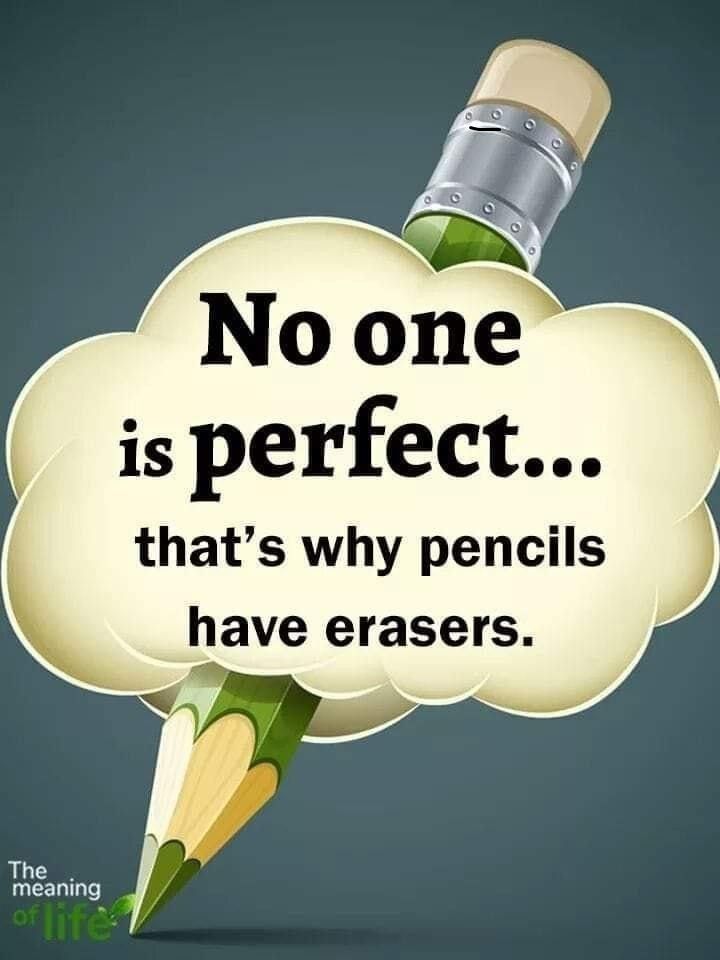
A viral inspirational graphic depicts a green pencil popping through a cloud bubble with a heartwarming quote:
“No one is perfect… that’s why pencils have erasers.”
This simple metaphor targets perfectionism—a common source of anxiety and self-doubt—and reframes mistakes as an expected, built-in part of the creative and personal development process.
In this guide, we analyze the visual imagery, break down the pencil-and-eraser metaphor, and explore practical ways to overcome the fear of making mistakes in daily life.
Breakdown of the Artwork & Metaphor
The graphic blends charming visual design with a universally relatable life lesson:
                     [ PENCIL & ERASER METAPHOR ]
                                  |
      -----------------------------------------------------------
     |                                                           |
 [ THE SHARP TIP ]           [ THE ERASER CAP ]          [ THE CLOUD BUBBLE ]
 • Represents creation,      • Represents flexibility,   • Represents creative
   action, and taking risks    correction, and learning    thought and gentle
 • Mistakes are expected       • Shows that revision is     reassurance
   along the way               built into design
Key Symbolic Elements:
-
The Pencil Tip: Represents writing your own story, taking chances, and putting ideas onto paper without fear.
-
The Eraser: Serves as a visual reminder that mistakes are not permanent. Revision is an inherent part of any creation.
-
The Soft Cloud Design: Adds a gentle tone, reminding readers to soften their inner dialogue and replace self-criticism with self-compassion.
Comparison: Perfectionism vs. Growth Mindset
| Mindset Dimension | Perfectionist Approach | Growth & Revision Approach |
| View of Mistakes | Proof of inadequacy or failure | Natural opportunities to learn and refine |
| Response to Errors | Shame, frustration, or paralysis | Wiping the slate clean and trying again |
| Willingness to Try | Hesitant; avoids risks due to fear of failure | Proactive; willing to draft, erase, and rewrite |
| Self-Talk | Harsh and unforgiving | Encouraging and supportive |
How to Embrace the “Eraser Mindset” in Daily Life
1. Separate Your Worth from Your Output
Making a mistake does not mean you are a failure; it simply means your initial attempt needed adjustment. Just as erasing a word doesn’t ruin the paper, making an error doesn’t lessen your value.
2. View Mistakes as Drafts
Treat your projects, career steps, and personal goals like first drafts. Giving yourself permission to make rough initial attempts removes the pressure of having to get everything right on the first try.
3. Cultivate Self-Compassion
When things don’t go as planned, offer yourself the same grace you would extend to a friend. Acknowledge the oversight, use your “eraser” to correct course, and keep moving forward.
Conclusion
The “Pencils Have Erasers” graphic delivers a timeless message about human resilience and self-acceptance. Mistakes are not flaw markers; they are merely stepping stones along the path to wisdom, growth, and mastery.
Frequently Asked Questions (FAQ)
What is the deeper meaning of “pencils have erasers”?
It means that human error is completely natural and expected. Tools are designed with erasers because humans aren’t expected to execute tasks perfectly on the first try, so we shouldn’t expect absolute perfection from ourselves either.
How can I stop being afraid of making mistakes?
Reframe mistakes as feedback rather than failure. Focus on continuous improvement rather than immediate perfection, and celebrate the courage it takes to start.