

Knowledge Speaks, Wisdom Listens: Decoding the Optical Illusion & Meaning
Visual art that incorporates optical illusions and famous quotes offers a unique double-take for the brain. By blending negative space illustration with philosophical thought, these graphics engage both our visual recognition pathways and reflective thinking.
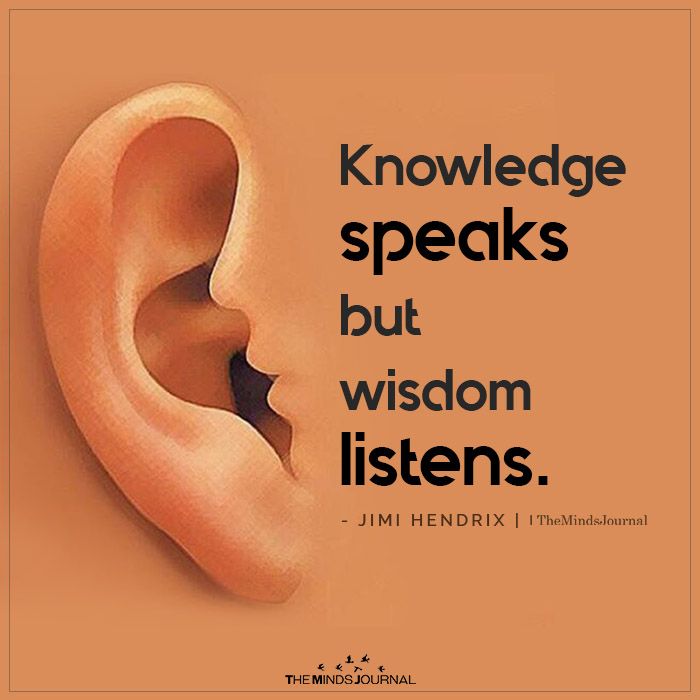
The featured image highlights a famous quote attributed to legendary guitarist Jimi Hendrix:
“Knowledge speaks but wisdom listens.”
Accompanying the typography is a clever visual optical illusion: a large illustration of a human ear where the inner contours double as a human face profile speaking toward the text.
Below, we break down how this visual illusion works and explore the deeper psychological and philosophical meaning behind the quote!
How the Visual Illusion Works: Negative Space & Contour Merging
At first glance, the graphic appears to simply show a detailed human ear next to text. However, a closer look reveals a secondary figure:
-
The Face Profile: The inner fold (antihelix and concha) and opening of the ear canal form the silhouette of a human face in profile—complete with a forehead, nose, lips, and chin facing to the right.
-
Visual Synergy: The face profile appears to be “speaking” or whispering directly toward the word “speaks,” while the outer ear represents the act of “listening.”
Perception Breakdown: What You Noticed First
| First Element Seen | Visual Processing Focus | Psychological Interpretation |
| The Ear | Object Recognition | Focuses on dominant, primary structures and realistic anatomical shapes. |
| The Face Profile | Negative Space / Gestalt | Spotting figures in negative space demonstrates keen attention to background contours and subtle patterns. |
| The Quote Text | Linguistic & Semantic | Prioritizes reading, language comprehension, and conceptual meaning over visual shapes. |
Philosophy & Psychology: Knowledge vs. Wisdom
Why has Jimi Hendrix’s quote resonated across generations?
1. Knowledge as Output (“Speaks”)
Knowledge refers to the accumulation of facts, information, and skills. When people eager to demonstrate knowledge enter a conversation, their natural impulse is to speak, explain, and assert what they know.
2. Wisdom as Input (“Listens”)
Wisdom is the ability to think, act, and discern using knowledge, experience, and deep understanding. True wisdom recognizes that talking only repeats what you already know, whereas listening allows you to learn something new.
Conclusion
Whether you were drawn first to the powerful message or the subtle face profile hidden within the ear, this graphic serves as a clever visual reminder of the balance between expression and perception.
Frequently Asked Questions (FAQ)
Who said “Knowledge speaks, but wisdom listens”?
The quote is widely attributed to the iconic American rock musician and songwriter Jimi Hendrix.
How does negative space work in optical illusions?
Negative space is the area around and between the main subject of an image. Artists utilize negative space by shaping it into recognizable figures (like a face profile inside an ear), prompting the viewer’s brain to alternate between foreground and background shapes.