
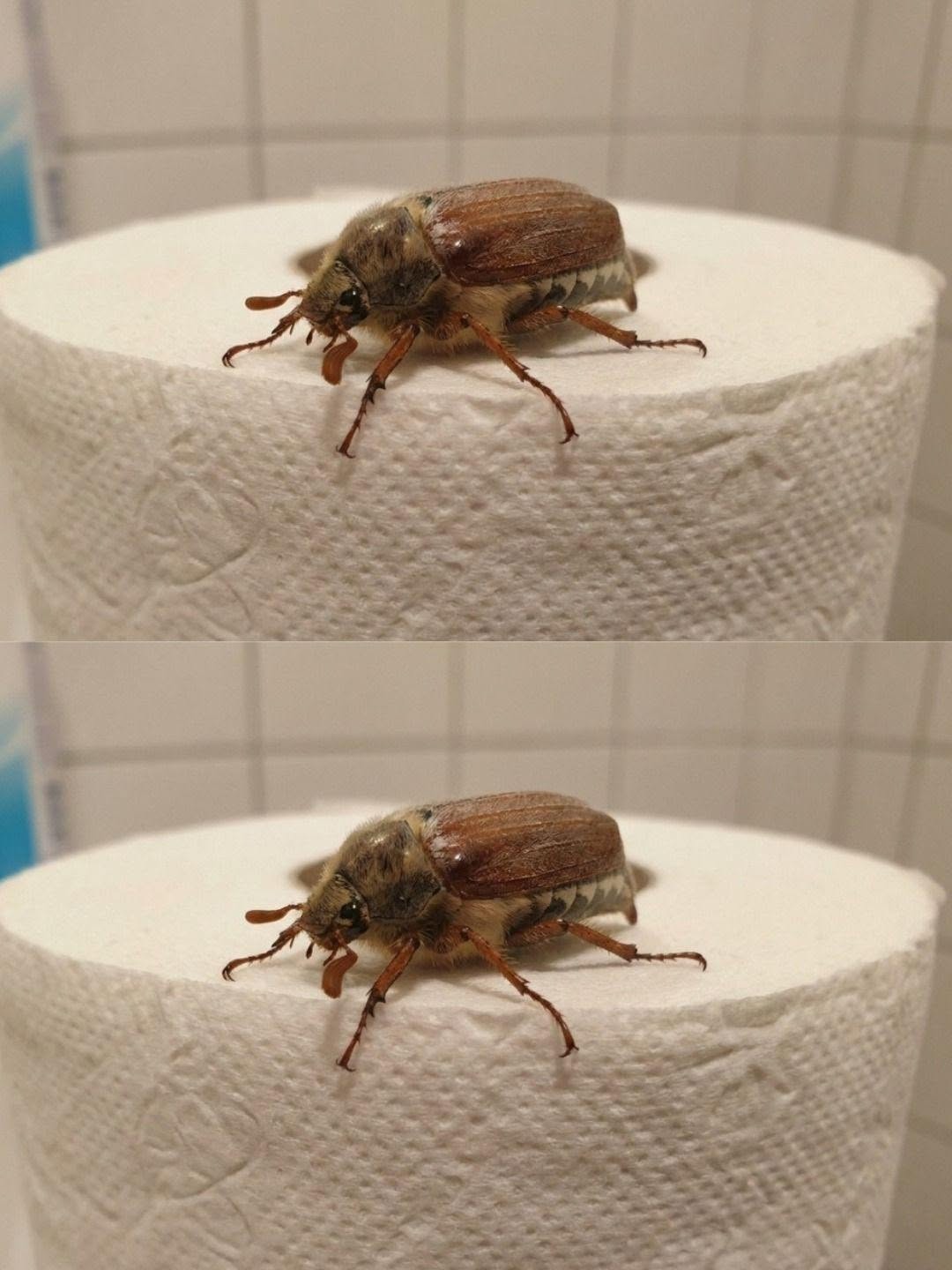


Stumbling upon a large, fuzzy insect indoors can be a startling experience. A common scene captured in home photographs shows a chunky, brown beetle perched on everyday household items like a toilet paper roll.
This distinctive insect is a Cockchafer (genus Melolontha), commonly known as a Maybug or Doodlebug. Despite its intimidating size and loud buzzing flight, it is entirely harmless to humans.
Key Features for Identifying a Cockchafer
Cockchafers belong to the scarab beetle family (Scarabaeidae) and possess several unique anatomical markers that make them easy to recognize:
| Feature | Physical Description | Biological Function |
| Fan-Like Antennae | Distinctive, leaf-like fan shape (lamellate antennae) | Senses pheromones and plant scents across long distances. |
| Fuzzy Thorax | Dense, fine hair covering the head and chest area | Provides insulation during cooler spring evening flights. |
| Abdominal Pattern | Alternating black and white triangular spots along the sides | Signature visual marker separating cockchafers from other scarab beetles. |
| Pointed Pygidium | A downward-curved tail extension at the end of the abdomen | Used by females to deposit eggs safely into soil. |
Why Do Cockchafers Enter Homes?
                   [ Evening Flight Activity ]
                                 |
     +---------------------------+---------------------------+
     |                                                       |
[ Drawn to Light ]                                  [ Poor Navigation ]
 - Attracted to bright window lamps                  - Clumsy fliers with heavy bodies
 - Fly toward indoor fixtures at night               - Accidental entry through open windows/doors
1. Phototaxis (Attraction to Artificial Light)
Cockchafers emerge during late spring evenings (primarily May and June). Like many nocturnal insects, they rely on natural moonlight to navigate. Bright interior lighting confuses their navigation systems, drawing them toward open windows and doors.
2. Clumsy Flying Habits
With heavy bodies and relatively broad wing covers (elytra), cockchafers are notoriously uncoordinated fliers. They frequently bump into walls, lamps, or people before landing awkwardly on available indoor surfaces.
Are Cockchafers Dangerous?
-
Do they bite or sting? No. Cockchafers do not possess stingers and their mouthparts are designed strictly for nibbling plant leaves, making them completely harmless to humans and pets.
-
Are they pests? While adult beetles feed on tree foliage and grubs in the soil feed on plant roots, a single beetle inside your home poses zero risk to furniture, food, or building structures.
What to Do If You Find One Indoors
-
Turn Off Nearby Lights: Douse interior room lights and turn on an outdoor porch light to encourage the beetle to navigate back outside.
-
Gently Relocate: Place a cup or glass over the beetle, slide a piece of stiff paper underneath, and carry it outdoors to a nearby bush or tree.
Key Takeaways and Conclusion
While a surprise encounter with a Maybug on your toilet paper roll might catch you off guard, these gentle giants are simply seasonal night fliers looking for trees and outdoor light. Simply scoop them up and escort them back outside into the night!
Frequently Asked Questions (FAQ)
What is a Maybug?
A Maybug is a common name for the Cockchafer beetle (Melolontha), a large scarab beetle species that emerges in Europe and parts of North America during late spring.
Why do Maybugs have fan-shaped antennae?
The feather-like or fan-like antennae allow the beetle to detect faint scents in the air, helping males locate females and host plants in the dark.