


The Story of the Westinghouse “Turn-Over” Toaster: Early 20th-Century Innovation
Long before automatic pop-up timers and digital shade settings, preparing a simple piece of toast in the 1910s and 1920s was an interactive, hands-on experience.
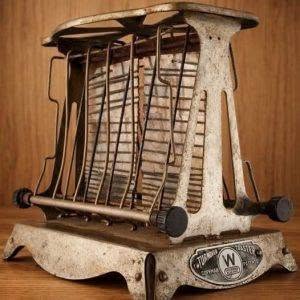
The featured image showcases a classic Westinghouse “Turn-Over” Electric Toaster—one of the earliest commercially successful household electric toasters produced in the early 20th century.
Below, we explore the history of electric toasting, how these vintage mechanical marvels operated, and why they remain prized collectibles today.
The Birth of the Electric Toaster
When electricity began entering residential homes in the early 1900s, manufacturers rushed to create labor-saving appliances. However, early electrical elements struggled with high heat until the discovery of Nichrome wire (a nickel-chromium alloy) in 1905, which could withstand intense heat without melting or oxidation.
By the 1910s and 1920s, companies like Westinghouse Electric & Manufacturing Co. introduced tabletop toasters that brought toast directly from the kitchen hearth to the dining table.
How the “Turn-Over” Mechanism Worked
Unlike modern pop-up toasters (invented later in 1919 by Charles Strite), early model toasters heated only one side of the bread at a time using exposed central heating elements.
To solve the challenge of flipping hot bread without burning one’s fingers, Westinghouse engineered the Turn-Over door design:
-
Bread Placement: A slice of bread was placed in one of the hinged side cages facing the central heating element.
-
Toasting Side One: The heating coils toasted the inner side of the bread slice.
-
The Flip: Opening the hinged cage using the heat-resistant knob caused the bottom of the bread to slide downward and flip outward automatically, turning the un-toasted side toward the heater when closed again!
Appliance Evolution Breakdown
| Era | Appliance Type | Toasting Mechanism | Key Feature |
| Pre-1900s | Fireplace Toasting Forks | Direct flame / hearth heat | Fully manual |
| 1910s–1920s | Westinghouse “Turn-Over” | Central Nichrome wire coils | Mechanical flip doors |
| 1930s–Present | Automatic Pop-Up | Dual-side internal heating | Timers, springs & auto-eject |
Why Vintage Appliances Remain Collectible Today
Antique enthusiasts and retro kitchen collectors value early Westinghouse toasters for several reasons:
-
Art Deco & Industrial Aesthetics: Featuring stamped steel bases, intricate wire cages, and distinctive logo badging, they serve as striking decorative display pieces.
-
Mechanical Ingenuity: The clever mechanical leverage used to flip bread without complex electronics displays early American industrial design at its finest.
Conclusion
The Westinghouse “Turn-Over” toaster represents a major bridge between primitive hearth cooking and modern kitchen automation. It serves as a fascinating reminder of how far household convenience technology has evolved over the last century!
Frequently Asked Questions (FAQ)
When was the Westinghouse Turn-Over toaster manufactured?
The Westinghouse “Turn-Over” design (including model E-5214 and related variants) was heavily produced and sold throughout the 1920s.
Are vintage toasters safe to use today?
Due to uninsulated wiring, lack of automatic shutoffs, and exposed heating elements, antique toasters are primarily recommended for display and collection purposes rather than daily cooking safety!