

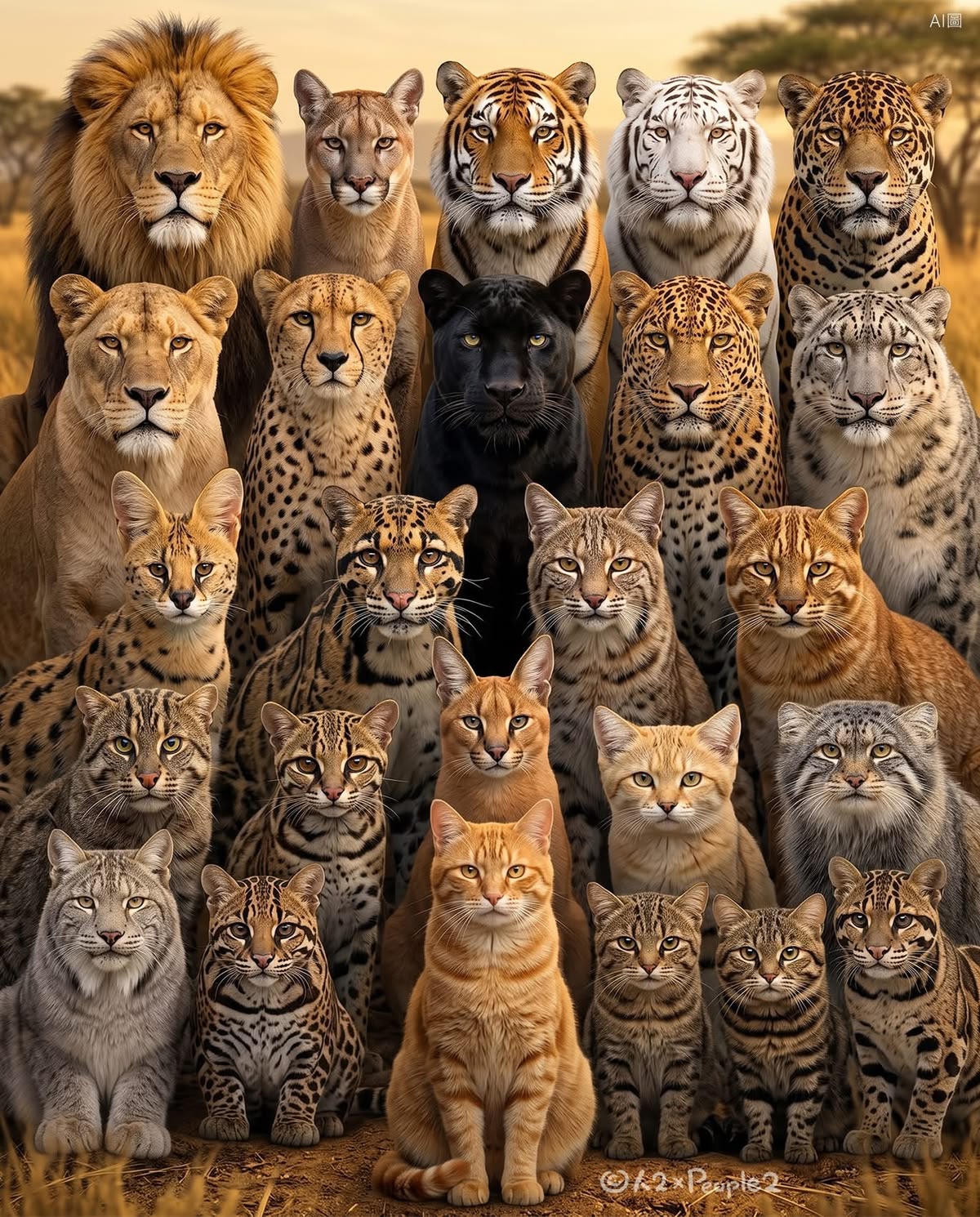


The Ultimate Guide to the Feline Family: Identifying 20+ Cats in One Portrait
The family Felidae is one of the most fascinating, diverse, and skilled predator groups on Earth. Spanning across continents—from the African savannas and Asian rainforests to snow-capped mountains and domestic living rooms—cats share key physical traits, remarkable agility, and shared evolutionary roots.
A stunning digital composite portrait brings together over 20 distinct feline species arranged in a family photo style, anchored by a familiar orange tabby domestic cat sitting right in the bottom center.
Below, we break down the key species featured in this portrait, their real-world habitats, and how the feline family tree is structured!
Species Breakdown: From Top to Bottom
The image arranges felines roughly by size, family lineage, and visual prominence across five distinct rows:
1. The Apex Predators (Top Row)
-
African Lion (Male): Instantly recognizable by its majestic mane, standing on the far top left.
-
Cougar / Mountain Lion: Sleek, tan-coated predator native to the Americas.
-
Bengal Tiger: Featuring iconic orange and black stripes, positioned top-center.
-
White Tiger: A rare genetic color variation of the Bengal tiger.
-
Jaguar: Native to South and Central America, featuring dense rosette patterns with central spots.
2. The Mid-Tier Hunters & Big Cats (Second Row)
-
African Lioness: Powerful female lion standing below the male lion.
-
Cheetah: Built for speed, featuring distinctive tear marks on the face and solid black spots.
-
Black Panther (Melanistic Leopard/Jaguar): Striking melanistic big cat sitting dead center.
-
African Leopard: Dappled in classic rosette patterns without central spots.
-
Snow Leopard: Thick, light gray fur with rosettes built for high-altitude mountain survival.
3. Medium Wild Cats (Middle & Fourth Rows)
-
Serval: Long-legged African wild cat with large, upright ears.
-
Clouded Leopard: Recognized by large, cloud-like blotches on its coat.
-
Eurasian Lynx & Bobcat: Featuring prominent ear tufts and thick facial ruffs.
-
Caracal: Sleek reddish-tan wild cat known for long, black ear tassels.
-
Ocelot & Margay: Small, beautiful spotted wild cats native to the Americas.
-
Pallas’s Cat (Manul): Fluffy, round-faced wild cat native to the cold steppes of Central Asia.
-
Sand Cat: Small desert-dwelling cat with broad ears and pale sandy fur.
4. Small Felines & Domestic Friends (Bottom Row)
-
Domestic Orange Tabby: Sitting proudly in the front-center position!
-
Wildcat Relatives & Asian Leopard Cats: Small patterned felines surrounding the domestic cat, illustrating the evolutionary bridge between wild ancestors and domestic pets.
Feline Comparison & Classification Matrix
| Species Category | Example Animals | Primary Habitat | Key Identification Feature |
| Panthera (Big Cats) | Lion, Tiger, Jaguar, Leopard | Savannas, Rainforests, Mountains | Roaring capability, massive frame, big paws |
| Puma & Acinonyx | Cougar, Cheetah | Deserts, Open Plains, Forests | Built for speed or stealth, non-retractable claws (Cheetah) |
| Small Wild Cats | Serval, Caracal, Ocelot, Pallas’s Cat | Steppes, Deserts, Dense Forests | Tufted ears, distinct facial markings, compact build |
| Domestic Cats | House Cats (Orange Tabby, etc.) | Homes Worldwide | Small size, varied coat colors, vocal purring |
Amazing Feline Facts You Might Not Know
-
Shared DNA: House cats share approximately 95.6% of their DNA with Bengal tigers, retaining many of the same hunting instincts, sleeping habits, and territorial behaviors.
-
Roar vs. Purr: Big cats in the Panthera genus (lions, tigers, jaguars, leopards) can roar due to a flexible hyoid bone, while smaller cats (and cougars) purr continuously.
-
The Black Panther Myth: A “black panther” is not a separate species; it is simply a leopard or jaguar with melanism, a genetic condition causing an abundance of dark pigment.
Conclusion
Whether big or small, wild or domestic, every feline in this portrait represents millions of years of evolutionary perfection. Next time you look at your house cat, remember—you’re looking at a tiny, couch-dwelling version of a tiger!
Frequently Asked Questions (FAQ)
What is the largest cat species in the world?
The Tiger (Panthera tigris) is the largest of all wild cats, with male Siberian tigers reaching weights of over 600 pounds (270 kg).
Are house cats descended from wildcats?
Yes! All domestic cats (Felis catus) descend from the African wildcat (Felis lybica), which was domesticated thousands of years ago in the Near East.