


The Aesthetic Fridge Trend: Is Pre-Chopping Veggies Worth It?
Organized fridge restock videos and perfectly styled produce photos have taken social media by storm.
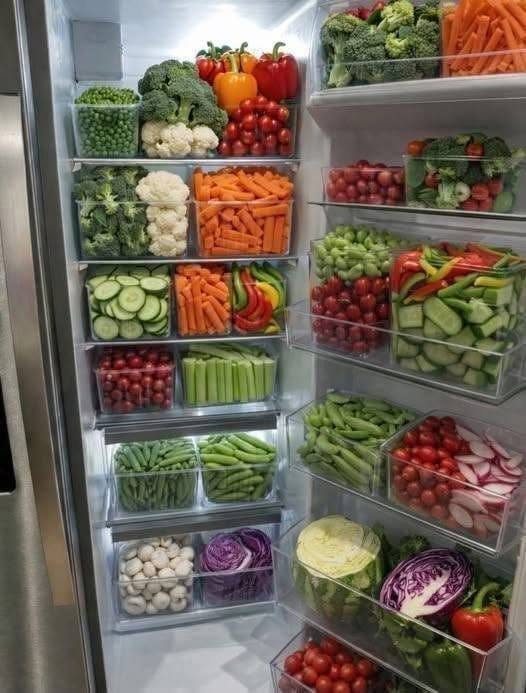
In this viral image, an open refrigerator is packed to the brim with clear plastic bins filled with pre-cut vegetables—including sliced cucumbers, chopped carrots, broccoli florets, cherry tomatoes, radishes, green peas, and fresh cabbages arranged in rainbow order.
While a fridge stocked like this is undeniably satisfying to look at, it also raises practical questions about meal variety, food safety, and shelf-life efficiency.
Below, we look at the pros and cons of heavy meal prep restocking and how to properly store pre-cut produce for maximum freshness!
The Pros & Cons of Extreme Fridge Prep
| Feature | The Benefits 🟢 | The Downsides 🔴 |
| Convenience | Grab-and-go access makes healthy snacking effortless. | Pre-chopping takes significant time and kitchen effort up front. |
| Visibility | Clear bins mean you can see everything you have at a glance. | High exposure to oxygen causes cut veggies to spoil much faster. |
| Aesthetics | Looks incredibly clean, organized, and inspiring. | Lack of proteins, grains, or sauces makes meal assembly limited. |
Food Storage Science: How Long Do Pre-Cut Veggies Last?
Once you slice into fresh produce, you break its protective cell walls, exposing the interior to oxygen and moisture loss.
-
Hard Veggies (Carrots & Celery): Store cut carrot and celery sticks in airtight containers submerged in clean, cold water. Change the water every couple of days, and they will stay crisp for up to $1$–$2$ weeks.
-
Fleshy Veggies (Cucumbers & Peppers): Sliced cucumbers and peppers release moisture quickly. Store them with a paper towel at the bottom of an airtight container to absorb excess humidity and prevent sogginess.
-
Cruciferous Veggies (Broccoli & Cauliflower): Chopped florets stay fresh in sealed glass or plastic containers for $5$–$7$ days if kept dry.
-
Whole Cabbage & Mushrooms: Keep whole until ready to cook! Pre-slicing mushrooms or exposing cut cabbage heads to open air causes rapid browning and moisture loss.
Smart Tips for Realistic Fridge Organization
-
Prep for $3$–$4$ Days, Not Weeks: Only wash and chop vegetables you plan to consume within a few days to avoid food waste.
-
Use Glass Containers: Glass containers maintain a consistent cold temperature better than thin plastic bins and keep food fresh longer.
-
Keep Ethylene Producers Separate: Items like tomatoes and apples produce natural ethylene gas, which can cause nearby leafy greens or cucumbers to spoil faster!
Conclusion
A fridge packed exclusively with chopped vegetables might be created for visual aesthetic appeal, but adopting a few smart prep habits—like storing pre-cut carrots in water or using paper towels in veggie containers—can make healthy eating at home much easier and more sustainable!
Frequently Asked Questions (FAQ)
Is it better to wash vegetables before or right before eating?
It is best to wash produce right before eating! Excess moisture from washing encourages mold growth and rotting during fridge storage.
How do you stop pre-cut apples or potatoes from turning brown?
Submerge cut apples or raw potato slices in a bowl of cold water with a pinch of salt or a splash of lemon juice to prevent oxidation.