

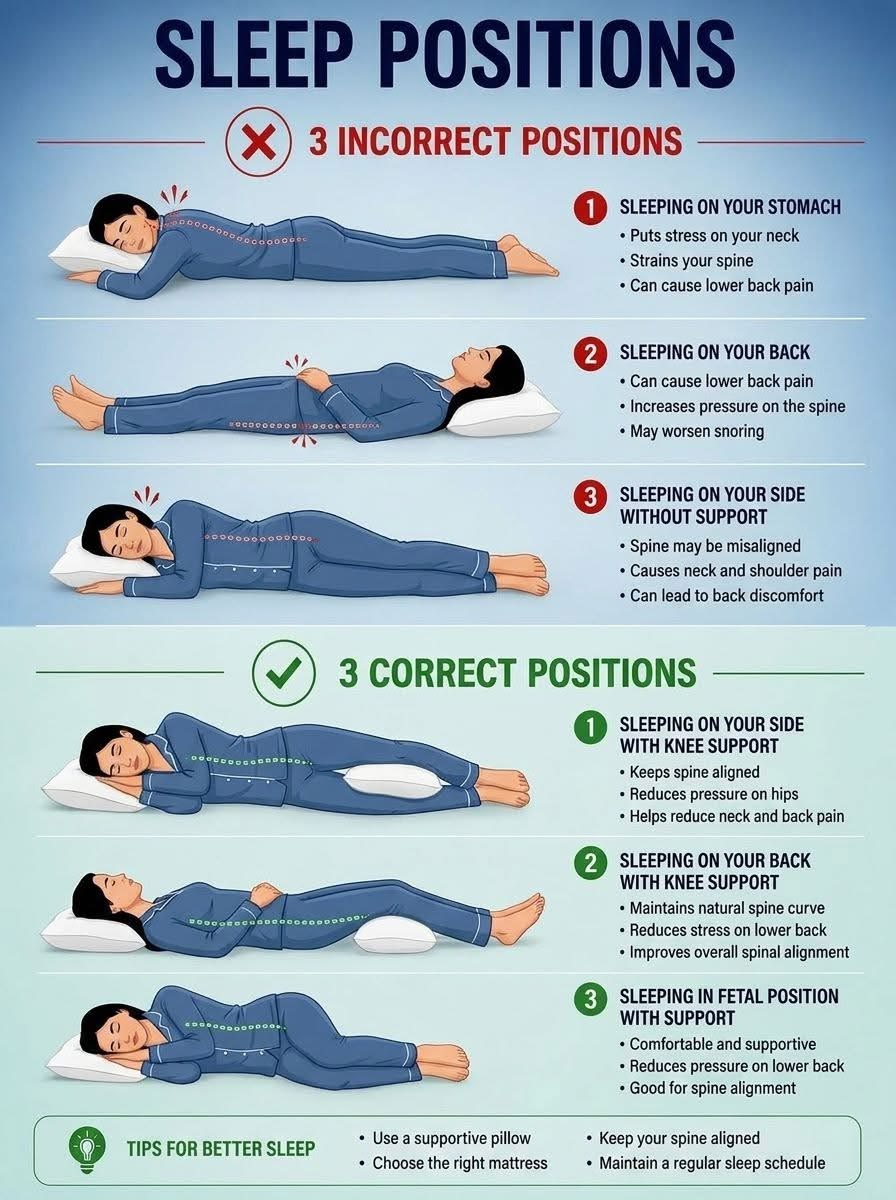

Prioritize Comfort and Sleep Duration: Do not stress over maintaining a rigid posture all night. Total sleep duration and uninterrupted sleep cycles are far more critical for health than staying completely still.Tailor Positions to Medical Needs: Shift to side sleeping if you experience acid reflux (GORD) or obstructive sleep apnea, as back sleeping can exacerbate both conditions.Key TakeawaysNeutral Alignment: Supportive pillows under or between the knees help maintain a neutral spine, reducing muscle strain and joint shear.Natural Movement: The body shifts positions multiple times per night; no single rigid position is mandatory for every person.Context Matters: recommendations should account for individual health factors like sleep apnea, acid reflux, and existing spinal issues.ConclusionImproving your sleep quality is all about finding the right balance between comfort, spinal alignment, and restful ! Using supportive pillows to keep your neck and back in a relaxed, neutral position allows you to wake up feeling refreshed and pain-free.Frequently Asked Questions (FAQ)Is stomach always bad for your spine?Not for everyone, but it requires twisting the neck to one side for extended periods, which can strain cervical joints and muscles. If you prefer stomach sleeping without pain, using a very thin head pillow (or no pillow) helps keep your neck in a safer alignment.Why does placing a pillow under the knees help lower back pain?Placing a pillow under your knees slightly flexes your hips. This reduces tension on the psoas (hip flexor) muscles, flattening the lumbar spine against the mattress and relieving pressure on lower back joints.What is the best sleep position for acid reflux or snoring?Left-side sleeping is best for acid reflux because it keeps the stomach junction below the oesophagus, preventing acid from rising. Side sleeping also keeps airways clear, making it superior for managing snoring and sleep apnea compared to back sleeping.