
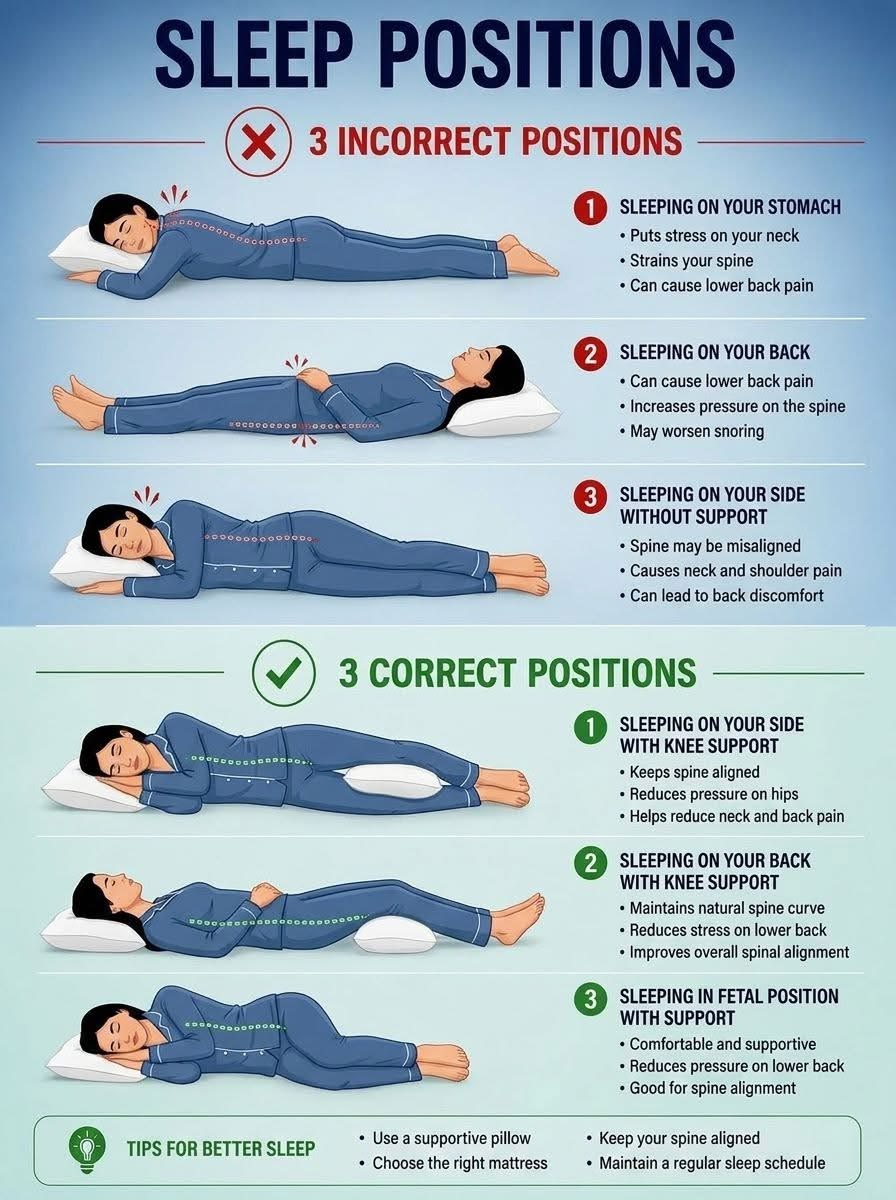

Back Sleeping (Supine): Sleeping on your back distributes body weight evenly across the spine. However, without knee support, gravity can pull the lumbar spine into extension, creating mild lower back tension for individuals with tight hip flexors. Placing a pillow under the knees flexes the hips slightly, flattening the lumbar curve back into a relaxed, neutral position.Side Sleeping (Lateral): Side sleeping aligns the head, neck, and torso. Without a pillow between the legs, the upper leg can drop forward, pulling the pelvis out of alignment and twisting the lower lumbar vertebrae. Placing a pillow between the knees keeps the hips, pelvis, and spine in a neutral plane.2. The Myth of the “Forbidden” Sleep PositionDynamic Nightly Movement: Healthy humans naturally change sleep positions between $10$ and $30$ times per night to relieve pressure points, stimulate tissue blood flow, and prevent joint stiffness.Individual Variability: There is no single “perfect” posture for everyone. Sleep position choice depends heavily on individual conditions—for instance, back sleeping can worsen obstructive sleep apnea or snoring, making side sleeping far superior regardless of pillow props.Science vs. Infographic Claims MatrixInfographic CategoryPosture / ClaimBiomechanical RealityClinical Context”Incorrect” Position #1Stomach SleepingPlaces sustained rotational torque on cervical vertebrae and increases lumbar hyperextension.Cautionary: Can aggravate neck strain, but tolerable for some without spinal pain.”Incorrect” Position #2Back Sleeping (Flat)May allow gravity to pull the lumbar spine into mild hyperextension if hip flexors are tight.Overstated: Back sleeping is clinically recommended for spinal weight distribution.”Correct” Position #1Side Sleeping + Knee PillowPillow between knees stops upper leg rotation, keeping pelvis and lumbar spine neutral.Validated: Highly effective for reducing hip and lower back shear stress.”Correct” Position #2Back Sleeping + Knee PillowPillow under knees flexes hips, relaxing the psoas muscles and flattening the lumbar spine.Validated: Relieves lower back pressure and optimizes weight distribution.4 Guidelines for Optimizing Sleep ErgonomicsAlign Your Neck and Head: Choose a pillow height (loft) that keeps your neck in line with your breastbone—neither tilted too high nor dipping too low.Use Props for Lumbar Relief: If you experience lower back tightness, place a thin pillow under your knees when lying on your back, or between your knees when sleeping on your side.