



Leave a Mark in Someone’s Life, But Make Sure It’s Not a Scar: Understanding the Depth of Human Impact
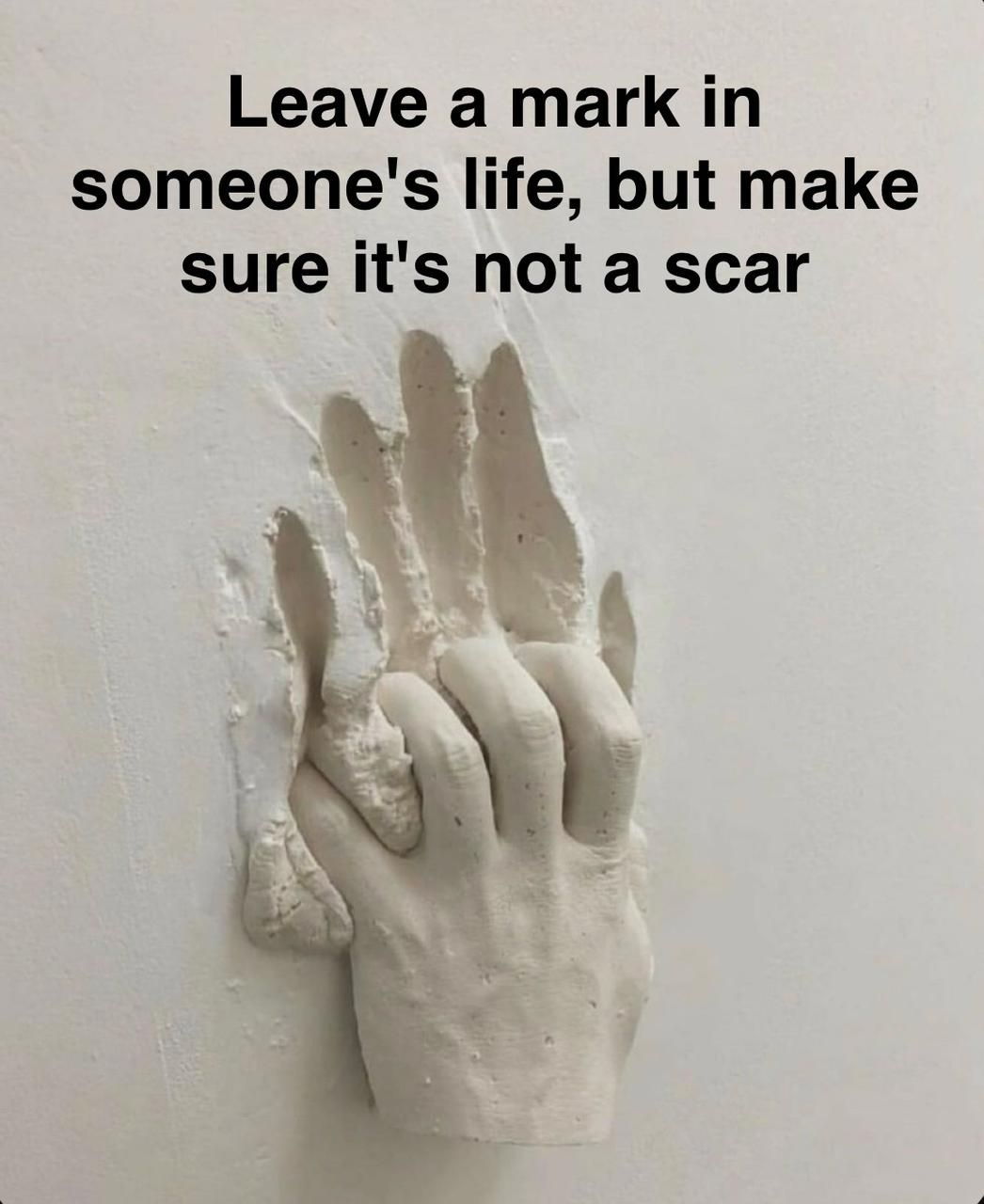
Every person we encounter leaves a footprint on our mental, emotional, and psychological landscape. Some individuals leave warmth, encouragement, and lasting inspiration that elevates our spirit, while others leave behind emotional trauma, broken trust, and painful memories. A viral inspirational artwork features a striking plaster sculpture—a hand reaching out and pressing directly into a wall, holding another hand, accompanied by a profound message:
“Leave a mark in someone’s life, but make sure it’s not a scar.”
This thought-provoking image serves as a powerful reminder of how deeply our words, actions, and behaviors influence the people around us. Whether in personal relationships, the workplace, or casual daily encounters, our interactions carry weight. Understanding the fundamental difference between leaving a constructive mark and leaving a destructive scar is essential for building healthy relationships, protecting emotional health, and fostering meaningful human connections.
In this comprehensive guide, we will explore the psychology of human relationships, the emotional mechanics of emotional scarring versus positive impact, practical ways to nurture empathy in daily life, and how personal growth contributes to long-term emotional well-being.
Deconstructing the Image: The Symbolism Behind the Artwork
The visual elements of the sculpture work together to communicate a layered message about human touch, connection, and lasting influence.
1. The Imprint on the Wall
-
Visual Representation: A wall made of plaster or clay bears a deep, indented handprint where a hand has pressed firmly into the surface.
-
Symbolism: The indent represents permanence. It highlights that once an action is performed or a word is spoken, it changes the structure of another person’s world forever. You cannot simply un-press a hand from soft clay; the impression remains.
2. The Holding Hands
-
Visual Representation: Out of the wall emerges a hand that warmly clasps another hand reaching into the space.
-
Symbolism: Represents support, comfort, empathy, and presence. It emphasizes that leaving a mark should stem from love, solidarity, and gentle connection rather than forceful destruction or neglect.
3. The Central Message
-
The Metaphor: A “mark” is an impression of beauty, support, and constructive memory. A “scar” is the lasting residue of emotional pain, trauma, or neglect. The quote cautions viewers to exercise mindfulness in how they treat others.
Marks vs. Scars: Comparing Emotional Impacts
To understand how our choices shape others, it helps to analyze the distinct characteristics between leaving a positive mark versus leaving an emotional scar:
| Aspect | Leaving a Mark (Positive Impact) | Leaving a Scar (Emotional Trauma) |
| Core Motivation | Empathy, kindness, respect, and love | Selfishness, anger, control, or carelessness |
| Communication Style | Active listening, encouragement, constructive feedback | Harsh criticism, manipulation, or silent treatment |
| Emotional Result | Builds confidence, trust, and emotional security | Induces anxiety, low self-esteem, and defensiveness |
| Long-Term Memory | Remembered with gratitude, warmth, and joy | Remembered with bitterness, pain, or regret |
| Impact on Relationships | Deepens intimacy and mutual respect | Creates distance, resentment, and broken trust |
The Psychology of Human Connection and Emotional Memory
Why do human beings hold onto emotional marks and scars so vividly throughout their lives? The answer lies in how our brains process social interactions and emotional experiences.
The Negativity Bias
Neuropsychological research shows that the human brain possesses an innate negativity bias. From an evolutionary perspective, our ancestors needed to remember painful or dangerous experiences vividly to survive. Consequently, negative interactions—such as harsh criticism, betrayal, or rejection—tend to be processed more intensely by the brain than positive compliments or acts of kindness.
This means that a single emotional scar can outweigh multiple positive experiences. Being mindful of this bias reinforces why we must intentionally choose kindness and constructive communication in our daily interactions.
The Lasting Power of Empathy
Empathy is the cognitive and emotional capacity to understand another person’s perspective and feelings. When a person feels heard, validated, and respected, their brain releases oxytocin and dopamine—neurochemicals associated with trust, happiness, and bonding. By practicing empathy, you create a safe environment where others can thrive without fear of judgment or emotional harm.
Practical Ways to Leave a Positive Mark in Daily Life
Leaving a positive mark does not require grand gestures or massive financial sacrifices. Often, the most profound impacts stem from small, consistent acts of consideration and genuine care.
1. Practice Active and Mindful Listening
Give people your full attention when they speak. Put away electronic devices, maintain eye contact, and validate their feelings without immediately offering unsolicited advice. Knowing that someone truly cares to listen leaves a comforting mark of validation.
2. Offer Genuine Encouragement and Gratitude
A simple word of appreciation can transform someone’s entire day. Express gratitude to family members, colleagues, and service workers. Acknowledging someone’s hard work or unique qualities builds their self-worth and brightens their outlook.
3. Handle Conflicts with Grace and Respect
Disagreements are a natural part of human relationships. However, how you navigate conflict determines whether you leave a constructive resolution or a lasting scar. Avoid personal attacks, yelling, or low blows. Focus on resolving the issue collaboratively while maintaining respect for the person.
4. Be Present During Tough Times
When friends or family experience loss, illness, or financial difficulty, simply showing up and being present offers immense comfort. You do not need to fix their problems; offering a compassionate presence and practical support leaves an indelible mark of true loyalty.
Healing Emotional Scars: A Path to Personal and Financial Well-being
While striving not to hurt others is essential, many people carry emotional scars from their own past experiences. Healing these wounds is a crucial journey toward personal freedom, emotional health, and overall stability.
Seeking Professional Mental Health Services
Overcoming deep-seated trauma or relationship scars often requires guidance from licensed mental health professionals, counselors, or therapists. Engaging in therapy provides structured strategies to reframe negative experiences, establish healthy boundaries, and rebuild self-confidence.
The Connection Between Emotional Health and Stability
Emotional well-being is closely tied to overall life stability. When individuals heal from past emotional pain, they make better decisions across all areas of life—including career choices, personal health management, and long-term financial planning. Securing insurance coverage, managing household finances, and investing in continuous personal education all contribute to creating a secure, peaceful environment where positive relationships can flourish.
Conclusion
The powerful artwork and message “Leave a mark in someone’s life, but make sure it’s not a scar” invites us to take self-reflection seriously. Every day presents countless opportunities to shape how others feel in our presence. By choosing empathy over anger, kindness over indifference, and support over criticism, we ensure that our legacy in the lives of others is one of warmth, healing, and lasting gratitude.
Frequently Asked Questions (FAQ)
What does the phrase “leave a mark, not a scar” mean?
The phrase means that you should strive to make a positive, inspiring, and meaningful impact on the lives of others (a mark), rather than causing emotional pain, trauma, or lasting damage (a scar) through your words and actions.
How can I heal from emotional scars left by others?
Healing from emotional scars involves practicing self-compassion, setting clear personal boundaries, seeking support from trusted loved ones, and working with professional therapists or legal services when dealing with severe hardship or trauma.
Why do negative actions leave deeper scars than positive ones?
Due to the brain’s natural negativity bias, negative or painful experiences are processed with higher emotional intensity than positive ones, making destructive events harder to forget unless intentionally processed and healed.