

How Good Are Your Eyes? Are They Coming or Going? Illusion Solved
Bistable perception illusions and silhouette direction riddles consistently drive high engagement across social media. They test your visual brain by presenting dark silhouettes that lack explicit depth cues, forcing viewers to debate whether subjects are moving toward or away from the camera.
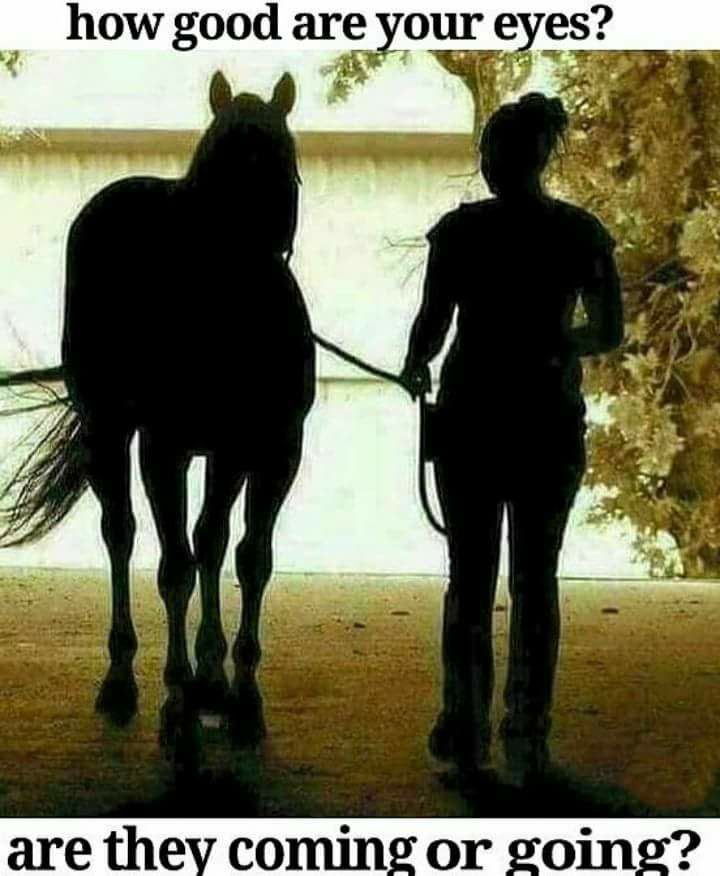
A widely shared visual challenge features a shadowed horse and handler set against a bright backdrop, framed by a simple question:
“how good are your eyes?”
“are they coming or going?”
Because the subjects are rendered primarily as dark silhouettes against backlighting, the brain can easily interpret the scene in two opposite ways. However, analyzing key visual details—such as horse anatomy, lighting, and tail placement—reveals the true direction.
In this guide, we break down the visual indicators, analyze why silhouette illusions trick the eye, and reveal whether they are coming or going.
Deconstructing the Visual Clues
To determine the true perspective, examine the specific physical details hidden within the shadows:
                    [ VISUAL EVIDENCE BREAKDOWN ]
                                  |
      ---------------------------------------------------------
     |                                                         |
 [ ANATOMICAL CLUES ]                                   [ LIGHTING & POSITION ]
 • Horse ears & face pointing forward                   • Backlight coming from tunnel
 • Tail extending to the left side                      • Shadows cast toward foreground
 • Front hooves & legs visible facing front             • Lead rope orientation
1. The Horse’s Anatomy & Head Orientation
-
Ears and Forelock: The horse’s ears are facing forward toward the viewer, with clear definitions of the front of the head and muzzle profile.
-
Chest and Front Legs: The muscular structure of the horse’s chest (pectoral region) and front legs are positioned toward the foreground, showing the front knees and hooves pointing forward.
-
Tail Position: The tail extends behind the horse to the left side of the frame rather than obscuring the hindquarters, which aligns with viewing the horse from the front.
2. The Person’s Stance & Details
-
Hair Bun and Shoulders: The handler’s stance and shoulder alignment face toward the viewer, holding the lead rope extending across to the horse’s halter on the left.
3. Lighting & Shadow Cues
-
The bright light originates from the background opening (tunnel/barn entrance).
-
Because the light is coming from behind them, their front side appears as a dark silhouette facing toward the camera.
Visual Perception Breakdown Table
| Visual Feature | Indicator | Direction Interpretation |
| Horse Head & Ears | Facing forward toward viewer | Coming |
| Front Legs & Hooves | Front-facing joint structure | Coming |
| Tail Placement | Extending behind on left side | Coming |
| Background Light | Light source behind subjects | Coming (Backlit Silhouette) |
The Answer
They are coming (walking toward the camera/viewer).
While the heavy shadow creates a silhouette effect that can temporarily trick your brain into seeing them walking away, the front-facing anatomical details of the horse (ears, chest, and hooves) confirm they are moving forward toward the front of the image.
Why Silhouette Illusions Divide Viewers
-
Lack of Depth Information: Pure silhouettes strip away 3D surface cues like shadows across clothing or fur texture. Without these depth markers, the visual cortex can flip between two plausible interpretations (multistable perception).
-
Backlighting Bias: When an image features a bright exit/opening in the background, human vision naturally assumes subjects are walking toward the light (“going away”) unless finer foreground details are closely inspected.
Conclusion
The correct answer to “Are they coming or going?” is that they are coming toward the camera. Paying close attention to the horse’s ears, chest structure, and hoof placement unlocks the true perspective!
Frequently Asked Questions (FAQ)
Are the horse and person in the photo coming or going?
They are coming (walking forward toward the viewer).
Why do some people see them going away?
Because the image is heavily backlit and silhouetted, the lack of surface detail allows the brain to interpret the figure in reverse until key anatomical features are examined.