

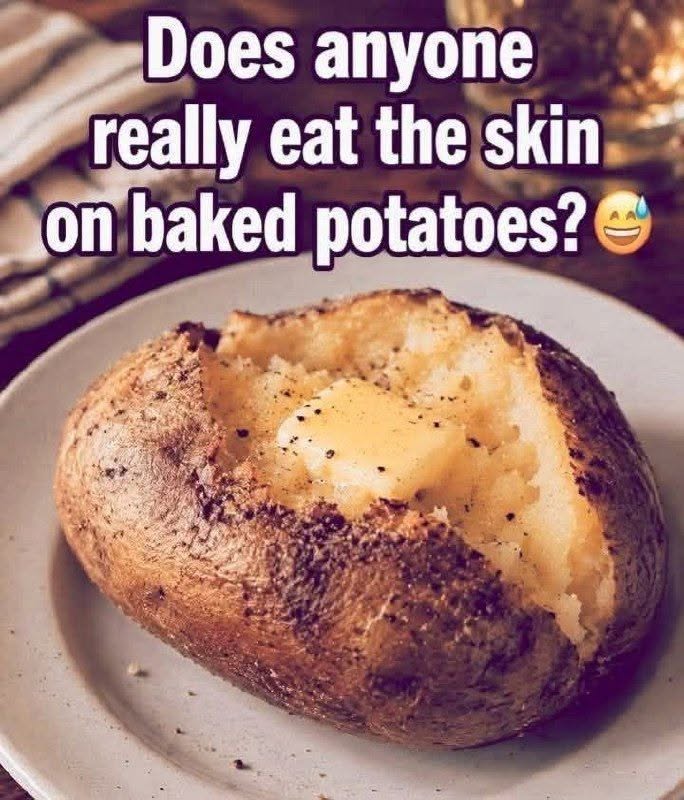


Debates over food habits frequently spark lively discussions across social media. Questions like “Does anyone really eat the skin on baked potatoes?” divide food lovers into two clear camps: those who scrape out only the fluffy interior, and those who consider the seasoned, crispy skin the absolute best part of the potato.
Beyond personal texture preferences, potato skins pack a significant portion of the vegetable’s overall nutrition, fiber, and flavor.
Nutrition Breakdown: Potato Skin vs. Potato Flesh
The skin acts as a protective barrier for the tuber, concentrating essential minerals, antioxidants, and dietary fiber.
| Nutrient Component | Potato Skin | Potato Flesh | Health Impact |
| Dietary Fiber | Concentrated insoluble fiber | Soluble fiber & starches | Supports digestion, gut health, and prolonged fullness. |
| Potassium & Minerals | High concentration of potassium & iron | Moderate potassium levels | Aids heart health, muscle contraction, and fluid balance. |
| Antioxidants | Rich in polyphenols & flavonoids | Lower antioxidant levels | Protects cells against oxidative stress. |
| Texture & Flavor | Crispy, savory, and nutty when seasoned | Fluffy, mild, and creamy | Provides structural contrast to rich butter and toppings. |
Why Potato Skins Deserve a Place on Your Plate
                    [ Benefits of Potato Skins ]
                                  |
     +----------------------------+----------------------------+
     |                                                         |
[ Nutrient Density ]                                 [ Culinary Texture ]
 - Contains half the potato's total fiber             - Develops deep caramelization
 - Packed with potassium, B vitamins & iron           - Holds butter, sour cream & chives
 - Helps regulate blood sugar spikes                  - Prevents food waste
-
High Fiber Content: Roughly half of a medium potato’s total fiber resides directly in or just beneath the peel. Fiber slows down starch digestion, preventing rapid blood sugar spikes.
-
Rich Mineral Profile: Potato skins contain significant amounts of potassium, iron, magnesium, and vitamin B6, supporting healthy blood pressure and energy metabolism.
-
Food Waste Reduction: Eating the entire potato utilizes 100% of the produce, reducing household food waste.
How to Make Perfect, Crispy Baked Potato Skins
If soggy or tough skins have kept you from eating them, the baking technique makes all the difference:
-
Scrub & Dry Thoroughly: Wash off all dirt with a vegetable brush and pat the potatoes completely dry with paper towels (moisture prevents crispiness).
-
Skip the Foil: Wrapping potatoes in aluminum foil traps steam, resulting in soft, soggy skins. Bake directly on a wire rack or baking sheet instead.
-
Oil & Salt Generously: Coat the outer skin with olive oil, melted butter, or avocado oil, then rub with coarse sea salt and cracked black pepper.
-
Bake High & Slow: Bake at 400°F (200°C) for 45 to 60 minutes until the skin turns golden and crackly while the inside becomes soft and tender.
Safety Note: When Not to Eat Potato Skins
While potato skins are healthy and delicious, you should avoid eating peels that show a distinct green tint or sprouts. Green coloring indicates the presence of chlorophyll along with elevated levels of solanine, a naturally occurring glycoalkaloid that can cause digestive upset and tastes bitter. Simply peel or trim away any green areas before cooking.
Key Takeaways and Conclusion
Not only is potato skin completely edible, but it is also one of the most nutrient-dense and flavorful parts of the potato! With proper scrubbing, oiling, and high-heat baking, the skin transforms into a crispy, savory crust that elevates any baked potato dish.
Frequently Asked Questions (FAQ)
Is it healthy to eat baked potato skin?
Yes! Potato skin is rich in insoluble fiber, potassium, iron, B vitamins, and antioxidants that support heart and digestive health.
Why shouldn’t you wrap baked potatoes in aluminum foil?
Foil traps moisture inside the potato, steaming the skin instead of crisping it. Baking without foil allows the skin to dry out and turn crispy.
Is green potato skin safe to eat?
No. Green potato skin contains solanine, a natural compound that can cause bitter tastes and mild stomach discomfort. Cut away green spots or peel green potatoes prior to eating.