

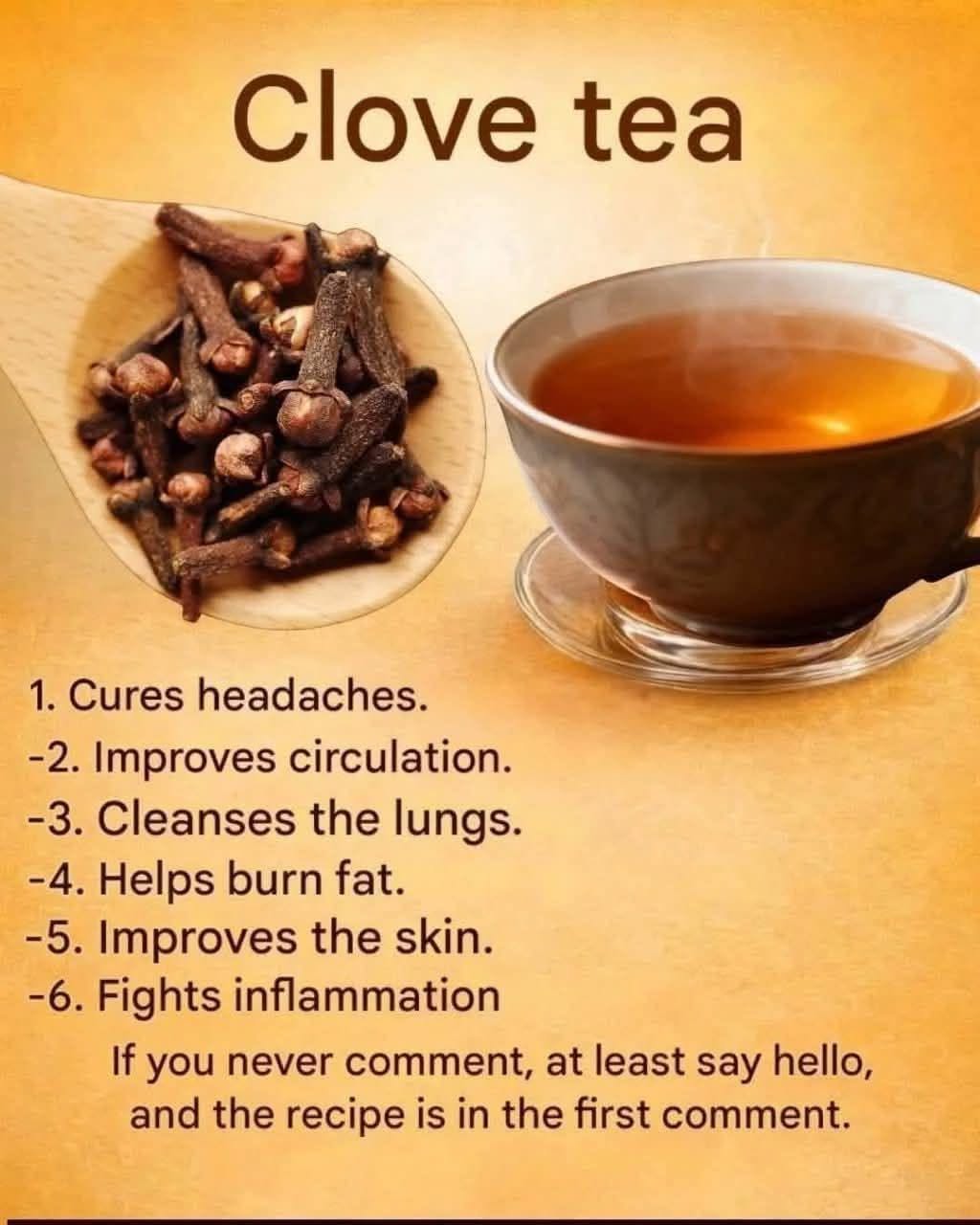

Clove Tea Health Claims: Eugenol Pharmacology, Respiratory Physiology, and Herbal RealityInfographics touting miraculous cure-all remedies using common kitchen spices are staple content across social media wellness groups. Featuring a cup of tea next to a wooden spoon piled with whole dried cloves, overlaid with a list claiming that clove tea “Cures headaches,” “Cleanses the lungs,” and “Helps burn fat,” this graphic ends with a classic call-to-action: “If you never comment, at least say hello.”While whole cloves (Syzygium aromaticum) contain eugenol, a active phenolic compound with established local anesthetic and antioxidant properties, claiming that clove tea acts as a cure for headaches or a lung detoxifier oversimplifies clinical medicine.In this comprehensive guide, we analyze the real biochemistry of eugenol, separate lung physiology from herbal “detox” myths, and provide safe guidelines for enjoying clove tea.Deconstructing Clove Chemistry: Eugenol Benefits vs. Cure-All MythsUnderstanding how active phytochemicals interact with human biological systems clarifies clove tea’s genuine benefits: [ CLOVE PHYTOCHEMISTRY & EFFECTS ]