



Transforming a balcony into a cozy outdoor sanctuary is one of the most rewarding home improvement projects. Beyond comfortable seating, lush greenery, and warm ambient lighting, the foundation of any great balcony aesthetic lies beneath your feet: the flooring.
Choosing the right outdoor flooring involves balancing aesthetic appeal, weather resistance, safety, and long-term maintenance. In modern interior and exterior design, porcelain tiles, stone-look pavers, and wood-finish tiles are top contenders for creating stylish, durable balcony spaces.
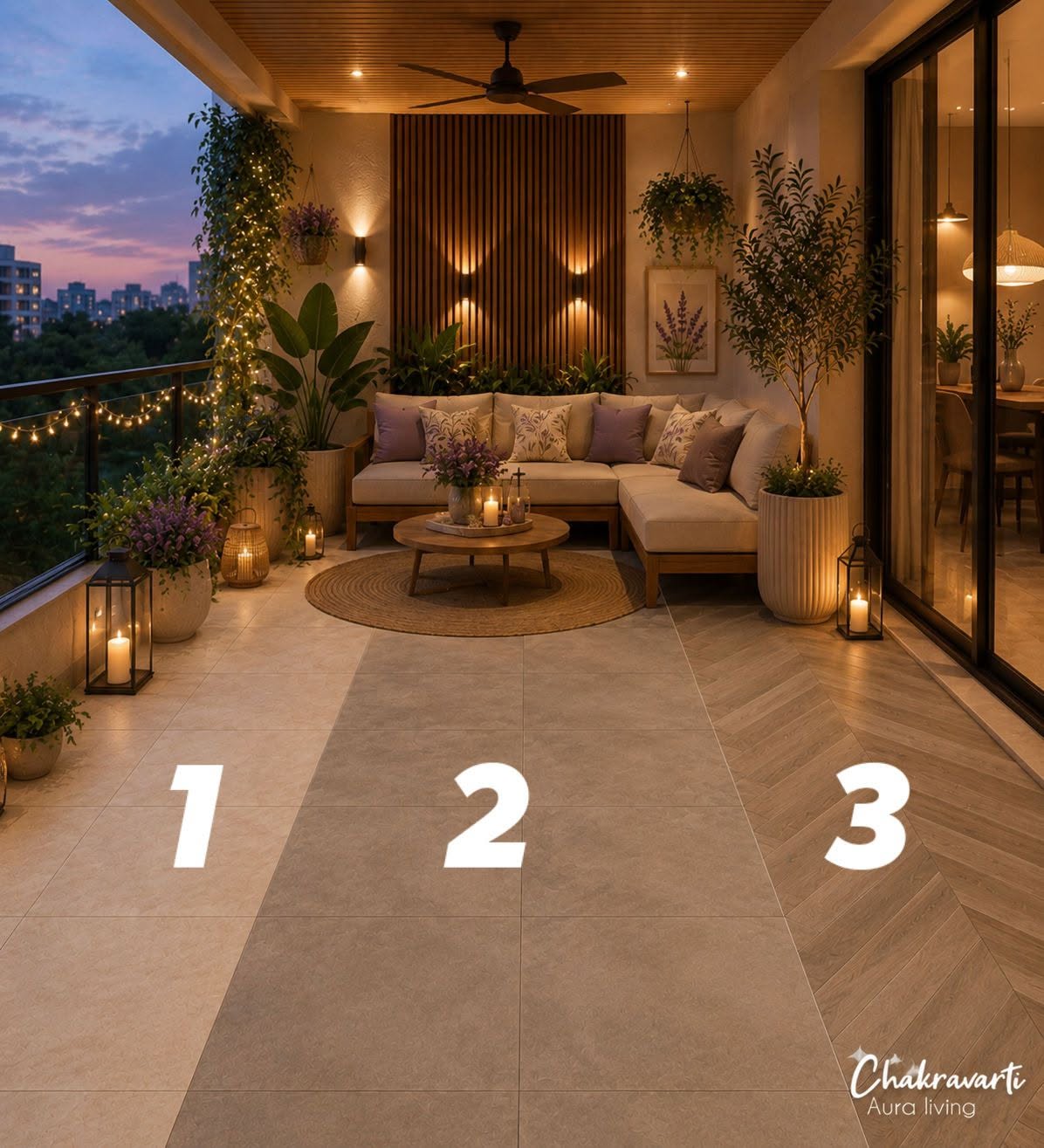
Below, we break down the three distinct flooring options featured in the comparison image, evaluate their practical pros and cons, and share expert design tips for styling a cozy balcony space.
Comparing the Top 3 Balcony Flooring Styles
The choice of flooring significantly influences the visual spaciousness and warmth of an outdoor area.
Option 1: Light Cream Porcelain Tiles (Clean & Bright)
-
The Look: Light beige or cream-toned porcelain tiles reflect ambient light, making smaller balcony spaces feel instantly larger, airier, and more open.
-
Best For: Small balconies, urban apartments, or spaces where maximizing natural light is a top priority.
-
Pros: Enhances brightness, pairs effortlessly with warm string lights and modern greenery, and stays cooler under direct sunlight.
Option 2: Large-Format Slate Grey Tiles (Modern & Minimalist)
-
The Look: Sleek, large-format matte grey tiles create a grounded, contemporary foundation with minimal grout lines.
-
Best For: Modern architectural apartments, industrial aesthetics, or minimalist outdoor lounge setups.
-
Pros: Highly durable, hides dust and minor dirt exceptionally well, and creates a seamless, high-end hotel resort feel.
Option 3: Chevron Wood-Look Tiles (Warm & Organic)
-
The Look: Herringbone or chevron pattern wood-look porcelain tiles combine the organic warmth of natural timber with the durability of stone.
-
Best For: Boho-chic, Scandinavian, or cozy outdoor living rooms paired with woven rattan furniture and plush cushions.
-
Pros: Delivers rich texture and natural warmth without the sealing, warping, or termite maintenance associated with real wood decking.
Key Factors to Consider When Selecting Outdoor Tiles
Selecting the best flooring material for an open or semi-covered balcony requires looking beyond aesthetics:
1. Slip Resistance (R-Rating)
Because balcony floors are routinely exposed to rainwater, spills, and condensation, always opt for outdoor-rated tiles with an anti-slip texture (typically an R10 or R11 slip rating) to ensure safe footing when wet.
2. Weather Durability and Water Absorption
Porcelain tiles are non-porous and feature an extremely low water absorption rate (below 0.5%), making them resistant to moisture damage, cracking in cold temperatures, and fading under direct UV exposure.
3. Ease of Cleaning
Smooth large-format tiles reduce the number of grout lines where dirt can accumulate, allowing for quick sweeping and effortless mopping.
Practical Styling Tips for a Cozy Outdoor Balcony
Elevate your balcony layout into an inviting evening retreat with these simple design strategies:
-
Layer Ambient Lighting: Combine overhead warm LED spotlights, woven lanterns, and fairy lights along the railing to create a soft, inviting nighttime atmosphere.
-
Incorporate Vertical Greenery: Utilize wall slats, hanging planters, and tall potted plants (like olive trees or birds of paradise) to maximize lush foliage without sacrificing floor space.
-
Define Zones with Round Rugs: Place a durable outdoor woven rug under coffee tables or seating nooks to anchor the space and soften hard tile surfaces.
-
Choose Weather-Resistant Textiles: Opt for outdoor performance fabrics on sofa cushions and accent pillows to prevent color fading and water retention.
Fascinating Facts About Outdoor Tile Engineering
-
The Power of Porcelain: Porcelain tiles are fired at temperatures reaching over $1200^\circ\text{C}$ ($2200^\circ\text{F}$), making them significantly denser, harder, and more water-resistant than standard ceramic tiles.
-
Inkjet Digital Printing: Modern wood-look and natural stone tiles use high-definition digital printing technology to replicate organic wood grains and marble veining so precisely that individual tiles rarely repeat patterns.
Conclusion
Whether you prefer the bright spaciousness of option 1, the modern sleekness of option 2, or the warm organic texture of option 3, choosing high-quality outdoor tiles establishes the ultimate foundation for your balcony retreat. Pair your ideal flooring with warm lighting, cozy seating, and rich botanical accents to create a personal outdoor oasis you’ll love enjoying year-round.
Frequently Asked Questions (FAQ)
Can you put regular indoor tiles on an outdoor balcony?
No. Indoor tiles lack the non-slip surface texture required for wet outdoor conditions and are more prone to cracking under temperature fluctuations and weather exposure.
Are wood-look tiles better than real wood decking for balconies?
Yes! Wood-look porcelain tiles provide the exact visual appeal of natural timber without requiring annual staining, sealing, or sanding, and they will never warp, rot, or splinter.
What is the easiest balcony tile color to keep clean?
Medium-toned grey or neutral beige tiles are the most forgiving, as they easily conceal everyday dust, footprints, and minor water spots between cleanings.