


Be Careful of Your Surroundings: The Science Behind Environmental Influence
Mindset graphics and psychological visual metaphors perform exceptionally well across social media platforms like Facebook. By illustrating complex life lessons—such as environmental influence, social circle impact, and emotional boundary setting—through simple imagery, these posts encourage readers to evaluate their everyday habitats and relationships.
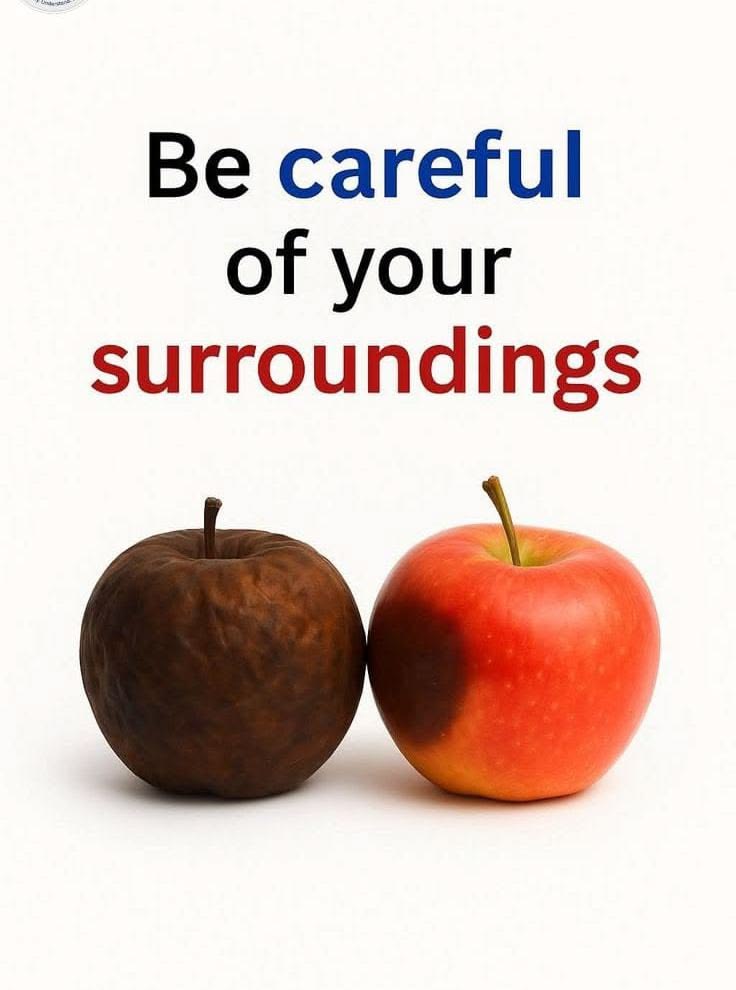
A striking viral image presents a clean white background featuring two apples sitting side by side, accompanied by the quote:
“Be careful of your surroundings”
-
The Left Apple: Fully rotted, brown, and decayed.
-
The Right Apple: A fresh red apple showing a dark brown rotten spot specifically where it makes physical contact with the rotten apple.
In this guide, we examine the scientific basis behind this visual phenomenon, explore the psychological concept of social contagion, and share practical strategies for curating a positive environment.
Visual Metaphor Breakdown
The image uses fruit decay as an intuitive analogy for human behavior and emotional health:
                       [ ENVIRONMENTAL INFLUENCE METAPHOR ]
                                         |
      ----------------------------------------------------------------------
     |                                                                      |
 [ THE ROTTEN APPLE ]                                       [ THE INFLUENCED APPLE ]
 • Emits ethylene gas & spreading decay                     • Absorbs surrounding environment
 • Symbolizes negativity, burnout, or toxic habits          • Shows localized damage at point of contact
 • Operates as an active environmental driver               • Demonstrates passive vulnerability
1. The Rotten Apple (The Environmental Source)
In agriculture, a decaying apple releases high concentrations of ethylene gas and fungal spores. In social psychology, this represents toxic environments, negative workplace cultures, or unsupportive social circles that passively project stress, cynicism, and destructive habits onto others.
2. The Contaminated Spot (The Spread of Influence)
The red apple isn’t completely rotten yet, but its point of contact has already begun to spoil. This visually demonstrates how continuous exposure to negative surroundings creates subtle, localized damage to one’s mindset, motivation, and emotional well-being over time.
The Social Contagion Effect: Why Surroundings Shape Success
Research in behavioral science and network psychology shows that habits, emotions, and mindsets spread through social networks similarly to physical phenomena:
| Life Domain | Impact of Negative Surroundings | Impact of Positive Surroundings |
| Mindset & Mood | Heightened stress, self-doubt, and chronic complaints | Increased optimism, resilience, and emotional stability |
| Career & Ambition | Normalization of complacency and low effort | Inspiration to learn, innovate, and pursue higher goals |
| Habits & Health | Adoption of poor lifestyle habits by proximity | Encouragement to maintain healthy routines and boundaries |
3 Steps to Protect Your Environment & Mindset
-
Audit Your Daily Inputs: Take stock of the people, social media content, and work environments you spend the most time around. Identify which sources drain your energy and which ones replenish it.
-
Establish Clear Emotional Boundaries: When you cannot completely remove yourself from a challenging environment, build strong boundaries to limit the depth of exposure and protect your core values.
-
Seek Out Elevating Communities: Actively place yourself in environments that align with the person you aspire to become. Positive surroundings encourage growth organically.
Conclusion
The message “Be careful of your surroundings” serves as a vital reminder that environment is a silent sculptor of behavior. By choosing your social circles, workspaces, and media inputs intentionally, you safeguard your personal growth and ensure your potential thrives.
Frequently Asked Questions (FAQ)
What does the phrase “One bad apple spoils the barrel” mean scientifically?
Scientifically, decaying fruit releases ethylene gas, a natural ripening hormone that speeds up decay in neighboring fruit. Conceptually, it highlights how one toxic presence can lower morale across an entire group.
Can positive mindsets change a bad environment?
While strong leadership and positive mindsets can influence others, prolonged exposure to toxic conditions often leads to burnout. It is usually far more effective to set firm boundaries or seek out healthier environments.