

Solve the Riddle: People Make Me, Save Me, Change Me, Raise Me
Riddles and wordplay teasers are fantastic tools for testing cognitive flexibility. By utilizing everyday verbs in multiple distinct contexts, riddles challenge the brain to find a single common thread that ties several seemingly unrelated actions together.
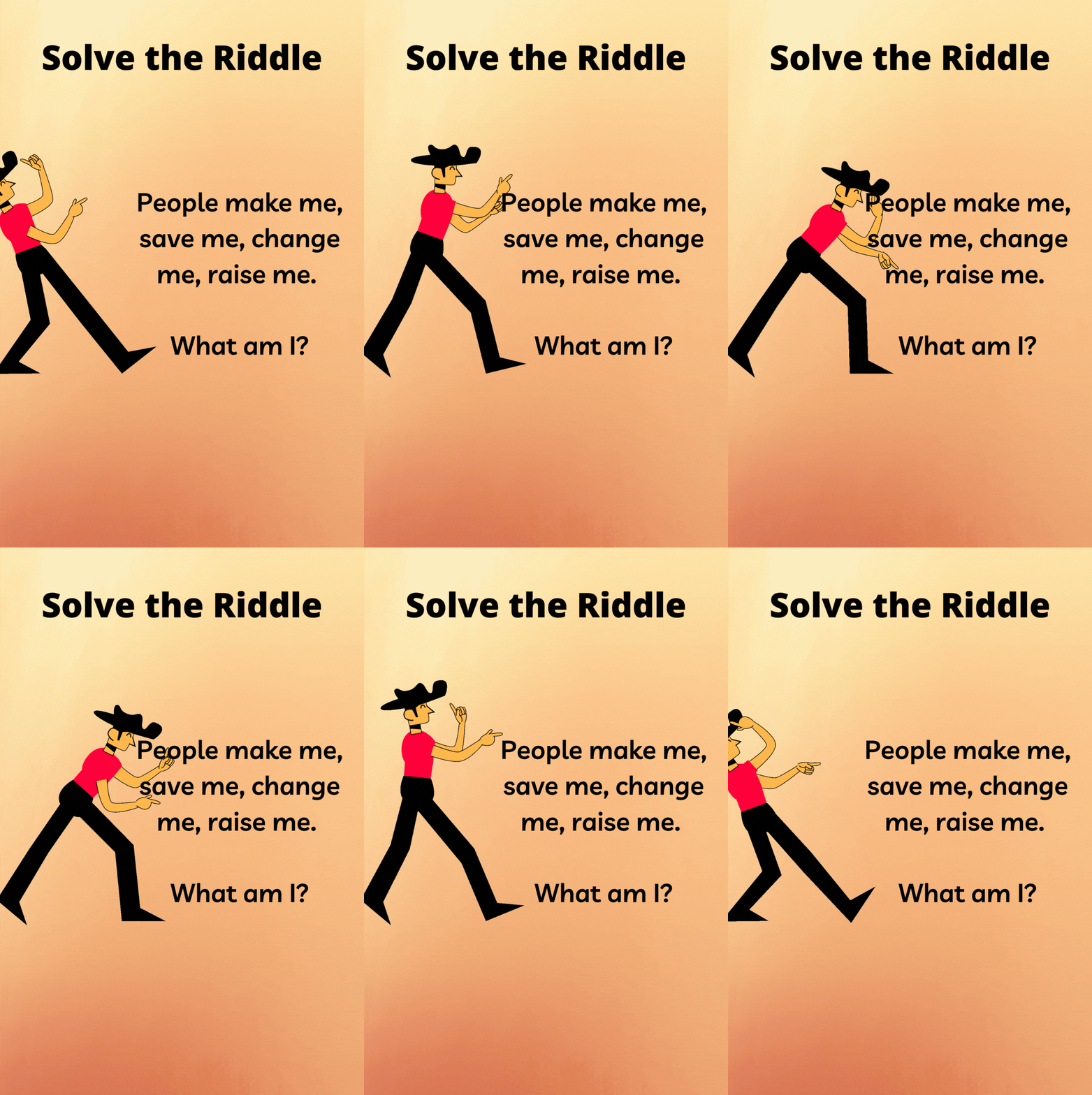
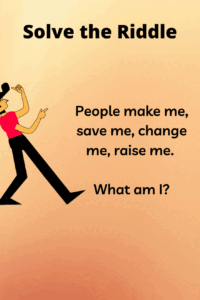
A popular word riddle presents the following clue on a warm gradient background:
“Solve the Riddle”
“People make me,”
“save me,”
“change me,”
“raise me.”
“What am I?”
While several words might satisfy one or two of these conditions, only one answer seamlessly aligns with all four verbs through common idiomatic expressions.
In this guide, we break down the definitive answer, unpack the linguistic double meanings behind each clue, and explore the cognitive psychology of lateral thinking.
Deconstructing the Clues: Verb-by-Verb Breakdown
The secret to solving this riddle lies in identifying how each verb connects to the target word through everyday language:
                      [ DECODING THE RIDDLE ]
                                 |
      --------------------------------------------------------
     |             |                   |                      |
 [ MAKE ME ]   [ SAVE ME ]        [ CHANGE ME ]          [ RAISE ME ]
 • Earning     • Stashing in bank  • Breaking big bills   • Crowdfunding /
   income        or savings          into coins             fundraising
1. “People make me”
To “make money” is one of the most common idioms for earning an income, generating profit, or creating wealth through work and business.
2. “People save me”
To “save money” refers to putting funds aside in bank accounts, investments, or piggy banks for future security.
3. “People change me”
To “change money” has a double meaning—it refers to exchanging currency from one form to another (e.g., swapping a $20 bill for smaller bills/coins, also known as receiving “change”) or converting currency between international exchange rates.
4. “People raise me”
To “raise money” refers to capital collection, fundraising events, venture funding, or crowdfunding campaigns to support a cause or venture.
Comparative Breakdown: Evaluating Potential Answers
| Candidate Answer | Make? | Save? | Change? | Raise? | Fits All Clues? |
| Money | Yes (Make income) | Yes (Save funds) | Yes (Make change) | Yes (Raise capital) | YES (100%) |
| Children | No | No | No | Yes (Raise kids) | No |
| Voice | No | No | No | Yes (Raise voice) | No |
| Time | Yes (Make time) | Yes (Save time) | Yes (Change time) | No | No |
The Answer
The answer to the riddle is MONEY.
The Psychology of Lateral Thinking Riddles
Why do riddles like this perform so well as mental exercises?
-
Polysemy and Wordplay: The riddle relies on polysemy—the phenomenon where a single word interacts with different verbs to form unique functional definitions. Your brain must cycle through various contexts (finance, child-rearing, time management) until all four verbs land on a single noun.
-
The “Aha!” Moment: Finding the solution triggers a burst of dopamine as your brain successfully reconciles four disparate linguistic paths into one coherent concept.
Conclusion
The power of “People make me, save me, change me, raise me” relies on clever everyday language. By connecting income, savings, currency exchange, and fundraising under one umbrella, the riddle highlights how versatile the concept of money really is.
Frequently Asked Questions (FAQ)
What is the answer to the “People make me, save me, change me, raise me” riddle?
The correct answer is Money.
How does each clue apply to the answer?
-
Make money: Earning an income or profit.
-
Save money: Depositing or hoarding currency.
-
Change money: Exchanging large bills into smaller coins or swapping currencies.
-
Raise money: Collecting donations or venture capital.