

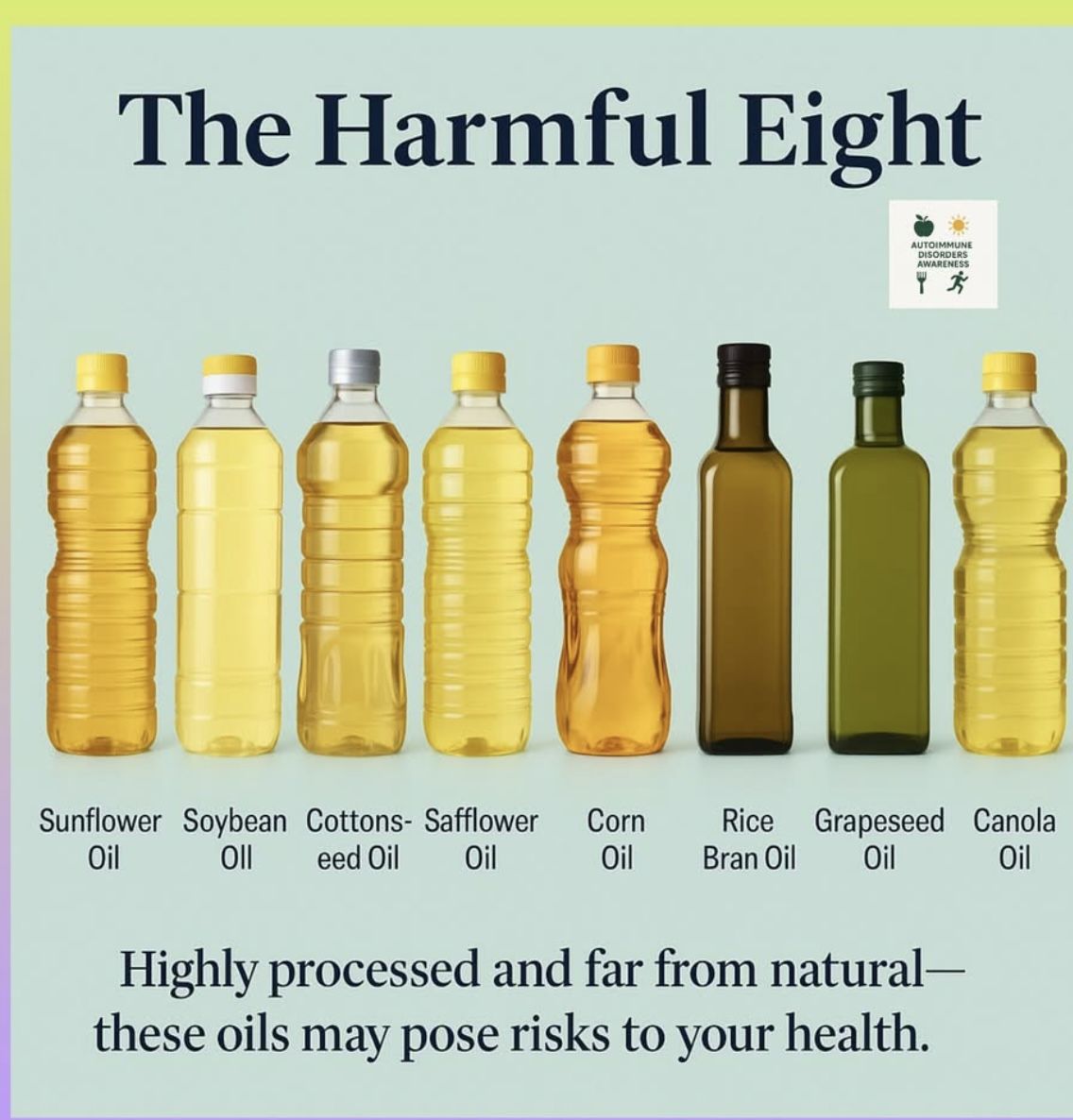

Seed Oil Physiology: Linoleic Acid, Refining Processes, and the “Harmful Eight” MisconceptionInfographics labeling seed oils as toxic “industrial waste products” are among the most widespread trends in modern wellness social media. Featuring eight clear bottles of common cooking oils labeled “The Harmful Eight”—including Sunflower, Soybean, Cottonseed, Safflower, Corn, Rice Bran, Grapeseed, and Canola Oil—overlaid with the headline “Highly processed and far from natural—these oils may pose risks to your health”, this graphic capitalizes on growing public anxiety around processed foods.While ultra-processed foods containing high-heat, repeatedly fried seed oils can contribute to issues, vilifying seed oils themselves oversimplifies lipid biochemistry and directly contradicts extensive clinical consensus on cardiovascular health.In this comprehensive guide, we evaluate the biochemistry of polyunsaturated fatty acids (PUFAs), deconstruct the myth that linoleic acid causes systemic inflammation, and examine why anti-seed oil narratives perform so well online.Deconstructing Seed Oil Biochemistry: Omega-6 Fatty Acids vs. Clinical RealityUnderstanding how polyunsaturated fats interact with human vascular and inflammatory pathways clarifies why seed oils are not inherently toxic: [ SEED OIL BIOCHEMISTRY & HEALTH ]
[ LINOLEIC ACID (OMEGA-6 PUFA) ] [ SENSATIONAL “TOXIC 8” CLAIMS ]
• Essential polyunsaturated fatty acid • Claims seed oils drive systemic inflammation
• Consistently shown to lower LDL cholesterol • Confuses whole oils with repeatedly fried fast
• Converts to arachidonic acid in negligible amounts • Uses “appeal to nature” logic to cause food fear
1. The Verified Clinical of Seed OilsCardiovascular Benefits: Major seed oils are exceptionally rich in linoleic acid, an essential omega-6 polyunsaturated fatty acid. Extensive randomized controlled trials and cohort studies consistently show that replacing saturated fats (like butter or lard) with linoleic acid lowers LDL cholesterol and reduces overall risk for coronary heart disease.The “Inflammation” Myth: Anti-seed oil claims assert that linoleic acid converts into arachidonic acid, driving systemic inflammation. However, human metabolic studies show that this biochemical conversion occurs at negligible rates (<1%), and human trials demonstrate that seed oil consumption does not elevate inflammatory markers like C-reactive protein (CRP).Processing vs. Toxicity: While industrial refining (degumming, bleaching, and deodorizing) uses heat and solvents, trace residual levels in consumer-grade oils fall far below safety thresholds. The primary risk arises when oils are repeatedly reheated in commercial deep-fryers, creating oxidized lipid byproducts.2. Spotting “Appeal to Nature” Marketing TrapsNatural vs.
1 2