


What Number Do You See? The Science Behind the Viral Optical Illusion
Visual optical illusions that hide low-contrast patterns inside high-contrast geometric spirals are a popular way to test visual acuity, contrast sensitivity, and pattern recognition. By overlaying faint grayscale numbers under a swirling high-contrast pattern, these illusions trick our eyes into seeing only partial sequences.
A widely shared viral puzzle asks a simple question:
“What Number Do You See?”
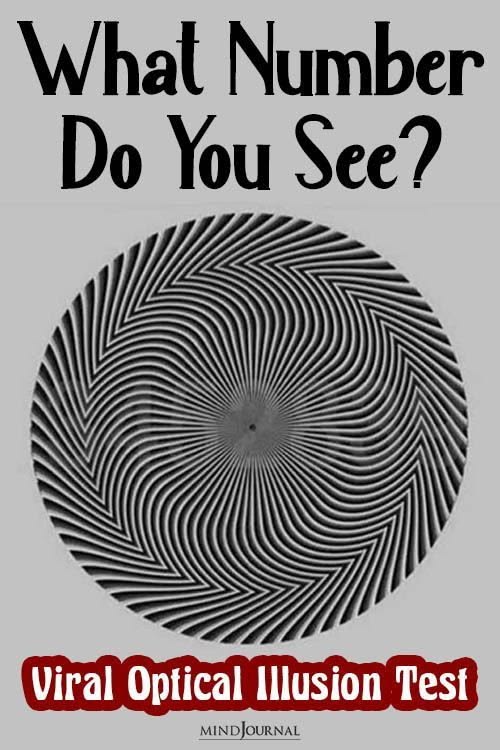
The graphic displays a large circular pattern containing swirling black and white lines. Faintly embedded within the center and edges of the circle is a 7-digit number sequence: 3452839.
Below, we break down why different people see different numbers and examine the science behind visual contrast processing!
Decoding the Image: Which Digits Are Hidden?
Depending on your screen brightness, viewing distance, and visual sensitivity, you might see anywhere from 3 to 7 digits:
1. The Easy Center Digits (528)
-
Most viewers immediately spot the numbers in the center: 528 (or 5283).
-
Why: The central digits are positioned where human focus naturally rests and feature slightly higher visual contrast.
2. The Outer Faint Digits (345…39)
-
Far Left: A faint 34 (or 345) sits near the outer left curve of the circle.
-
Far Right: A faint 39 (or 9) sits near the outer right edge.
-
Full Sequence: Combining all hidden sections reveals the full sequence: 3452839.
Visual Perception Matrix: How Many Digits Did You See?
| Digits Seen | Common Sequence | What It Reveals About Your Vision |
| 3 Digits | 528 |
Standard Contrast Sensitivity: Identifies high-contrast central elements easily. |
| 5 Digits | 45283 |
Above Average Perception: Catches mid-level contrast details expanding outward. |
| 7 Digits | 3452839 |
High Contrast Sensitivity: Detects extremely subtle low-contrast variations across the entire field. |
The Science of Contrast Sensitivity
Why doesn’t everyone see all 7 numbers immediately?
1. Spatial Frequency & Visual Noise
The high-contrast spiral pattern creates visual “noise.” The brain prioritizes sharp, high-contrast lines (the spiral) over low-contrast shading (the hidden numbers), effectively camouflaging the outer digits.
2. Distance and Lighting Dynamics
-
Viewing Angle & Distance: Stepping back from your screen or squinting slightly reduces the high-frequency distraction of the spiral, making the faint grayscale numbers 3452839 far easier to read.
-
Screen Brightness: Higher screen contrast or brightness settings can make the subtle edge numbers pop out.
Conclusion
Whether you caught the central 528 or decoded the full 3452839 sequence, this viral optical illusion demonstrates how dynamic human vision really is. A quick tilt of your screen or a change in viewing distance can completely alter what your eyes perceive!
Frequently Asked Questions (FAQ)
What is the full correct number in the optical illusion?
The complete hidden number sequence inside the circle is 3452839.
Why does squinting help reveal the hidden numbers?
Squinting acts as a natural low-pass filter for your eyes. It blurs out the high-frequency details of the black-and-white spiral, allowing your brain to process the broader, low-contrast outlines of the hidden numbers.