
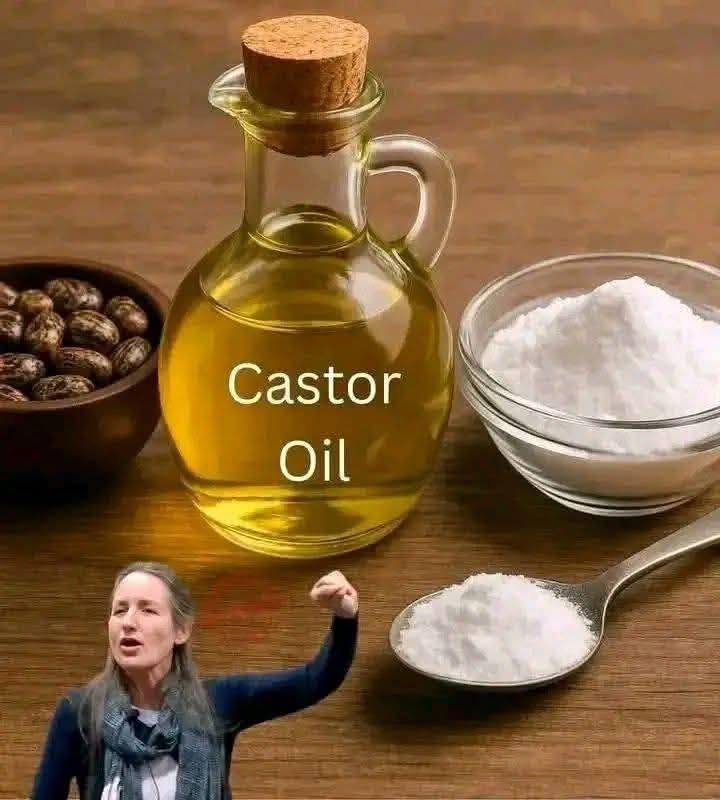


Home remedies combining castor oil and baking soda (sodium bicarbonate) have circulated in natural wellness communities for decades. Castor oil—pressed from castor seeds—is famous for its thick texture and rich ricinoleic acid content, while baking soda is widely used for its gentle physical exfoliating properties.
Together, this mixture is frequently praised online as a DIY remedy for skin texture, dry spots, and localized skin care.
Below, we break down what this combination actually does for the skin, how to use it safely, and important precautions to keep in mind.
Benefits of Castor Oil & Baking Soda for Skin
1. Deep Moisture & Occlusive Barrier
Castor oil is a rich, viscous oil loaded with essential fatty acids. When applied topically, it acts as an occlusive barrier that seals in moisture, making it excellent for softening rough, dry skin on elbows, knees, and heels.
2. Gentle Exfoliation
Baking soda’s fine mineral texture works as a physical exfoliant. When mixed into a paste with castor oil, it helps buff away dead skin cells, leaving skin feeling smoother and renewed.
3. Soothing Properties
Ricinoleic acid, the primary fatty acid in castor oil, possesses natural anti-inflammatory properties that can help soothe surface redness and skin dryness when used appropriately.
How to Prepare a Safe DIY Paste
Ingredients:
-
1 tbsp cold-pressed, organic castor oil
-
1/2 tbsp baking soda
Directions:
-
In a small glass bowl, mix the castor oil and baking soda until a thick, smooth paste forms.
-
Apply a small amount gently to target areas (such as dry elbows, heels, or rough patches).
-
Massaging softly in circular motions for 1 to 2 minutes.
-
Rinse thoroughly with warm water and pat dry.
3 Important Precautions for Facial & Sensitive Skin
-
Perform a Patch Test: Both castor oil and baking soda can cause contact dermatitis or irritation on sensitive skin. Always test a small patch on your inner arm 24 hours before broader application.
-
Be Cautious with Facial Skin: Baking soda is alkaline (pH ~9), which can disrupt the skin’s natural acidic pH mantle if overused, potentially leading to dryness or irritation. It is best used on body skin rather than delicate facial skin.
-
Avoid Open Wounds: Never apply DIY pastes over broken skin, open cuts, or active infections.
Conclusion
Combining castor oil with baking soda offers an affordable, natural way to exfoliate and deeply moisturize rough body skin! Approaching home remedies with balanced expectations ensures you get the best skin-smoothing benefits safely.
Frequently Asked Questions (FAQ)
Can I leave castor oil and baking soda on overnight?
It’s generally best to use this mixture as a rinse-off scrub (5 to 10 minutes maximum). Leaving baking soda on skin for extended periods can cause dryness or pH imbalance.
How often should I use a baking soda and castor oil scrub?
Limit use to 1 to 2 times a week to avoid over-exfoliating your skin.