

Which Is Not a Vegetable? The Science Behind Tomato, Carrot, Potato, and Spinach
Food trivia and plant science puzzles are constantly circulating on social media, sparking fun debates in comment sections.
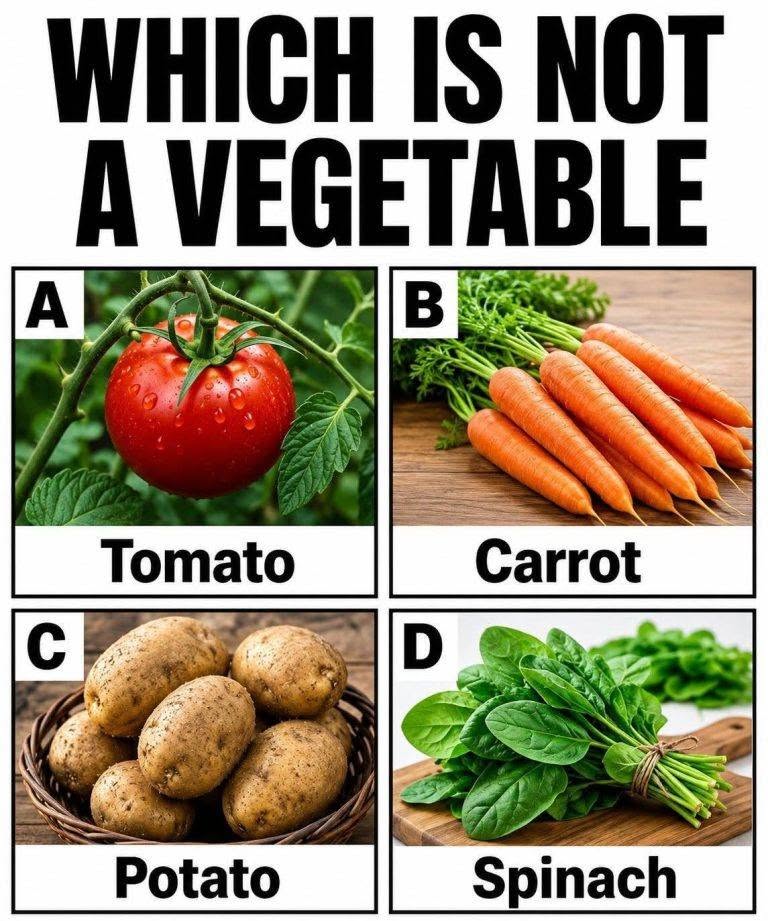
In this viral image challenge, four common produce items are presented in a 2×2 grid below the prompt: “WHICH IS NOT A VEGETABLE”
-
A: Tomato
-
B: Carrot
-
C: Potato
-
D: Spinach
While all four items are treated as culinary vegetables in kitchen recipes, botanically speaking, Option A (Tomato) is actually a fruit!
Below, we break down the scientific differences between fruits and vegetables, examine each of the four items, and clarify why the tomato stands apart.
The Botanical Definition: Fruit vs. Vegetable
To understand why a tomato isn’t a true botanical vegetable, it helps to look at plant anatomy:
-
Botanical Fruits: Fleshy, seed-bearing structures that develop from the ovary of a flowering plant after pollination.
-
Botanical Vegetables: Any other edible part of a plant, including roots, stems, tubers, bulbs, leaves, and flower buds.
Item-by-Item Scientific Breakdown
Let’s look at each option from the graphic through a scientific lens:
A. Tomato (Fruit)
-
Plant Structure: Develops from the yellow blossom of the tomato vine (Solanum lycopersicum) and houses seeds within its fleshy interior.
-
Botanical Classification: Fleshy berry.
-
Verdict: NOT a botanical vegetable.
B. Carrot (Vegetable)
-
Plant Structure: The taproot of the plant (Daucus carota).
-
Botanical Classification: Root vegetable.
-
Verdict: True botanical vegetable.
C. Potato (Vegetable)
-
Plant Structure: Starch-storing underground stem tissue (tubers) of Solanum tuberosum.
-
Botanical Classification: Tuber vegetable.
-
Verdict: True botanical vegetable.
D. Spinach (Vegetable)
-
Plant Structure: The edible leaves of the plant Spinacia oleracea.
-
Botanical Classification: Leafy green vegetable.
-
Verdict: True botanical vegetable.
Quick Comparison Table
| Option | Item Name | Edible Plant Part | Botanical Category | Culinary Category |
| A | Tomato | Seed-bearing ovary | Fruit (Berry) | Vegetable |
| B | Carrot | Taproot | Vegetable (Root) | Vegetable |
| C | Potato | Underground stem (Tuber) | Vegetable (Tuber) | Vegetable |
| D | Spinach | Leaf tissue | Vegetable (Leafy Green) | Vegetable |
Conclusion
The correct answer to the riddle is A: Tomato! While chefs, nutritionists, and grocers classify tomatoes as vegetables based on flavor profile and culinary use, plant science strictly categorizes them as botanical fruits.
Frequently Asked Questions (FAQ)
Are potatoes and carrots true vegetables?
Yes! Carrots are roots and potatoes are stem tubers. Neither develops from a flower blossom nor contains seeds inside, making them genuine botanical vegetables.
What other “vegetables” are actually fruits?
Cucumbers, bell peppers, eggplants, zucchini, pumpkins, and avocados are all seed-bearing plant outputs, meaning they are all botanically classified as fruits!