


What Single Word Describes an Unmarried Woman Living Alone?
Prompts asking readers to summarize complex lifestyle choices in a single word frequently generate high engagement across social media. They tap into cultural norms, evolving linguistic definitions, and personal views on independence versus traditional relationship structures.
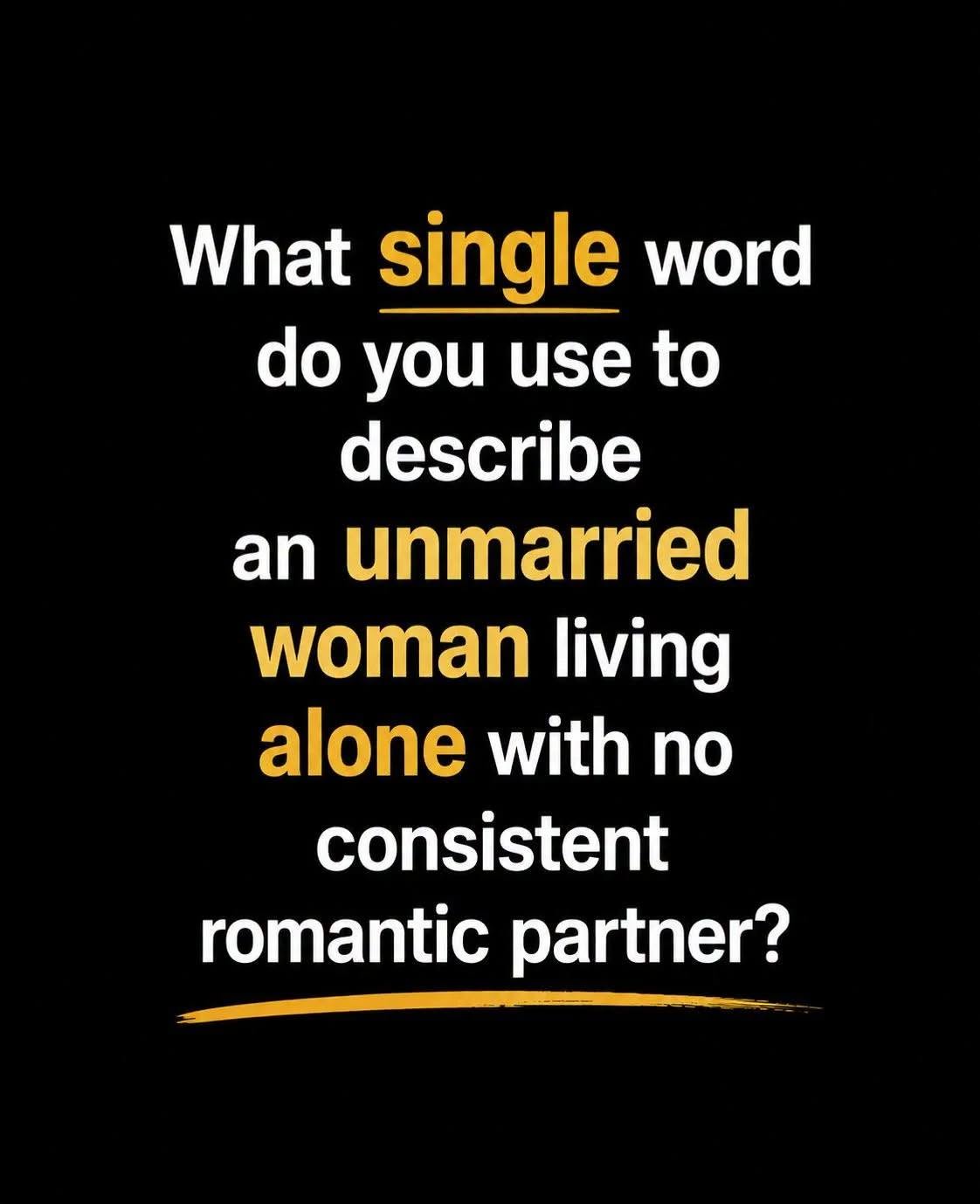
A viral graphic poses the question:
“What single word do you use to describe an unmarried woman living alone with no consistent romantic partner?”
While standard legal definitions offer plain terms like Single, the cultural terms used to describe independent women have shifted dramatically over time.
Below, we break down the historical, modern, and psychological terms used to answer this prompt!
The Evolution of Terms: Past vs. Present
1. Traditional & Legal Terms
-
Single: The standard, neutral legal status for any person not currently married.
-
Unmarried: A straightforward descriptive term indicating civil status.
-
Spinster: Historically used in legal documents and census data to refer to an unmarried woman past typical marrying age. Today, it is largely considered dated or pejorative, though occasionally reclaimed.
-
Bachelorette: The female equivalent of “bachelor,” traditionally referring to an unmarried woman pursuing her career or social life.
2. Empowering & Modern Terms
-
Independent: Focuses on self-reliance, financial autonomy, and personal capability.
-
Free / Autonomous: Highlights the liberty to make personal choices without needing to consult a partner.
-
Thriving: Emphasizes personal growth, happiness, and fulfillment regardless of relationship status.
-
Self-Partnered: A modern term popularized in recent years to describe being complete and content in one’s own company.
Linguistic Categorization Matrix
| Word Category | Example Words | Cultural Connotation |
| Legal / Neutral | Single, Unmarried | Neutral, objective administrative status |
| Historical / Dated | Spinster, Maiden | Traditional, often negatively skewed in past eras |
| Modern / Lifestyle | Bachelorette, Solo | Active, lifestyle-focused |
| Empowerment | Independent, Free, Thriving | Positive, self-reliant, autonomous |
Why This Question Triggers Strong Responses
-
Shifting Societal Norms: Historically, living independently as an unmarried woman carried social pressure. Modern culture increasingly views solo living as a choice aligned with freedom, self-discovery, and personal growth.
-
The Power of Language: Words shape perception. Moving from dated labels to empowering terms reflects broader cultural shifts toward valuing individual autonomy over marital status.
Conclusion
Whether described objectively as Single, traditionally as a Bachelorette, or modernly as Independent, the choice of words reflects how modern society views personal freedom and lifestyle independence.
Frequently Asked Questions (FAQ)
What is the original historical meaning of the word “spinster”?
Originally, in the late Middle Ages, a “spinster” simply referred to a woman whose occupation was spinning wool or thread. Because it provided independent income, many spinning women remained unmarried, eventually causing the job title to become a legal term for unmarried women.
What is the male equivalent of a bachelorette?
The male equivalent is a bachelor, traditionally referring to an unmarried man living independently.