


What Does NOT Go on a Burger? The Great Topping Debate
Burger customization is a serious business, and food lovers are always ready to defend their ultimate burger build.
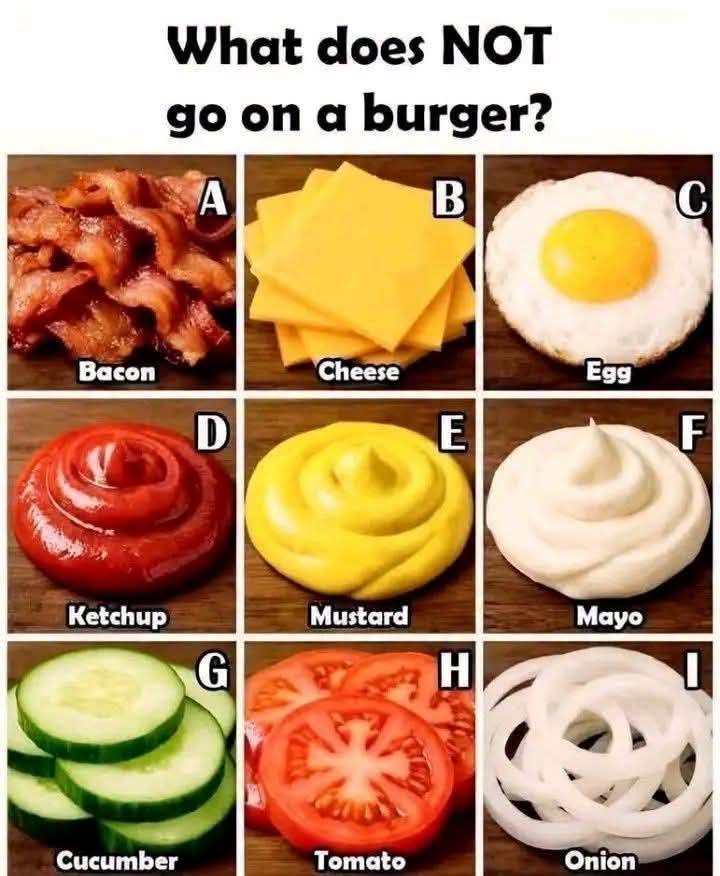
In this viral 3×3 grid graphic, nine popular burger toppings and condiments are presented under a simple question: “What does NOT go on a burger?”
-
A: Bacon
-
B: Cheese
-
C: Egg
-
D: Ketchup
-
E: Mustard
-
F: Mayo
-
G: Cucumber
-
H: Tomato
-
I: Onion
While most options on this list are beloved staples in kitchens worldwide, G (Cucumber) is almost universally identified by burger purists as the main culprit that doesn’t belong—at least in its unpickled form!
Below, we break down why raw cucumber stands out, explore the controversy around fried eggs and condiments, and rank these classic toppings.
Why Cucumber (G) Sparks the Biggest Debate
While pickles (pickled cucumbers) are a staple across almost every major fast-food chain and gourmet burger joint, raw fresh cucumber slices rarely make an appearance on a classic beef burger:
-
Moisture Content: Raw cucumbers release a high amount of water when warm, which can quickly make the bottom bun soggy.
-
Lack of Acidity: Pickles work on a burger because their vinegary acidity cuts through the heavy, rich fat of the beef patty and melted cheese. Fresh cucumbers lack that sharp acidity.
-
Textural Mismatch: While fresh cucumbers offer a great crunch in Mediterranean dishes or salads, their mild flavor gets completely overwhelmed by grilled beef and heavy sauces.
Breakdown of the 9 Toppings
The Undisputed Classics
-
A (Bacon): Adds smoky flavor and crisp texture that pairs seamlessly with beef.
-
B (Cheese): A fundamental element that transforms a standard burger into an iconic cheeseburger.
-
H (Tomato) & I (Onion): Provide freshness, sharpness, and crunch to balance the savory patty.
The Condiment Trio
-
D (Ketchup), E (Mustard), F (Mayo): The classic “Holy Trinity” of burger spreads. While some regional styles prefer mustard over ketchup (or vice versa), all three are universally accepted burger sauces.
The Wildcards
-
C (Egg): A fried egg with a runny yolk creates a rich, decadent sauce over the patty—a huge favorite in brunch burgers and Aussie-style burgers!
-
G (Cucumber): Typically substituted for pickles; while refreshing in salads, it is the least common traditional burger topping on the grid.
Burger Topping Comparison Table
| Letter | Topping | Classic Status | Main Flavor / Function |
| A | Bacon | Classic | Smoky, salty, crispy texture |
| B | Cheese | Essential | Creamy, savory melt |
| C | Egg | Modern / Specialty | Rich, runny yolk sauce |
| D | Ketchup | Classic Spread | Sweet & tangy balance |
| E | Mustard | Classic Spread | Sharp, zesty bite |
| F | Mayo | Classic Spread | Rich, creamy moisture barrier |
| G | Cucumber | Unconventional | Mild crunch (lacks pickle acidity) |
| H | Tomato | Classic | Fresh, juicy acidity |
| I | Onion | Classic | Pungent crunch or caramelized sweetness |
Conclusion
Whether you love a runny fried egg on your breakfast burger or stick strictly to simple cheese and bacon, food preferences are all about personal taste! However, if you’re looking for that essential crunch, swapping raw cucumber (G) for dill pickles is usually the safest bet for maximum flavor.
Frequently Asked Questions (FAQ)
Why do pickles go on burgers, but raw cucumbers usually don’t?
Pickles undergo a curing process in vinegar and brine. This high acidity cuts through the richness and fat of the beef patty, whereas fresh cucumber lacks the acidity required to balance heavy flavors.
What is a “brunch burger”?
A brunch burger typically features classic breakfast ingredients added to a standard beef patty, most notably a fried egg, bacon, and sometimes hash browns or maple syrup glaze.