


What Do You Call an Unmarried Woman Living Alone? Origins, Etymology, and Modern Perspectives
Language evolves alongside societal norms. For centuries, social labels were attached to adults based strictly on their marital status and living arrangements. Today, however, the vocabulary used to describe an unmarried woman living independently reflects a blend of historical terms, modern empowering descriptions, and evolving social values.
Whether exploring traditional terminology or contemporary vocabulary, the words we use reveal how cultural views on singlehood have shifted over time.
Below, we examine the origins of traditional terms, modern lifestyle labels, and how society’s view of living independently continues to change!
1. Traditional & Historical Terms
Historically, marital status was tied directly to legal, social, and economic standing. As a result, specific single-word terms emerged in the English language to classify unmarried women:
-
Single / Unmarried: The most neutral and straightforward legal and demographic descriptor used today.
-
Spinster: Originally a medieval occupational term for a woman who spun wool, “spinster” eventually became a legal term for an unmarried woman. Over time, it developed a negative social connotation.
-
Bachelorette: Adapted in the mid-20th century as the female equivalent of “bachelor,” signaling an independent woman enjoying single life.
-
Maiden: An archaic term traditionally referring to a young, unmarried woman.
2. Modern & Empowering Descriptors
In contemporary culture, single-word descriptors often focus on personal choice, freedom, and self-reliance rather than marital status alone:
-
Independent: Emphasizes self-sufficiency, personal ambition, and financial autonomy.
-
Peaceful: Highlights the quiet, stress-free lifestyle often associated with living solo without domestic friction.
-
Unbothered: A popular modern colloquial term describing someone who is content with their life and indifferent to societal pressure to marry.
-
Solitary: A descriptive term focusing simply on the state of living alone by choice or circumstance.
Word Comparison Overview
| Term | Historical Context | Modern Connotation | Tone |
| Single | Neutral legal status | Standard demographic term | Neutral |
| Spinster | Medieval textile occupation | Dated; often viewed critically | Negative / Archaic |
| Bachelorette | Mid-20th century response | Fun, social, lifestyle-focused | Positive |
| Independent | Late 20th century shift | Focuses on strength and autonomy | High Positive |
| Solo | Modern lifestyle usage | Simple, modern, and self-directed | Neutral / Positive |
The Shift Toward “Single by Choice” Culture
Demographic trends around the globe show significant increases in single-person households. Modern social research indicates that living alone is increasingly viewed not as a waiting period before marriage, but as a fulfilling, conscious lifestyle choice that fosters personal growth, career focus, and strong community friendships.
Conclusion
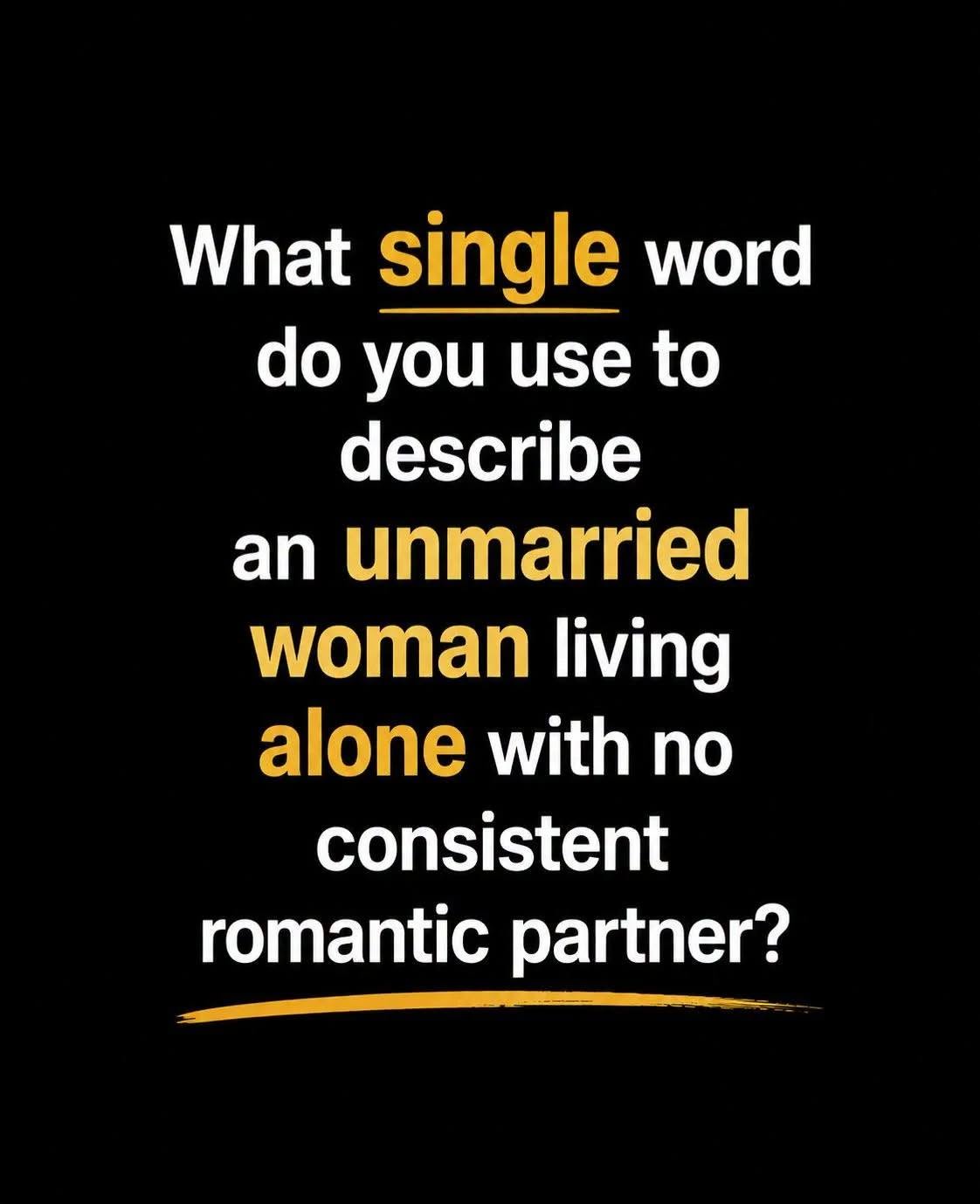
Language reflects culture. While older terms like “spinster” carried heavy social stereotypes in previous centuries, today’s vocabulary embraces concepts like autonomy, peace, and independence. What single word do you feel fits best today?
Frequently Asked Questions (FAQ)
What is the female equivalent of “bachelor”?
Historically, terms like “spinster” or “bachelorette” were used. Today, “bachelorette” or simply “single” are the most common neutral equivalents for a woman.
Where did the word “spinster” originate?
The term originated in the Middle Ages to describe women who spun thread or yarn for a living. Because spinning was a reliable source of independent income, many spinsters remained unmarried, leading to the term’s eventual association with marital status!