


Few kitchen dilemmas are as common as finding an undated carton of eggs in the back of the refrigerator. Luckily, you don’t need to crack them open—and risk a foul smell in your kitchen—to determine their freshness.
The egg float test is a simple, science-based method that reveals an egg’s age in seconds using just a glass of plain water.
Below, we break down how the float test works, what each position in the glass means, and best practices for testing egg safety.
How the Egg Float Test Works: The Science Behind It
Eggshells are naturally porous, containing thousands of microscopic pores that allow moisture and gas exchange during incubation.
Over time, two main changes happen inside an egg as it ages:
-
Moisture Evaporation: Liquid inside the egg slowly evaporates through the porous shell.
-
Air Pocket Growth: As liquid leaves, air enters, causing the natural air pocket (air cell) at the wider end of the egg to expand.
As the air pocket grows larger, the egg becomes less dense. Eventually, the buoyancy provided by the enlarged air pocket counteracts the egg’s weight, causing older eggs to float in water.
What the Glass Positions Mean
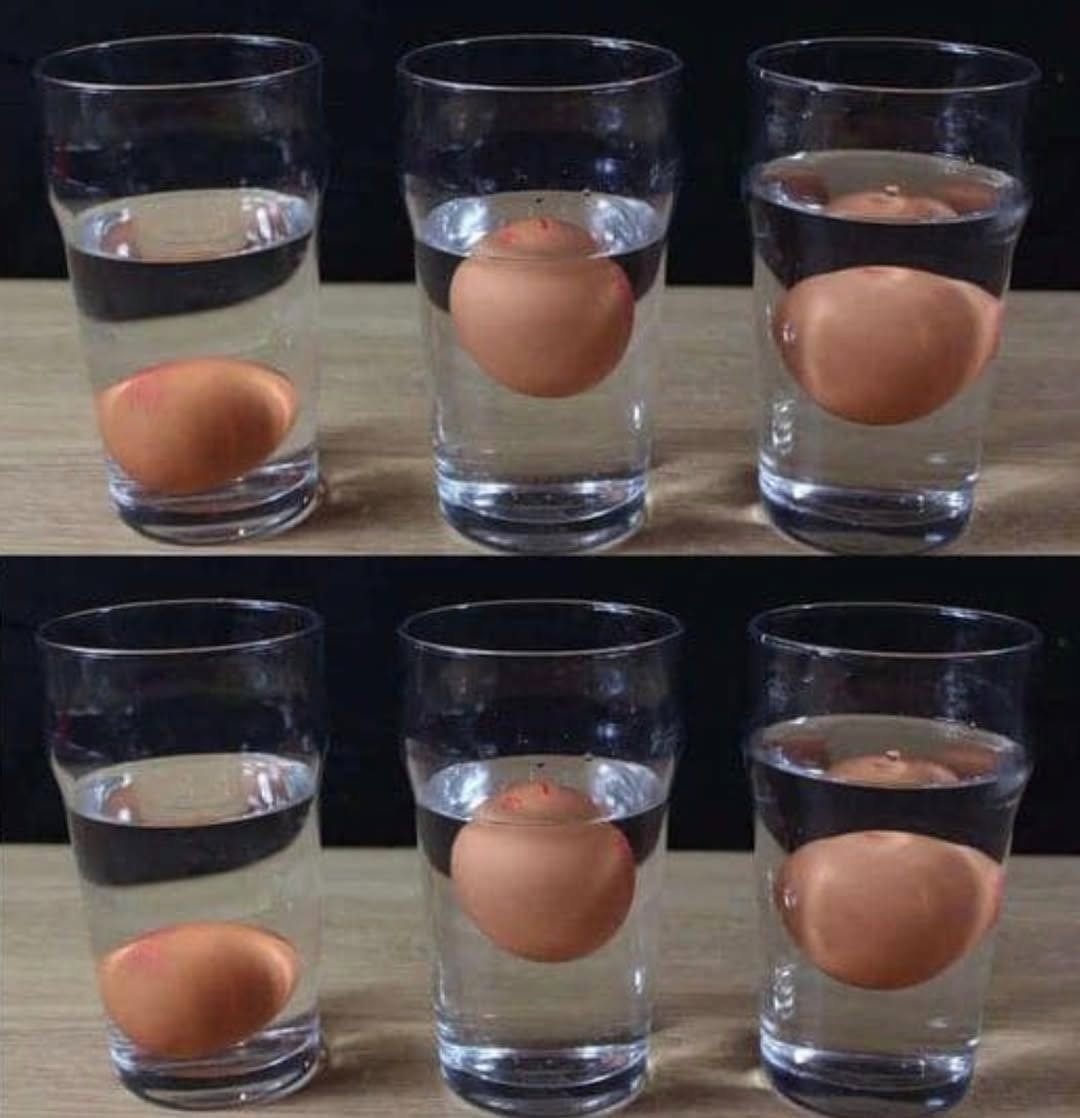
When you lower a raw egg into a deep glass of cold tap water, observe its position:
1. Sinks Flat to the Bottom (Fresh)
-
The Look: The egg sits completely horizontal at the bottom of the glass.
-
Freshness Level: Very fresh! The air cell is tiny, and moisture levels are high.
-
Best Uses: Poaching, frying, or baking, where firm egg whites and intact yolks are ideal.
2. Stands Upright on the Bottom or Suspends Midway (Slightly Older)
-
The Look: The egg rests on the bottom with its pointed end down and wider end pointing up, or hovers near the middle.
-
Freshness Level: Slightly older (typically 2 to 3 weeks past laying), but still completely safe and good to eat.
-
Best Uses: Hard-boiling! Older eggs are actually much easier to peel because the larger air cell helps separate the membrane from the shell.
3. Floats to the Top Surface (Old)
-
The Look: The egg rises to the top and floats on the surface of the water.
-
Freshness Level: Very old. A large air pocket has formed inside the shell.
-
What to Do: Floating indicates age, but not necessarily spoilage. Before using a floating egg, crack it into a separate bowl to inspect for off-odors, discoloration, or liquid consistency.
Other Reliable Ways to Test Egg Freshness
While the float test measures age, other sensory checks ensure food safety:
-
The Sniff Test: The most definitive test for spoilage. Fresh eggs have a neutral smell, whereas spoiled eggs emit an unmistakable, sharp sulfur odor immediately upon cracking.
-
Visual Plate Test: Crack the egg onto a flat plate. A fresh egg has a tall, rounded yolk surrounded by thick, tight egg whites. An older egg has a flat yolk and thin, spread-out egg whites.
-
The Shake Test: Hold the egg to your ear and shake gently. A fresh egg makes no sound, while an older egg may produce a faint sloshing sound due to the larger air pocket.
Practical Egg Storage Tips
To keep eggs fresh for as long as possible:
-
Keep in Original Carton: Store eggs in their original paper carton to prevent them from absorbing strong odors from other foods in your fridge.
-
Avoid the Fridge Door: Store eggs on an inner shelf where temperature remains consistently cold ($40^\circ\text{F}$ or below), rather than in the door where temperature fluctuates.
-
Store Pointy Side Down: Storing eggs with the pointed end down keeps the air pocket at the top, helping keep the yolk centered and fresh longer.
Fascinating Facts About Eggs
-
Natural Protective Coating: Freshly laid eggs feature a natural protective layer called the “bloom” or cuticle, which seals shell pores against bacteria and moisture loss.
-
Easier Hard-Boiled Peeling: Fresh eggs are harder to peel when hard-boiled because the inner shell membrane clings tightly to the shell in a low-acid, low-air environment.
Conclusion
The float test is a quick, reliable way to check egg age before cooking. By understanding how moisture loss impacts buoyancy, you can easily choose the freshest eggs for frying, make the best hard-boiled eggs, and eliminate food waste in your kitchen.
Frequently Asked Questions (FAQ)
Does a floating egg always mean it’s spoiled?
Not necessarily! Floating indicates that the egg is old due to an expanded air pocket. It is only spoiled if it has an off-odor, unusual color, or bacterial growth when cracked open.
Should I wash eggs before doing the float test?
Dry any tested eggs thoroughly if returning them to the fridge, as excess moisture on unwashed eggs can encourage bacterial growth on the shell.
How long do raw eggs last in the refrigerator?
Raw shell eggs typically remain fresh and safe to eat for 3 to 5 weeks past the pack date when kept continuously refrigerated at $40^\circ\text{F}$ or below.