
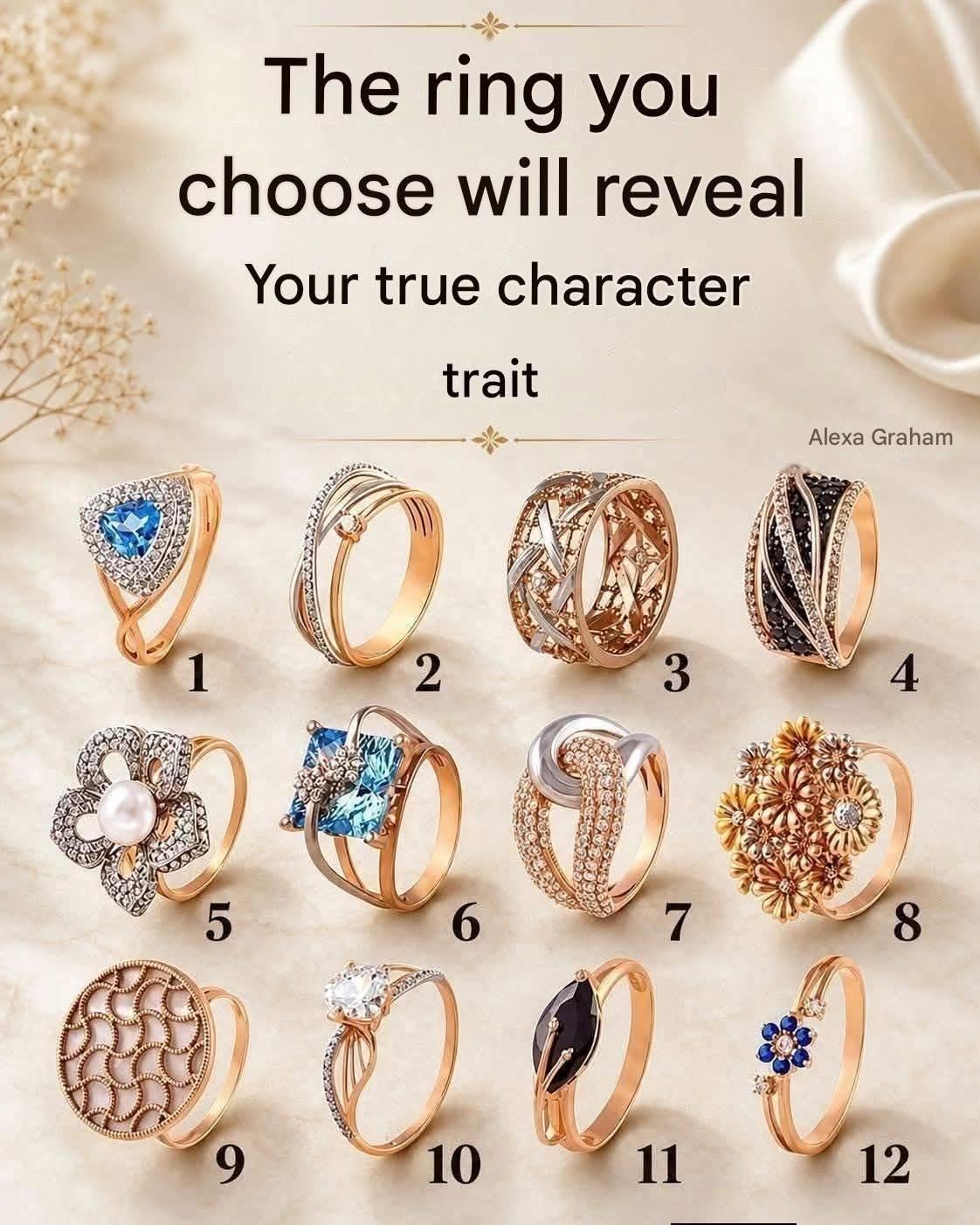

Ring 8 (Joyful & Expressive): A vibrant bouquet of golden floral motifs matches an optimistic, energetic personality who naturally brightens any room.Ring 9 (Methodical & Grounded): A structured geometric pattern inside a circular disc demonstrates a love for symmetry, order, and logical organization.Ring 10 (Sincere & Intentional): A classic solitaire design highlights an honest, direct communicator who values deep trust and clarity in relationships.Ring 11 (Selective & Refined): A sleek marquise cut with a dark focal stone points to a strong, discerning individual who keeps a close inner circle and demands high quality in all things.Ring 12 (Creative & Gentle): Delicate floral detailing with blue stone accents reveals a romantic, artful spirit who notices subtle beauty and thinks outside the box.Deconstructing the Psychology: Why Visual Choice Quizzes WorkUnderstanding why visual selection tests feel surprisingly accurate helps separate psychological fun from scientific assessment: [ VISUAL TEST PSYCHOLOGY ]
[ THE FORER (BARNUM) EFFECT ] [ AESTHETIC SELF-EXPRESSION ]
• Universal traits framed as personal insights • Jewelry reflects personal aesthetic taste
• Affirming language builds instant resonance • Visual preferences link to lifestyle habits
• Drives user comments and social shares • Fun interactive exercise without scientific claim
1. The Forer (Barnum) EffectUniversally Relatable Traits: Visual personality tests rely on statements that sound highly specific but apply to almost everyone (e.g., “you value trust,” “you adapt well under pressure”). This optical illusion of personality profiling makes the result feel custom-tailored.Positive Confirmation Bias: Because the descriptions focus on affirming, positive character traits, viewers naturally identify with the traits and validate the assessment.2. Style as an Extension of SelfAesthetic Psychology: While a ring choice cannot predict your entire character, design preferences do mirror real personality nuances. Someone drawn to minimalist solitaire settings often prefers uncluttered, straightforward environments, whereas someone drawn to detailed lattice work often enjoys rich texture and complexity.