

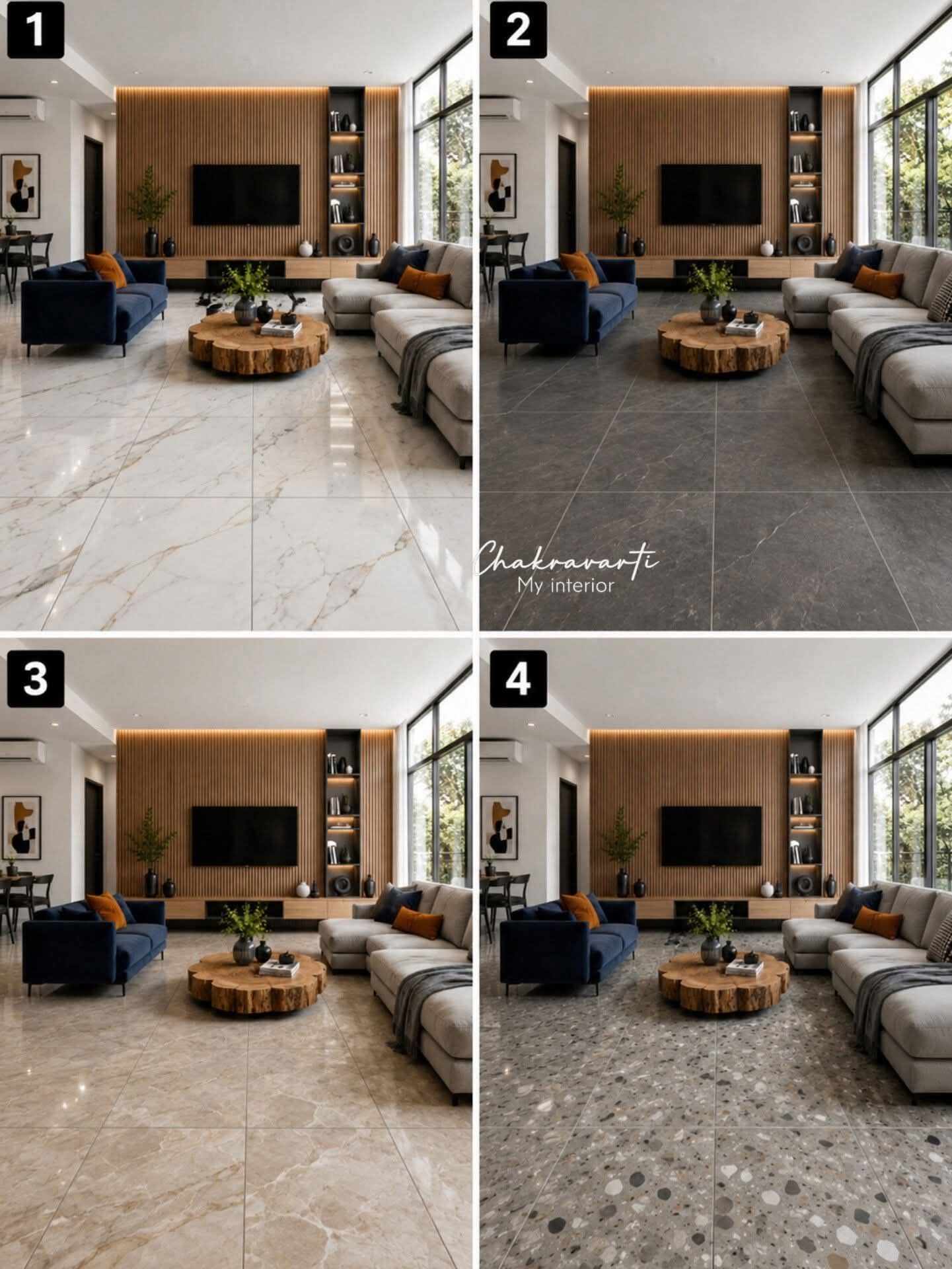


Flooring is the single largest visual element in any living room layout. It sets the tonal foundation for your furniture, amplifies or absorbs natural light, and establishes the overall mood of your home interior. Whether you are building a new space or renovating a living room, choosing between polished marble, moody dark stone, warm travertine, or playful terrazzo can completely redefine the room’s character.
When evaluating tile options, interior designers look at light reflectance, maintenance, color contrast with furniture, and spatial dynamics.
Below, we break down the four distinct flooring designs featured in the comparison image, evaluate their practical advantages, and share expert interior design tips for selecting the ideal floor for your home.
Comparing the 4 Living Room Tile Designs
Each of the four tiles completely shifts how the room’s elements—such as the wood slatted accent wall, navy velvet accent armchair, and light grey sectional—interact with one another:
Option 1: Polished White Calacatta Marble-Look Porcelain
-
The Look: Bright, high-gloss white porcelain featuring subtle warm gold and grey marble veining.
-
Best For: Creating an airy, luxurious, and ultra-spacious feel.
-
Design Impact: Reflects natural sunlight throughout the room, making the ceilings feel higher and highlighting the contrast of the dark navy armchair and warm wood coffee table.
Option 2: Matte Charcoal Grey Stone-Look Tiles
-
The Look: Deep, sophisticated matte charcoal stone with delicate white micro-veining.
-
Best For: Modern industrial, moody contemporary, or hotel-suite aesthetic interiors.
-
Design Impact: Grounds the room with dramatic contrast, allowing the warm wood slats and orange accent pillows to pop vibrantly against the moody dark floor.
Option 3: Warm Polish Beige/Travertine Tiles
-
The Look: Rich, warm beige marble-look tiles with soft cream and bronze undertones.
-
Best For: Japandi, organic modern, or warm minimalist living room designs.
-
Design Impact: Harmonizes seamlessly with the natural wood media wall and raw edge coffee table, creating a cohesive, cozy, and inviting earth-toned environment.
Option 4: Contemporary Grey Terrazzo Tiles
-
The Look: Matte light grey base embedded with multi-toned stone aggregate chips.
-
Best For: Mid-century modern, eclectic, or contemporary artistic spaces.
-
Design Impact: Adds rich visual texture and playful character to the floor without overwhelming the room’s clean geometric architectural lines.
Key Factors to Consider When Selecting Living Room Flooring
Before committing to a specific tile finish, consider how everyday living impacts your choice:
1. Light Reflectance and Room Size
-
High-Gloss Light Tiles (Options 1 & 3): Bounce light across the space, making smaller or dimly lit rooms feel brighter and more open.
-
Matte Dark Tiles (Option 2): Absorb light, creating an intimate, cozy atmosphere that works exceptionally well in larger open-plan spaces with ample natural light.
2. Maintenance and Everyday Wear
-
Polished Finishes: Beautiful and easy to wipe down, but can show water spots or dust under direct lighting.
-
Textured or Patterned Tiles (Option 4): Terrazzo patterns are famously forgiving, naturally concealing everyday dust, lint, and footprints between routine cleanings.
3. Complementing Furniture and Wood Tones
-
Ensure your flooring choice offers proper contrast with your furniture legs and cabinetry. If your floors match your wood furniture too closely, the furniture can visually blend into the ground.
Practical Interior Design Tips for Tile Living Rooms
-
Incorporate Area Rugs: Soften large expanses of tile by layering plush area rugs under seating arrangements to define conversational zones and add acoustic warmth.
-
Opt for Minimal Grout Lines: Choose rectified-edge porcelain tiles and match the grout color closely to the tile shade for a seamless, continuous slab appearance.
-
Consider Underfloor Heating: In cooler climates, pair porcelain or ceramic floor tiles with radiant underfloor heating for luxurious warmth underfoot during winter months.
Fascinating Facts About Living Room Flooring
-
The Return of Terrazzo: Originally created by 15th-century Venetian marble workers recycling leftover stone fragments, modern porcelain terrazzo captures this classic aesthetic with incredible durability.
-
Durability of Porcelain: High-grade porcelain tiles have a water absorption rate of less than 0.5%, making them virtually immune to domestic stains, scratches, and moisture absorption.
Conclusion
Every flooring option brings a unique mood to a home: polished white marble adds timeless luxury, charcoal grey delivers bold modern drama, warm travertine offers cozy organic comfort, and terrazzo introduces vibrant artistic flair. By pairing your personal style with practical light and maintenance considerations, you can create a living room space that feels balanced, welcoming, and beautifully designed.
Frequently Asked Questions (FAQ)
Which tile color makes a small living room look bigger?
Light colors—such as white, cream, or light grey with a polished or glossy finish—reflect the most light and make small living rooms feel significantly larger and airier.
Is terrazzo flooring hard to maintain?
Modern terrazzo-look porcelain tiles are extremely low-maintenance, stain-resistant, and scratch-resistant, requiring only simple sweeping and damp mopping.
Should living room tiles be shiny or matte?
Polished (shiny) tiles reflect light and feel elegant, whereas matte tiles offer better slip resistance, feel more natural underfoot, and conceal smudges and minor dust better.