

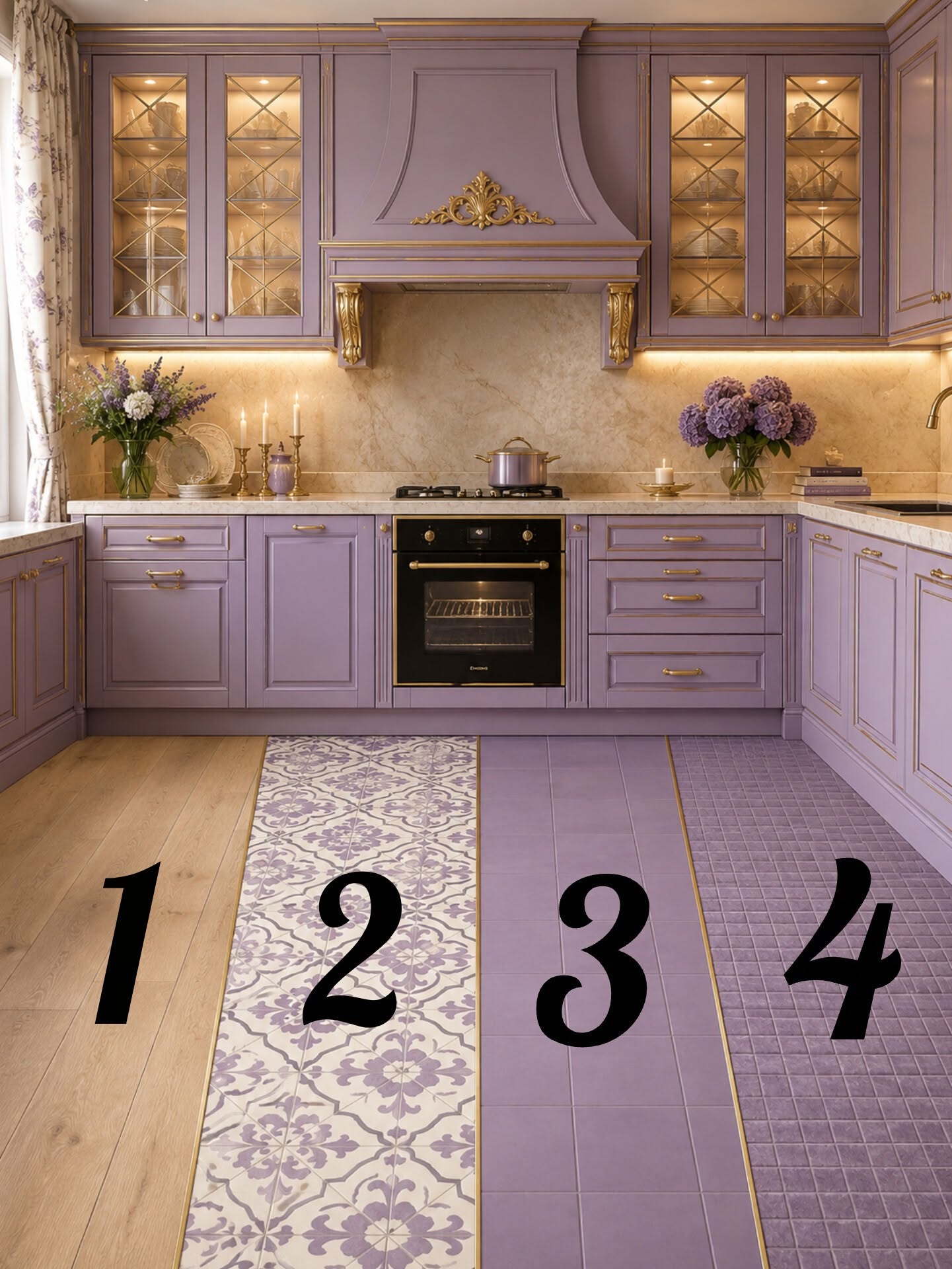


Designing a kitchen around distinct, colorful cabinetry—such as muted lavender, soft lilac, or dusty violet—is one of the most expressive ways to elevate home interiors. However, choosing the right flooring option to complement bold cabinet tones requires balancing color harmony, pattern scale, and long-term functionality.
Whether you prefer natural wood warm tones, ornate floral tiles, monochromatic solid shades, or subtle micro-mosaics, the floor serves as the visual anchor that holds the entire room together.
Below, we break down the four distinct flooring concepts featured in the comparison image, evaluate their aesthetic impact, and share practical design tips for creating a cohesive kitchen environment.
Comparing the 4 Kitchen Flooring Options
Each flooring style completely transforms the mood and character of this classical lavender kitchen:
Option 1: Natural Light Oak Wood Planks
-
The Look: Warm, neutral natural oak wood planks featuring soft grain movement.
-
Best For: French country, classic provincial, or warm traditional kitchens.
-
Design Impact: Introduces essential natural warmth that balances cool purple tones, making the space feel cozy, timeless, and grounded.
Option 2: Ornate Lilac & Cream Patterned Encaustic Tiles
-
The Look: Elaborate vintage-inspired tile patterns combining soft purple scrollwork with creamy off-white backgrounds.
-
Best For: Mediterranean, Victorian, or romantic old-world kitchen designs.
-
Design Impact: Creates a stunning focal point, adding artistic character and historical charm that echoes the brass decorative trim and glass-front upper cabinets.
Option 3: Solid Muted Purple Square Tiles
-
The Look: Clean, mid-format square ceramic tiles in a solid, muted lavender shade separated by subtle grout lines.
-
Best For: Monochromatic, contemporary classic, or modern retro aesthetics.
-
Design Impact: Extends the cabinet color seamlessly onto the floor plane, creating a dramatic, unified color block that emphasizes sleek continuity.
Option 4: Fine Purple Mosaic Grid Tiles
-
The Look: Small-scale, textured square mosaic tiles featuring subtle tonal variations in lavender and plum.
-
Best For: Textural modern, artisanal, or Parisian-inspired culinary spaces.
-
Design Impact: Provides rich micro-texture underfoot, adding depth and tactile interest without competing visually with larger architectural details.
Key Factors to Consider When Flooring a Kitchen
Selecting kitchen flooring involves evaluating daily kitchen traffic, spill resistance, and visual scale:
1. Color Contrast vs. Monochromatic Harmony
-
Contrasting Floors (Option 1): Neutral ground materials—such as light oak, warm limestone, or soft cream porcelain—prevent colorful cabinets from overpowering the room.
-
Monochromatic Floors (Options 3 & 4): Matching floor tones create an immersive color story, but benefit from textured surfaces or metallic brass transitions to avoid visual monotony.
2. Maintenance and Grout Care
-
Large Planks & Tiles (Options 1 & 3): Fewer seams mean easier daily sweeping and effortless mopping, ideal for high-traffic cooking areas.
-
Small Mosaic & Patterned Tiles (Options 2 & 4): Small mosaic tiles feature a higher proportion of grout lines. Selecting stain-resistant epoxy grout ensures long-term cleanliness in splash-prone areas.
Practical Styling Tips for Lavender and Pastel Kitchens
-
Incorporate Warm Metallic Accents: Pair soft purple cabinets with brushed brass or antique gold cabinet hardware, faucet fixtures, and decorative brackets to create a luxurious, warm finish.
-
Balance with Neutral Countertops: Use warm beige marble, taj mahal quartzite, or creamy limestone backsplashes to bridge the gap between floor and cabinet tones.
-
Layer Soft Under-Cabinet Lighting: Warm 2700K–3000K LED task lighting underneath upper cabinetry highlights subtle tile patterns and enhances the richness of custom paint finishes.
Fascinating Facts About Kitchen Design History
-
The Psychology of Purple: Historically associated with royalty and artisan luxury due to the rarity of natural purple dyes, muted lavenders and lilacs have made a major resurgence in modern boutique kitchen design.
-
Encaustic Tile Heritage: Traditional patterned tiles (Option 2) date back to the Middle Ages, where colors were created using different clays inlaid directly into the tile body rather than painted on the surface glaze.
Conclusion
Whether you prefer the natural grounding warmth of light oak, the artistic elegance of patterned tiles, or the bold statement of monochromatic ceramics, your choice of flooring establishes the core tone of your kitchen. By pairing cabinet colors with thoughtful floor textures and complementary trim, you can build an inviting culinary space that is both functional and beautifully crafted.
Frequently Asked Questions (FAQ)
What floor color goes best with lavender kitchen cabinets?
Natural light oak, warm beige stone, soft cream porcelain, and complementary muted purple tiles work exceptionally well with lavender cabinets.
Are wood floors practical for kitchens?
Engineered hardwood or wood-look porcelain tiles are highly practical for kitchens, offering moisture resistance while providing the timeless aesthetic warmth of natural wood.
How do you keep white or light tile grout clean in a kitchen?
Using stain-impermeable epoxy grout and sealing cement grout lines annually prevents grease and food spills from discoloring kitchen tile seams.