

“It Is Only a Short Trip, Enjoy It”: The Hourglass Metaphor for Life Explained
Inspirational artwork and poignant life quotes resonate deeply across social media platforms. They encourage mindfulness, emotional connection, and self-reflection by pairing simple truths with striking visual symbolism.
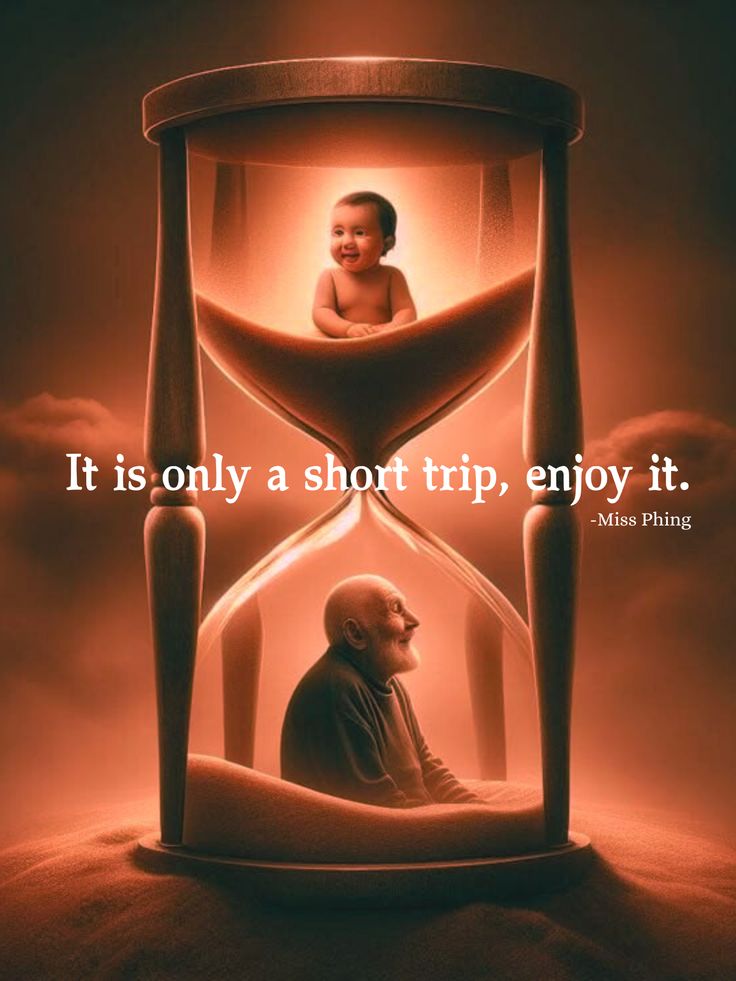
A widely shared piece of artwork depicts an wooden hourglass filled with glowing sand. In the top bulb sits a smiling baby, while in the bottom bulb, an elderly man looks up with a serene expression. Overlaid across the center is a meaningful quote:
“It is only a short trip, enjoy it.”
—Miss Phing
This visual metaphor captures the fleeting nature of human existence, highlighting the transition from youth to old age as time steadily trickles away.
In this guide, we analyze the artistic symbolism of the hourglass image, break down the core philosophy behind the quote, and explore practical ways to embrace mindfulness daily.
Deconstructing the Hourglass Symbolism
The image uses classic artistic motifs to illustrate the passage of time:
                    [ LIFESPAN HOURGLASS METAPHOR ]
                                   |
      -----------------------------------------------------------
     |                                                           |
 [ TOP BULB: YOUTH & BEGINNINGS ]              [ BOTTOM BULB: AGE & WISDOM ]
 • Smiling baby sitting atop sand             • Elderly man resting in settled sand
 • Represents innocence, birth & potential     • Represents experience, reflection & memories
 • Sand yet to fall (Future ahead)            • Accumulated sand (Time lived)
Key Visual Elements:
-
The Baby in the Upper Bulb: Positioned at the top of the glass, the infant represents the beginning of life. The vast mound of sand beneath the baby symbolizes the unspent time and potential that lie ahead.
-
The Narrow Neck: The center point where the sand flows through represents the present moment—the thin slice of time where life actually happens second by second.
-
The Elderly Man in the Lower Bulb: Resting comfortably in the fallen sand at the base, the older man represents the culmination of life’s experiences, wisdom, and peaceful acceptance of time passed.
-
Warm Sepia Tone & Lighting: The soft, amber lighting creates a calm, reflective mood rather than a dark or fearful tone, framing aging as a natural, beautiful progression.
Symbolic Elements Breakdown Table
| Visual Element | Representation | Core Philosophical Meaning |
| Upper Glass Bulb | Infancy & Youth | The abundance of remaining time and potential |
| Trickling Sand | The Present Moment | The relentless, steady movement of time |
| Lower Glass Bulb | Old Age & Maturity | A life filled with accumulated memories and lessons |
| Warm Glowing Palette | Acceptance & Warmth | Viewing the passage of time with appreciation rather than regret |
The Meaning Behind the Quote: “It Is Only a Short Trip, Enjoy It”
The message attributed to Miss Phing encourages a shift in perspective:
-
Perspective on Daily Stress: Most daily anxieties and minor setbacks lose their weight when viewed against the backdrop of an entire lifespan.
-
Cultivating Gratitude: Recognizing that time is finite inspires individuals to cherish current moments—whether spent with family, pursuing passions, or simply appreciating nature.
-
Mindful Living: Rather than rushing toward future goals or dwelling on the past, the quote serves as a gentle nudge to stay present during the “trip.”
How to Apply This Mindset in Daily Life
-
Practice Daily Reflection: Spend a few minutes each evening identifying three small moments you enjoyed or felt grateful for during the day.
-
Prioritize Relationships: Time flies quickly; make intentional space for connecting with loved ones without distraction.
-
Let Go of Small Grievances: Ask yourself if today’s worry will matter in five years. If not, release it to preserve your energy for meaningful experiences.
Conclusion
The message “It is only a short trip, enjoy it” serves as a timeless reminder that life moves quickly from infancy to old age. By viewing time as a precious resource, we can navigate the journey with gratitude, peace, and joy.
Frequently Asked Questions (FAQ)
What is the central message of the hourglass artwork?
The image illustrates how fast life passes from childhood to old age, encouraging viewers to appreciate the present moment and enjoy life’s journey.
What do the baby and elderly man represent in the hourglass?
The baby in the top bulb represents youth, innocence, and the future, while the elderly man at the bottom represents maturity, reflection, and a life fully lived.