
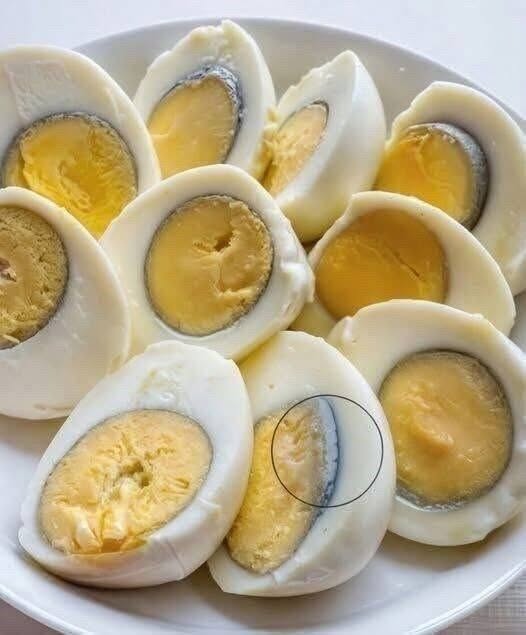

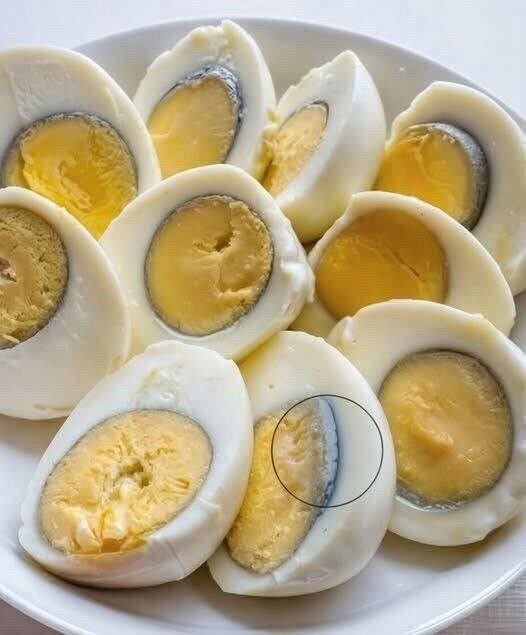
A green or gray ring around the yolk of a hard-boiled egg is a very common and harmless result of overcooking. It does not mean the egg has gone bad or that it is unsafe to eat. Instead, the discoloration appears because of a natural chemical reaction that takes place when eggs are exposed to heat for too long.
Inside the egg, sulfur compounds in the white react with iron in the yolk when the temperature becomes too high or the cooking time is too long. This reaction creates iron sulfide, which forms the greenish or grayish layer around the yolk.
This usually happens when eggs are cooked at a strong rolling boil instead of a gentler simmer. The intense heat causes the proteins in the egg white to break down more than necessary, releasing sulfur gases. Those gases move toward the yolk, where they combine with the iron and create the discolored ring. Although it may not look very appealing, it does not change the egg’s safety and does not make it harmful to eat.
 Continue Reading
 Next Page
Avoiding this is fairly simple with the right cooking method. Eggs should be placed in boiling water, but once the water reaches that point, the heat should be lowered so the eggs cook at a gentle simmer rather than a harsh boil. Timing also matters. Most hard-boiled eggs need around nine to twelve minutes, depending on their size. Once they are done, placing them immediately into cold water or an ice bath helps stop the cooking process and prevents the yolk from continuing to darken.
In the end, the green ring is simply a sign that the egg has been cooked a little too long, not a warning about spoilage or food safety. With better control over heat, cooking time, and cooling, it can be easily avoided. Properly cooked hard-boiled eggs usually have a bright yellow yolk and a clean white appearance, making them more attractive and consistent. Understanding why this happens can help anyone feel more confident in the kitchen and achieve better results when preparing eggs at home.