

I See 5 Cats, and You? The Ultimate Park Optical Illusion Solved
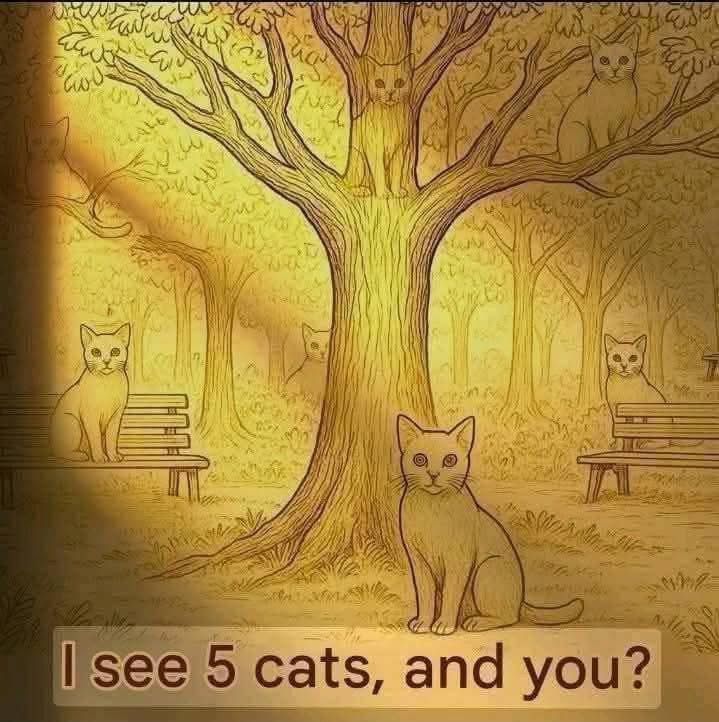
Visual brain teasers, hidden-object challenges, and clever optical illusions have captured the imagination of internet users worldwide. A single image featuring an everyday setting, such as a peaceful park with autumn trees and wooden benches, can instantly spark friendly debates, thousands of comments, and intense visual searches. The popular visual puzzle titled “I see 5 cats, and you?” invites viewers to put their observation skills to the test by searching for felines camouflaged throughout the landscape.
While casual observers easily spot the obvious cats sitting on the park ground and benches, sharper eyes quickly realize that the image contains several clever tricks. Cats are hidden within the bark of the main tree, blended into the upper branches, and subtly peeking from behind background foliage. Most people claim to see only 4 or 5 cats, but a complete visual breakdown reveals a higher number hidden within the subtle line art.
In this ultimate guide, we will break down the complete solution to this park puzzle, explain the fascinating visual psychology behind hidden-object challenges, discuss practical methods to sharpen your cognitive abilities, and explore how mental clarity plays a role in daily life and long-term wellness.
Deconstructing the Image: The Complete 7 Cats Solution
If you are eager to verify your count or couldn’t find every feline hidden in the scene, here is the exact location breakdown for all 7 cats hidden in the artwork.
1. The Foreground Cat (Bottom Right)
-
Location: Sitting on the ground directly to the right of the large central tree trunk.
-
Details: This is the most prominent feline in the drawing. It sits in plain sight, looking directly forward with clear outlines and full body details.
2. The Left Bench Cat (Lower Left)
-
Location: Sitting upright on the wooden park bench on the left side of the image.
-
Details: Easily visible, this cat rests comfortably on the bench slats, positioned in full profile facing left.
3. The Right Bench Cat (Lower Right)
-
Location: Positioned just behind the wooden bench on the right side of the illustration.
-
Details: This cat is resting behind the backrest of the right bench, with its head and upper torso clearly visible against the distant trees.
4. The Center Trunk Cat (Upper Tree Fork)
-
Location: Embedded vertically directly inside the central fork of the main tree trunk.
-
Details: Formed by the natural grain and texture of the tree bark, this cat is standing vertically where the primary branches split from the main trunk.
5. The Upper-Right Branch Cat (Top Right)
-
Location: Resting atop a thick horizontal branch in the upper-right section of the tree.
-
Details: Positioned high in the canopy, this cat sits calmly on the branch with its ears pointing upward against the background leaves.
6. The Upper-Left Branch Cat (Top Left)
-
Location: Perched on a slender branch on the far left side of the tree.
-
Details: Drawn with lighter contour lines, this cat sits high in the left branch structure, blending into the surrounding leaf patterns.
7. The Background Peeking Cat (Center-Left Background)
-
Location: Tucked behind a smaller tree trunk in the mid-ground, to the left of the main tree.
-
Details: Only the face and ears of this subtle feline are visible as it peeks out from behind the background tree trunk.
The Visual Breakdown Summary
To help you review your score, here is a quick overview of where every hidden feline is located across the artwork:
| Cat Number | Specific Location | Level of Difficulty |
| Cat 1 | Ground near main trunk base | Easy (Prominent) |
| Cat 2 | Seated on the left park bench | Easy (Prominent) |
| Cat 3 | Behind the right park bench | Moderate |
| Cat 4 | Center bark fork of the main tree | Hard (Camouflaged) |
| Cat 5 | Upper-right main branch | Moderate |
| Cat 6 | Upper-left thin branch | Hard (Light Line Art) |
| Cat 7 | Peeking behind background tree trunk | Very Hard (Subtle) |
The Psychology of Hidden-Object Puzzles
Why are visual riddles involving hidden animals so addictive, and why do different people detect them at vastly different speeds? The answer lies in how our visual cortex processes complex scenes.
Pattern Recognition and Visual Camouflage
When you look at an image, your brain instantly organizes visual data into recognizable structures using past experiences and expectations:
-
Expectation Bias: When searching for a cat in a park, your brain naturally searches on the ground or on benches—places where domestic cats are typically found. It often overlooks cats embedded in tree bark or high branches because those locations defy initial expectations.
-
Contour Integration: Artists create effective hidden-object puzzles by matching the thickness and curvature of hidden figures to the surrounding textures, such as tree bark or leaves.
-
Figure-Ground Separation: Your visual processing system must constantly separate primary objects (the figure) from the background scenery (the ground). When the lines of a hidden cat double as the grain of a tree trunk, your brain must work harder to isolate the animal shape.
Cognitive Benefits of Daily Brain Teasers
Engaging regularly with visual brain teasers provides tangible mental benefits across all age groups:
-
Enhanced Focus and Selective Attention: Searching for hidden shapes trains your mind to filter out unnecessary visual distractions and focus on tiny structural details.
-
Improved Visual-Spatial Processing: Recognizing figures turned at unusual angles or integrated into natural landscapes builds spatial flexibility.
-
Stress Relief and Dopamine Release: Successfully solving a tricky puzzle triggers a small release of dopamine, providing a healthy mental reset during a busy day.
Practical Scanning Techniques to Solve Visual Puzzles Faster
If you want to improve your speed and accuracy when tackling optical illusions, consider adopting these systematic observation strategies:
Use the Quadrant Method
Instead of allowing your gaze to jump randomly across an image, mentally divide the illustration into four equal quadrants. Systematically scan each grid section from top to bottom and left to right. This ensures that no hidden corner escapes your attention.
Look for Geometric Irregularities
In hand-drawn illustrations, natural scenery like leaves, bark, and grass features organic, irregular patterns. Animal figures, however, possess distinct geometric curves—such as pointed ear triangles, almond eye shapes, and smooth curved backs. Look for lines that seem slightly out of place within the natural vegetation.
Adjust Your Viewing Distance
Standing back from your phone or desktop screen alters how light and contrast register on your retinas. Softening your focus or squinting slightly reduces fine visual noise, allowing hidden shapes embedded in tree trunks or foliage to stand out more clearly.
Protecting Mind, Health, and Future Well-Being
Challenging your mind with creative visual riddles is a fantastic component of maintaining overall mental agility. However, long-term cognitive vitality and personal peace of mind depend on a well-rounded approach to health, lifestyle, and life planning.
1. Nourish Your Brain Through Nutrition and Exercise
Physical health directly impacts mental focus. Engaging in regular cardiovascular exercise boosts blood circulation to the brain, supporting memory and cognitive processing speed. Likewise, a diet rich in healthy omega-3 fatty acids, antioxidants, and adequate hydration keeps neural pathways functioning at their best.
2. Prioritize Sleep and Recovery
Quality sleep is essential for cognitive consolidation and mental sharpness. During deep sleep stages, the brain clears metabolic waste and restores energy reserves, ensuring you wake up with sharp focus ready to tackle complex daily tasks.
3. Establish Peace of Mind for You and Your Family
Cognitive performance is heavily influenced by stress levels. Reducing chronic worry through smart long-term decisions—such as securing comprehensive health insurance, managing family investment plans, and organizing household finances—allows you to focus your mental energy on productive, enjoyable activities rather than daily anxieties.
Conclusion
The “I see 5 cats, and you?” park optical illusion is a wonderful example of artistic creativity and cognitive challenge. While most people stop searching after finding 4 or 5 cats, taking a closer, more systematic look reveals 7 total felines scattered throughout the park grounds, benches, background trees, and high branches.
Making time for daily visual challenges offers a quick, enjoyable way to exercise your brain, test your observation skills, and keep your focus sharp for everyday life!
Frequently Asked Questions (FAQ)
How many cats are actually in this park image?
There are 7 cats hidden throughout the image: 1 on the ground, 2 on or behind benches, 2 in the upper tree branches, 1 embedded in the main trunk bark, and 1 peeking from behind a background tree.
Why do most people only see 5 cats initially?
Most viewers only notice the cats placed in expected locations (the ground, benches, and main branches). The cats embedded directly into the tree bark texture and peeking from behind distant trees require closer, more focused inspection.
What is the best technique for finding hidden objects in pictures?
The most effective strategy is the quadrant method. Divide the image into smaller sections and scan systematically while looking specifically for unnatural curves, triangular ear shapes, or distinct eye outlines.