



Help People Even When You Know They Can’t Help You Back: The Power of Unconditional Kindness
Inspirational quotes, psychological artwork, and motivational visual metaphors generate deep engagement across social media platforms like Facebook. By using creative visual storytelling to highlight core human values like empathy and generosity, these posts encourage readers to reflect on how they interact with the world around them.
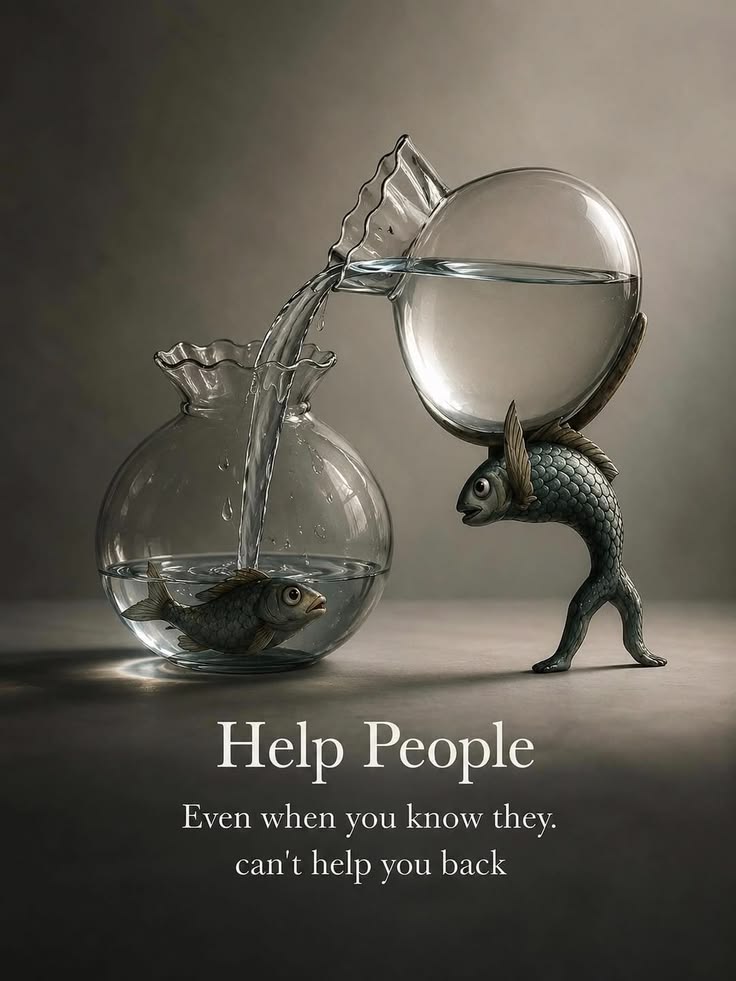
A evocative artistic graphic depicts a fish with legs standing outside its glass fishbowl, tilting the vessel to pour fresh water into a smaller glass bowl containing another fish. Across the bottom, elegant typography reads:
“Help People — Even when you know they can’t help you back.”
In this guide, we break down the visual symbolism of this artwork, examine the psychology of unconditional altruism, and explore how practicing selflessness enriches our personal growth.
Visual Metaphor Breakdown
The artwork highlights the beauty of selfless support through contrasting physical states:
                      [ UNCONDITIONAL ALTRUISM IN ACTION ]
                                       |
      --------------------------------------------------------------
     |                                                              |
 [ THE HELPER FISH (STANDING) ]                    [ THE RECEIVING FISH (BOWL) ]
 • Able to move & adapt                            • Trapped in a low-water bowl
 • Gives away part of its own environment          • Dependent on external support
 • Represents capability, effort, & sacrifice     • Represents vulnerability & need
1. The Helper Fish
The fish standing upright on its fins represents someone who has the capability, awareness, or resources to make a difference. By stepping out of its own comfort zone and using its effort to tilt the heavy water glass, it makes a conscious sacrifice to sustain another life.
2. The Receiving Fish
The fish resting in the lower bowl represents someone in a vulnerable position who cannot help themselves or offer a return favor. The helper’s actions are driven entirely by empathy rather than expectation of reciprocal gain.
Transactional Support vs. True Altruism
Understanding the difference between conditional favors and genuine kindness helps build healthier relationships and personal character:
| Feature | Transactional Support | True Altruism (“Unconditional Help”) |
| Motivation | Expected return, favor trading, or obligation | Pure empathy, moral values, and compassion |
| Expectation | “What do I get in return?” | “How can I improve their situation?” |
| Fulfillment | Dependent on the recipient’s response | Internal peace, alignment with personal values |
3 Ways to Practice Unconditional Kindness
-
Offer Micro-Acts of Service: Help someone with a heavy load, hold a door, or share helpful information without seeking credit or applause.
-
Support Without Keeping Score: Avoid treating kindness like a ledger. Give help freely when you are able, without tracking who owes what in return.
-
Listen Active & Without Judgment: Sometimes the best way to help someone who cannot help you back is simply offering a patient, non-judgmental ear when they are going through a tough time.
Conclusion
The message “Help people even when you know they can’t help you back” reminds us that character is defined by how we treat those who can do nothing for us. Practicing true kindness enriches both the giver and the receiver, creating a more compassionate world.
Frequently Asked Questions (FAQ)
Why is helping others without expectation good for mental health?
Acts of selfless kindness release oxytocin and endorphins (often referred to as the “helper’s high”), reducing stress levels and increasing feelings of gratitude and emotional fulfillment.
How do you balance helping others without burning yourself out?
Set healthy personal boundaries. Help from your surplus energy and resources rather than depleting your basic needs—just as the helper fish maintains enough water in its own bowl to survive.