


There is nothing quite as refreshing on a hot day as a crisp, juicy slice of sweet watermelon. However, picking a dull, tasteless, or watery melon at the grocery store or farmers’ market can be disappointing.
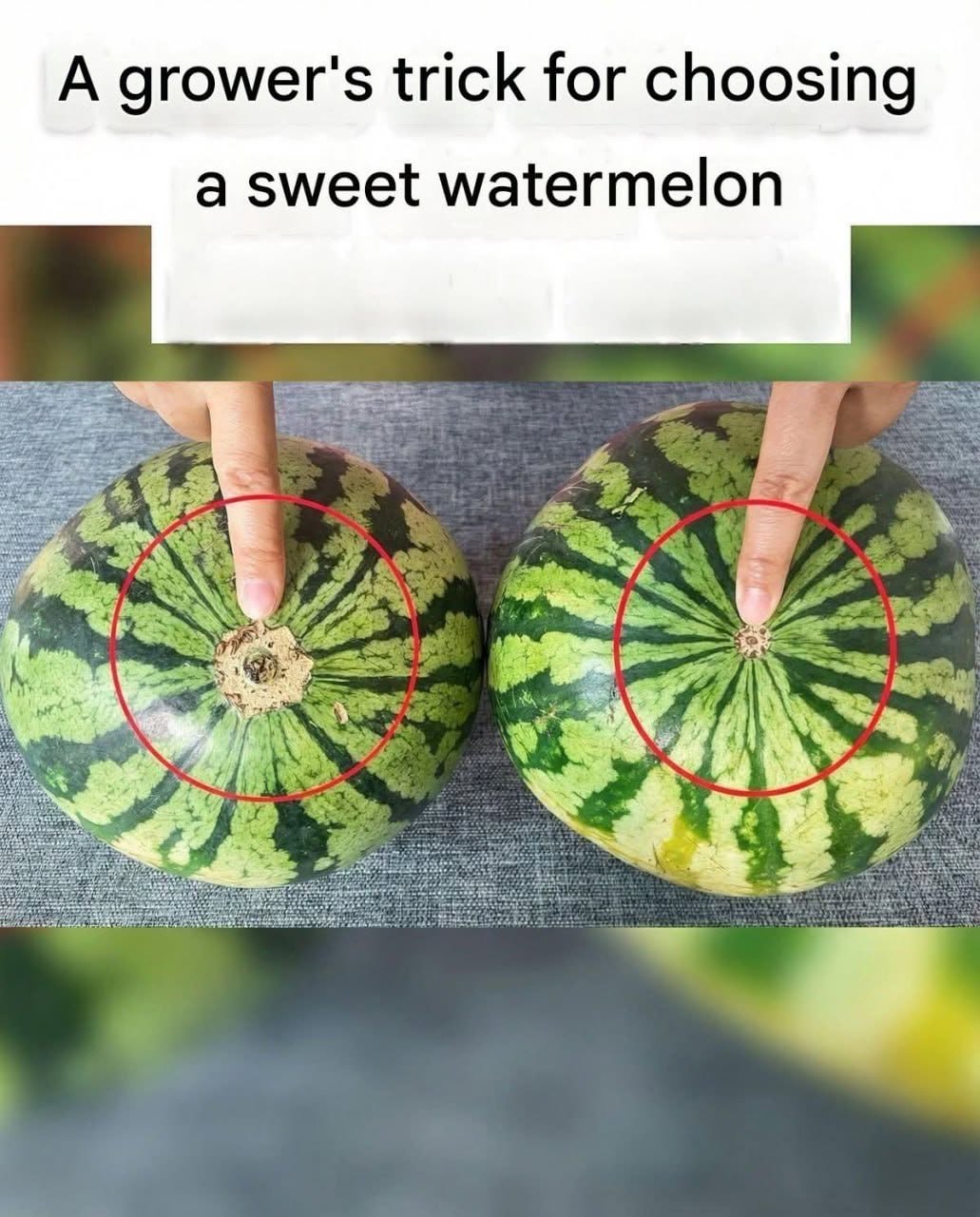
While many people rely on tapping or thumping the rind, experienced fruit growers look for key visual indicators. One popular grower’s trick focuses on inspecting the blossom end (often referred to as the melon’s “belly button”).
Below, we break down how to read the blossom end, share additional proven tricks for picking sweet watermelons, and clear up common produce myths.
The Blossom End Trick: Small Spot vs. Large Spot
When looking at the bottom of a watermelon opposite the stem, you will find a small circular scar where the flower once bloomed:
The Smaller Blossom End (Right Side)
-
What It Means: A smaller, tight blossom dot often indicates a melon that matured evenly with ideal sugar accumulation and crisp flesh texture.
-
Why Growers Prefer It: A small, neat scar indicates that the bloom detached smoothly after pollination without leaving behind excessive corky scar tissue, preserving maximum sweetness.
The Larger Blossom End (Left Side)
-
What It Means: A wide, rough, or corky blossom circle can sometimes result from irregular watering or temperature swings during early fruit set.
-
The Verdict: While a wider spot doesn’t automatically mean the melon is bad, experienced growers consistently point to the watermelon with the smaller, tighter blossom dot (Right) as the sweeter choice!
4 More Proven Secrets to Choosing a Sweet Watermelon
To make sure you get a winner every time, combine the blossom end trick with these four grower-tested checks:
1. Look for a Creamy Yellow Field Spot
The ground spot (or field spot) is where the watermelon rested on the earth while ripening on the vine.
-
Creamy Yellow to Gold: Indicates the melon spent enough time ripening on the vine to develop natural sugars.
-
White or Pale Green: Indicates the melon was picked too early and will likely lack sweetness.
2. Check for “Webbing” or Sugar Marks
Brown, net-like webbing or rough streaks on the rind are caused by sugar leaking out as the fruit grows, as well as honeybee pollination during early bloom. More webbing usually signals a sweeter melon!
3. Feel the Weight
Pick up two watermelons of similar size and compare their weight. A sweet, fully ripe melon is composed of roughly 92% water and packed with natural fruit juices, making it feel noticeably heavy for its size.
4. Give It a Hollow “Thump”
Tap the melon firm with your knuckles:
-
Deep, Hollow Sound: Indicates crisp, water-rich flesh inside.
-
Dull, Muffled Sound: Suggests the melon is underripe or overripe and starting to turn mealy.
Fascinating Facts About Watermelons
-
Complete Edibility: Every part of a watermelon is edible! The rind can be pickled, stir-fried, or candied, and dried watermelon seeds are a popular nutrient-rich snack in many cultures.
-
Lyco-Powerhouse: Watermelon contains higher concentrations of lycopene—a powerful antioxidant—than fresh tomatoes!
Conclusion
Next time you are picking out a fresh watermelon, don’t rely on luck alone! Flip the melon over to find a creamy yellow field spot, check for a small, neat blossom end, and pick the heaviest fruit for maximum sweetness and crunch.
Frequently Asked Questions (FAQ)
Do watermelons continue to ripen after being picked?
No. Unlike bananas or tomatoes, watermelons stop ripening once they are cut from the vine. Their sugar content will not increase after harvest, which makes picking a vine-ripened melon essential.
Does a dull or shiny rind mean a sweeter watermelon?
A dull, matte finish usually indicates a ripe, sweet melon. A shiny rind often means the watermelon was harvested before reaching full maturity.
What is the best way to store a whole watermelon?
Store whole, uncut watermelons at room temperature out of direct sunlight. Once sliced, cover the exposed flesh tightly with wrap and refrigerate for up to 3 to 5 days.