
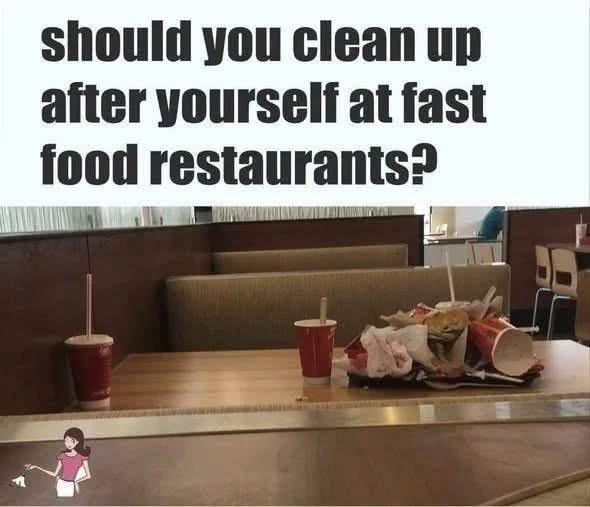


The fast food experience is built around speed, convenience, and affordability. From ordering via touch-screen kiosks to grabbing meals at drive-thru windows, the modern quick-service dining model relies heavily on streamlined customer self-service. However, one longstanding debate frequently sparks passionate discussions online and in dining rooms alike: are customers expected to bus their own trays and dispose of trash before leaving, or is that strictly the job of restaurant staff?
While some view clearing a table as basic social courtesy, others argue that maintaining dining room cleanliness is part of what customers pay for when buying a meal. Examining restaurant operational design, customer expectations, and service industry dynamics reveals the nuances behind this daily social debate.
Below, we dive into the arguments on both sides, explore how fast food business models operate, and share practical etiquette guidelines for modern dining out.
The Case for Cleaning Up Your Own Table
Proponents of cleaning up after yourself emphasize social consideration, dining room hygiene, and supporting restaurant workers.
1. The Fast Food Self-Service Model
Unlike traditional sit-down establishments with full table service, fast food restaurants are designed around a self-service framework. Customers order at a counter, carry their own food to the table on plastic trays, and are provided with prominent trash bins, tray stacks, and recycling stations near exits to dispose of waste conveniently.
2. Courtesy to Other Customers
Leaving food wrappers, sticky cups, and grease-soaked paper bags on a table prevents incoming guests from finding a clean place to sit. Bus staff might be occupied in the kitchen or drive-thru during peak rushes, meaning leftover trash directly degrades the dining experience for fellow customers.
3. Supporting Fast Food Workers
Fast food employees handle a wide array of duties—from taking orders and preparing food to managing drive-thrus and sanitizing restrooms. Busying your own table takes just a few seconds and significantly eases the physical workload on busy kitchen and front-of-house staff.
The Counterargument: Why Some Believe Staff Should Clean
While cleaning up is widely considered polite, those who believe employees should handle table clearing raise valid points regarding hospitality, service roles, and hygiene standards.
1. Customer Service Expectations
Some diners feel that paying for a meal includes a basic level of service. In this view, part of the operational cost embedded in menu prices goes toward staff maintaining dining area cleanliness, making customer busing an unnecessary transfer of labor.
2. Sanitation and Sanitization
Throwing away garbage removes visual clutter, but it does not sanitize the table surface. Opponents point out that when employees clean a table, they also wipe down surfaces with commercial disinfectant—a crucial hygiene step that customers cannot perform themselves.
Modern Restaurant Design, Technology, and Workplace Dynamics
The debate surrounding fast food dining etiquette highlights broader trends in workplace automation, service efficiency, and personal responsibility.
-
Streamlined Operations and Labor Allocation: Fast food chains allocate staffing based on tight efficiency metrics. When customers clear basic trash, staff can focus on food quality, order accuracy, and deeper sanitation routines.
-
Property Stewardship and Community Environment: Respecting public and commercial spaces reflects positive community habits. Keeping shared spaces tidy creates welcoming dining environments for everyone.
-
Financial Value and Convenience: Balancing quick service with affordable prices requires mutual cooperation between business operations and consumer behavior.
Practical Etiquette Guidelines for Quick-Service Dining
Navigating fast food dining rooms respectfully comes down to a few simple, thoughtful habits:
-
Clear Big Waste Items: Toss empty paper wrappers, fry boxes, cups, and straw wrappers into designated trash cans before leaving your booth or table.
-
Stack Trays Properly: Place plastic trays on top of trash receptacles or in designated tray slots rather than leaving them scattered on tables.
-
Alert Staff to Spills: If you accidentally spill liquid or drop food on the floor, politely inform a team member so they can sanitize the area safely.
-
Be Mindful During Peak Hours: During busy lunch and dinner rushes, clearing your space promptly helps ensure available seating for waiting families and diners.
Fascinating Facts About Fast Food and Service History
-
The Birth of the Tray Return: Self-service tray return stations were introduced by early fast food pioneers in the mid-20th century to reduce overhead costs and keep menu prices low.
-
Global Etiquette Differences: In many East Asian countries, self-busing is heavily ingrained in culture, with multi-stream sorting bins for food waste, liquids, and recyclables.
-
The Origin of the Drive-Thru: The first drive-thru service was created to offer complete convenience, allowing customers to eat entirely in their vehicles without using the dining area.
Conclusion
While fast food restaurants don’t typically enforce strict rules, the general consensus leans strongly toward self-service courtesy. Disposing of your garbage and returning plastic trays takes only a moment, but it ensures a cleaner environment for the next customer and keeps restaurant operations running smoothly. Balancing personal courtesy with staff hospitality creates a better dining experience for everyone involved.
Frequently Asked Questions (FAQ)
Is it rude to leave your trash on a fast food table?
In most cultures, leaving food waste on a fast food table is considered inconsiderate to both the staff and incoming guests who need a clean place to sit.
Do fast food employees expect you to clean your table?
While employees appreciate when customers clear their trash, their primary focus during busy hours is maintaining food preparation, order fulfillment, and surface sanitation.
What should you do with plastic trays after eating?
Empty your trash into the bin and stack your plastic tray on top of the receptacle or on the designated tray rack above the bin.