

Everything You See on Social Media Is Not Real: The Illusion of Online Perfection
Mindset illustrations and social commentary graphics consistently resonate strongly across digital platforms like Facebook. By illustrating the sharp divide between online representation and actual lived experience, these posts encourage readers to reflect on digital consumption, mental health, and social comparison.
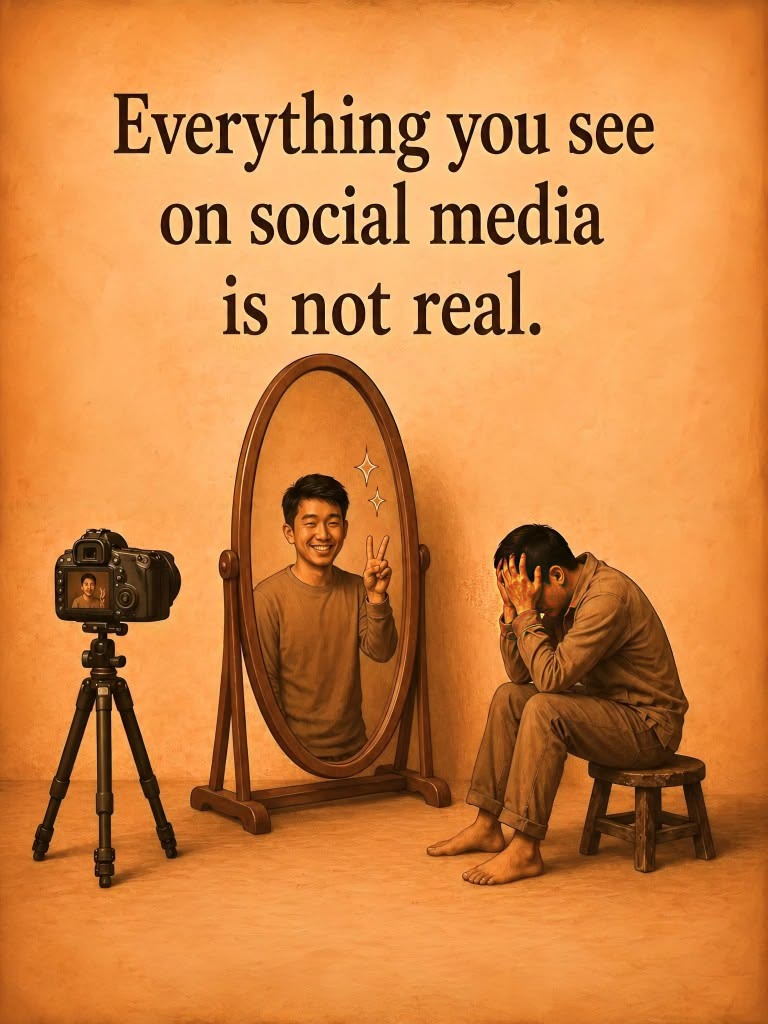
A compelling graphic illustrates a man sitting on a wooden stool in a sparse room, accompanied by the headline:
“Everything you see on social media is not real.”
The artwork highlights a dramatic contrast in the scene:
-
The Reality: A man sitting on a stool with his face buried in his hands, visibly exhausted, stressed, or distressed.
-
The Reflection: A oval mirror reflecting an upbeat image of him smiling and giving a peace sign, complete with cartoon sparkles.
-
The Lens: A DSLR camera mounted on a tripod pointed directly at the mirror, capturing only the curated, cheerful reflection for the audience.
In this guide, we break down the psychological breakdown behind this visual metaphor, explore the dangers of social media comparison, and share actionable steps for building digital boundaries.
Visual Metaphor Breakdown
The artwork highlights how digital tools allow individuals to stage a curated persona that completely hides their internal struggles:
                       [ DIGITAL PERSONA VS. REALITY ]
                                      |
      --------------------------------------------------------------
     |                                                              |
 [ THE REALITY (OFF-CAMERA) ]                     [ THE REFLECTION (ON-CAMERA) ]
 • Man with head in hands                         • Bright smile & peace sign
 • Experiencing stress, sadness, or burnout        • Filtered, sparkling, & cheerful
 • Raw, unedited human experience                  • Carefully staged highlight reel
1. The Seated Man (Off-Camera Reality)
The man sitting with his head in his hands represents authentic human vulnerability. Everyone experiences moments of stress, exhaustion, self-doubt, and hardship. However, these raw moments are rarely posted or shared online.
2. The Mirror and Camera (The Curated Lens)
The camera does not record the man as he actually feels; it only captures the manufactured reflection in the mirror. This represents how social media algorithms and user behavior incentivize showing polished highlights while filtering out life’s daily struggles.
The Social Media Paradox: Highlight Reels vs. Reality
Understanding why online content distorts perception helps protect mental well-being:
| Feature | Social Media Highlight Reel | Everyday Human Reality |
| Visibility | Public, polished, and highly curated | Private, unedited, and complex |
| Incentive | Likes, views, comments, and social validation | Authentic connection and self-care |
| Mental Impact | Triggers comparison trap and social envy | Fosters genuine empathy and self-acceptance |
3 Ways to Break the Social Media Comparison Cycle
-
Remember the “Highlight Reel” Effect: Always remind yourself that people post their best moments, curated photos, and achievements, not their everyday struggles or failures.
-
Audit Your Digital Feed: Unfollow or mute accounts that make you feel inadequate, anxious, or envious. Fill your feed with content that educates, inspires, or promotes genuine authenticity.
-
Set Digital Boundaries: Limit your screen time and schedule daily digital detox periods to ground yourself in your physical surroundings and real-world relationships.
Conclusion
The message “Everything you see on social media is not real” serves as a vital reality check in the modern digital age. By recognizing that online personas are carefully edited snapshots rather than complete truths, you protect your self-worth and build a healthier relationship with technology.
Frequently Asked Questions (FAQ)
What does “Don’t compare your behind-the-scenes to someone else’s highlight reel” mean?
It means you shouldn’t measure your full, unfiltered life—including your doubts, mistakes, and bad days—against the carefully curated best moments that others choose to show publicly.
How does social media affect mental health and self-esteem?
Constant exposure to idealized images can trigger social comparison, feelings of inadequacy, anxiety, and loneliness. Practicing digital mindfulness helps mitigate these negative effects.