

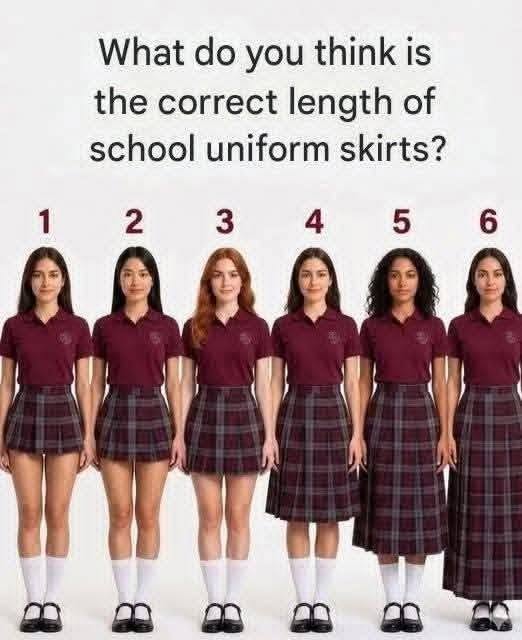
It looks like a simple question, but behind these 6 numbers lies one of the most debated topics in school dress codes worldwide: Where is the line between discipline and freedom?
Let’s break down what your choice actually says:
🎒 1 & 2: The Modern & Practical Take?
The Pitch: Shorter cuts offer better mobility and a modern aesthetic.
The Debate: Often targeted by strict dress codes for being “distracting,” leading critics to ask: Why are we teaching girls to hide their bodies instead of teaching respect?
📏 3 & 4: The Golden Middle Ground?
The Pitch: Knee-length or slightly above—classic, neat, and standardized.
The Debate: Most schools aim here to strike a balance between modesty and comfort. But is it actually comfortable for active students, or just a safe compromise?
🏛️ 5 & 6: Tradition & Cultural Modesty?
The Pitch: Ankle or mid-calf lengths offering maximum coverage, formality, and modesty.
The Debate: Preferred in conservative settings or formal institutions, but critics argue long skirts can be restrictive during daily school activities.
💭 The Big Question:
Is a dress code meant to teach discipline, promote safety, or simply control how students present themselves?
Summary:
1–2 (Modern Approach): Prioritizes movement and comfort, questioning why dress codes often overly police students’ bodies.
3–4 (Balanced Approach): The standard middle ground, balancing neatness, modesty, and everyday practicality.
5–6 (Traditional Approach): Emphasizes modesty, culture, and formality, though sometimes less practical for active school days.
Core Message: Beyond fashion, school dress codes reflect a deeper balance between individual freedom, tradition, and institutional control.