


Don’t Treat People According to Their Badness: The Power of Values-Based Kindness
Mindset illustrations and ethical reflection graphics generate high engagement across social media platforms like Facebook. By offering simple yet profound wisdom on interpersonal relationships and emotional maturity, these posts encourage readers to reflect on self-control, integrity, and personal values.
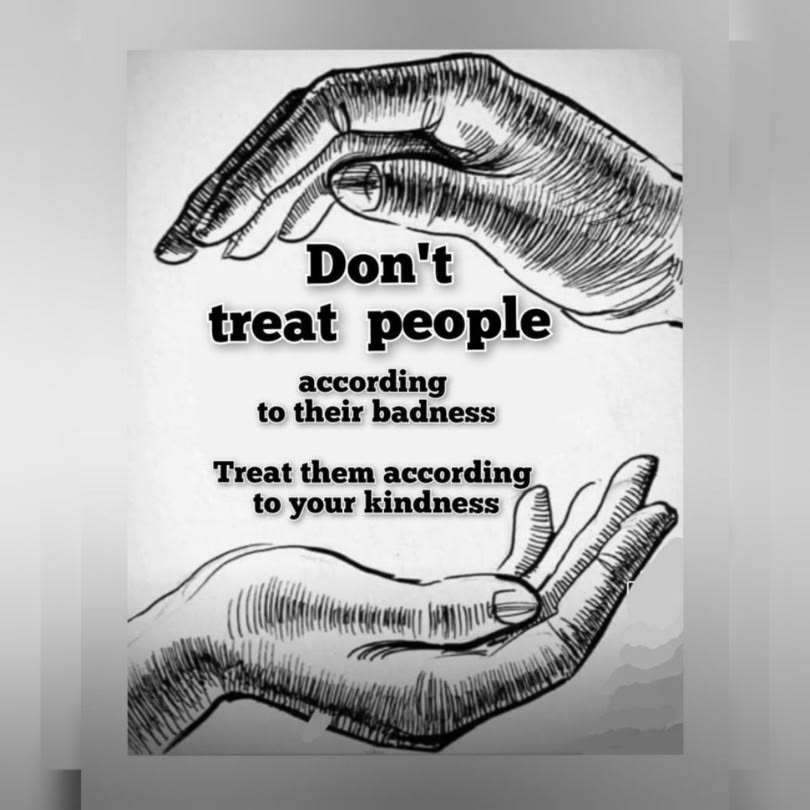
A detailed black-and-white sketch shows two hands facing each other—one reaching down from above and one cupped open from below—framing a clear message:
“Don’t treat people according to their badness. Treat them according to your kindness.”
This core philosophical principle highlights an important distinction: allowing someone else’s bad behavior to dictate your response surrenders your control, whereas acting out of your own values preserves your integrity and peace of mind.
In this guide, we break down the meaning behind this visual message, explore the psychology of values-driven behavior, and share strategies for maintaining grace in challenging situations.
Visual Metaphor Breakdown
The artwork uses two gentle, open hands to symbolize protection, reciprocity, and moral grounding:
                      [ REACTION VS. PRINCIPLED ACTION ]
                                     |
      --------------------------------------------------------------
     |                                                              |
 [ REACTIVE BEHAVIOR ]                             [ PRINCIPLED KINDNESS ]
 • Mirroring negativity and badness                 • Acting from core values and empathy
 • Letting others control your emotions             • Maintaining internal peace and dignity
 • Lowers personal standards to match others        • Holds high personal standards consistently
1. The Reaching Hands (Protection & Space)
The curved hands coming together represent holding a protective space for one’s own character. Rather than striking back or acting in hostility, the open hands symbolize peace, patience, and non-retaliation.
2. The Core Message (Internal Standards)
Treating people based on “their badness” makes your character dependent on external circumstances. Treating them based on “your kindness” roots your actions in an internal compass that remains steady regardless of how others behave.
Reactive Behavior vs. Values-Based Kindness
Understanding the difference between reacting to someone’s negativity and responding through personal values is key to emotional intelligence:
| Dimension | Reactive Behavior (“Their Badness”) | Values-Based Action (“Your Kindness”) |
| Trigger Source | External insults, hostility, or bad behavior | Internal ethics, compassion, and self-respect |
| Emotional State | Anger, frustration, and loss of control | Calmness, clarity, and emotional maturity |
| Long-Term Result | Escalates conflict and compromises character | Maintains dignity and sets a constructive boundary |
3 Ways to Practice Values-Based Kindness
-
Pause Before Reacting: When faced with rudeness or negativity, take a breath before responding. This creates a buffer between stimulus and response, allowing you to choose a conscious answer rather than an emotional reaction.
-
Separate the Behavior from Your Identity: Remind yourself that another person’s bad mood or hostile behavior is a reflection of their internal state, not a directive for how you should behave.
-
Establish Kind Boundaries: Being kind does not mean being passive. You can maintain firm, healthy boundaries and protect your well-being while still remaining respectful and calm.
Conclusion
The quote “Don’t treat people according to their badness. Treat them according to your kindness” serves as a timeless guide for personal integrity. By choosing to let your own values dictate your actions, you maintain emotional freedom, protect your peace, and elevate every interaction.
Frequently Asked Questions (FAQ)
What does “Treat people according to your kindness” mean?
It means your behavior should be guided by your own moral principles, empathy, and character, rather than lowering your standards to match the negative behavior or rudeness of others.
Does treating difficult people with kindness mean letting them walk over you?
No. Kindness and boundaries go hand-in-hand. You can treat someone with basic human respect and politeness while still enforcing strong boundaries or removing yourself from toxic situations.