


Japanese Wisdom: 4 Simple Principles for an Honorable Life
In a fast-paced world filled with moral ambiguity, complex decisions, and endless noise, returning to fundamental principles of ethics can bring immense clarity and peace of mind. Traditional philosophies often distill life advice down to crisp, actionable rules of conduct.
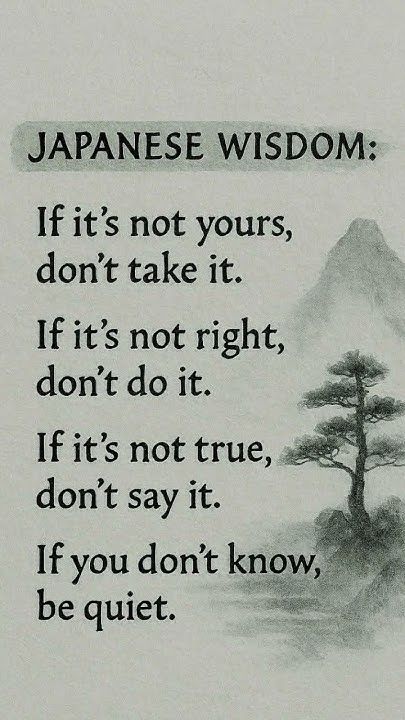
A widely shared graphic presenting a tranquil traditional ink-wash landscape highlights four core maxims labeled as timeless guidance:
JAPANESE WISDOM:
If it’s not yours, don’t take it.
If it’s not right, don’t do it.
If it’s not true, don’t say it.
If you don’t know, be quiet.
These four short statements form a complete framework for personal integrity, moral clarity, mindful speech, and emotional self-control.
In this guide, we break down each of the four rules, explore the cultural and philosophical roots behind them, and share actionable ways to apply this mindset in everyday life.
Deconstructing the Image: The 4 Rules of Integrity
What makes this visual list so universally resonant across social media?
                 [ THE 4 PILLARS OF MORAL INTEGRITY ]
                                   |
      -----------------------------------------------------------
     |                  |                  |                     |
 [ RESPECT ]        [ INTEGRITY ]       [ TRUTH ]           [ WISDOM ]
 • "Not yours,      • "Not right,       • "Not true,        • "Don't know,
   don't take it"     don't do it"        don't say it"       be quiet"
 • Boundaries       • Moral compass     • Honest speech     • Mindful silence
1. “If it’s not yours, don’t take it.” (Respect & Boundaries)
This principle extends beyond physical property. It applies to taking credit for someone else’s work, invading personal space, stealing another person’s time, or taking unearned advantages. Respecting ownership creates trust and harmony.
2. “If it’s not right, don’t do it.” (Moral Compass)
This rule emphasizes radical personal accountability. Regardless of whether an action is legal, popular, or convenient, if your internal conscience signals that it is morally wrong, you refrain from doing it.
3. “If it’s not true, don’t say it.” (Honest & Pure Speech)
Spreading rumors, exaggerating facts, or telling outright lies degrades personal integrity and damages relationships. Adhering to truth ensures that your words carry weight and reliability.
4. “If you don’t know, be quiet.” (Mindful Silence & Humility)
In a culture that encourages instant opinions on every topic, remaining silent when lacking knowledge is a sign of wisdom and humility. It prevents the spread of misinformation and allows you to listen and learn instead.
Core Principles Breakdown
| Principle | Focus Area | Real-World Application | Cultural Connection |
| Respect | Material & Intellectual Property | Never claim work, ideas, or items that belong to others. | Meiwaku (Avoiding causing inconvenience to others) |
| Integrity | Ethical Decision-Making | Stand by core values even when no one is watching. | Bushido (The code of honor and moral rectitude) |
| Truth | Verbal Communication | Avoid gossip, half-truths, and misleading statements. | Makoto (Sincerity and truthfulness of heart) |
| Humility | Self-Restraint & Speech | Listen before speaking; admit when you lack knowledge. | Chinkou (Calm reflection and quiet composure) |
Philosophical Background: Where Does This Wisdom Come From?
While frequently attributed broadly to Japanese wisdom or Bushido (the Samurai code of honor), similar ethical frameworks appear across multiple Eastern philosophies, including Zen Buddhism and Confucianism.
-
Conscience Over Consequence: Eastern philosophy often places high value on living in alignment with nature and social harmony.
-
The Value of Silence: Unlike Western traditions that often prioritize persuasive speech, traditional Japanese culture places immense value on silence (chinmoku), viewing quiet restraint as a sign of strength, respect, and deep reflection.
Practical Ways to Apply These Rules Today
-
Pause Before Reacting: When tempted to jump into a heated discussion or comment thread, ask yourself: “Do I actually know enough about this topic to contribute accurately?”
-
Audit Your Speech: Practice absolute truthfulness in daily conversations. Eliminate “small” exaggerations and refrain from passing along unverified rumors.
-
Respect Hidden Boundaries: Value other people’s focus, quiet time, and energy just as strictly as you would respect their physical possessions.
Conclusion
Living a meaningful, low-stress life doesn’t require complex strategies—it simply requires strong daily ethics. By following these four simple rules—respecting boundaries, acting with integrity, speaking the truth, and knowing when to stay silent—you build an unshakeable foundation of personal character and peace.
Frequently Asked Questions (FAQ)
Is “If it’s not yours, don’t take it…” an authentic Japanese quote?
While the exact four-line English phrasing is a modern summary, the underlying concepts directly mirror core Japanese cultural principles, including Bushido (righteousness), Makoto (sincerity), and traditional Zen teachings on right speech and restraint.
Why is silence considered a virtue in Japanese philosophy?
Silence is viewed as a form of respect, self-control, and mindfulness. It allows time for deep listening and reflection, preventing reckless speech and unnecessary conflict.
PINNED COMMENT: