

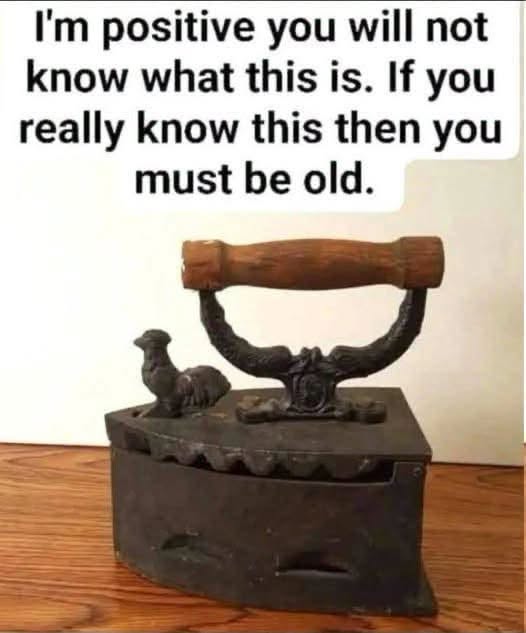


Social media challenges frequently test viewers’ knowledge of bygone domestic items with nostalgic captions like “I’m positive you will not know what this is. If you really know this then you must be old.”
While modern households rely on lightweight electric or steam irons, this heavy cast-iron device played a central role in laundry care during the 19th and early 20th centuries.
What Is It? An Antique Charcoal Iron
The object shown is an antique charcoal iron (also known as a box iron or coal iron).
Unlike solid “sad irons” that had to be continuously reheated on a wood stove or hearth, a charcoal iron contained its own internal heat source: hot, glowing charcoal briquettes or embers placed directly inside the hollow metal body.
                    [ Charcoal Iron Anatomy ]
                                |
     +--------------------------+--------------------------+
     |                                                     |
[ Hollow Metal Body & Lid ]                       [ Safety Features ]
 - Deep chamber holds hot coals                    - Wooden top handle prevents burns
 - Flat polished bottom soleplate                  - Latch (often rooster-shaped) locks lid
 - Side vents supply oxygen to coals               - Chimney/flue releases excess smoke
How the Charcoal Iron Worked
Using a charcoal iron required preparation, skill, and careful heat management:
-
Loading the Coals: The top lid (connected to the wooden handle) unlatches and hinges open. Burning charcoal from a fireplace or stove is carefully transferred into the interior box.
-
Air Flow Regulation: Ventilation slots along the sides and bottom of the box allow oxygen to pass through, keeping the coals glowing hot while ironing.
-
Pressing Fabrics: The heavy weight of the cast iron combined with the heat stored in the metal smooths out wrinkles in heavy cottons, linens, and garments.
Key Design Features
| Feature | Design Purpose |
| Rooster/Bird Latch | A decorative yet functional metal latch at the front that locks the top lid securely shut so hot coals don’t spill out while ironing. |
| Wooden Handle | Wood is a poor thermal conductor, protecting the user’s hands from the intense heat radiating off the cast-iron body. |
| Ventilation Slots | Intakes air near the bottom to sustain combustion while releasing ash and smoke away from clean clothes. |
Key Takeaways and Conclusion
Before the widespread adoption of domestic electricity in the 1920s and 1930s, charcoal irons were a major technological step forward for pressing clothes. Recognizing these vintage tools offers a fascinating glimpse into everyday household history!
Frequently Asked Questions (FAQ)
What is the rooster at the front for?
The rooster figurine serves as a functional latch. Twisting or sliding it unlocks the hinged top cover so charcoal can be loaded into the heating chamber.
When were charcoal irons used?
Charcoal irons were widely used throughout the 19th century and early 20th century until electric irons became common household appliances in the 1920s and 1930s.