

The Lines of Life: Understanding Human Behavior and the Power of Choice
Conceptual illustrations and social commentary graphics generate tremendous engagement across platforms like Facebook. By visualizing human tendencies through simple metaphors—like waiting in line at different doors—these posts encourage readers to reflect on social dynamics, personal accountability, and positive action.
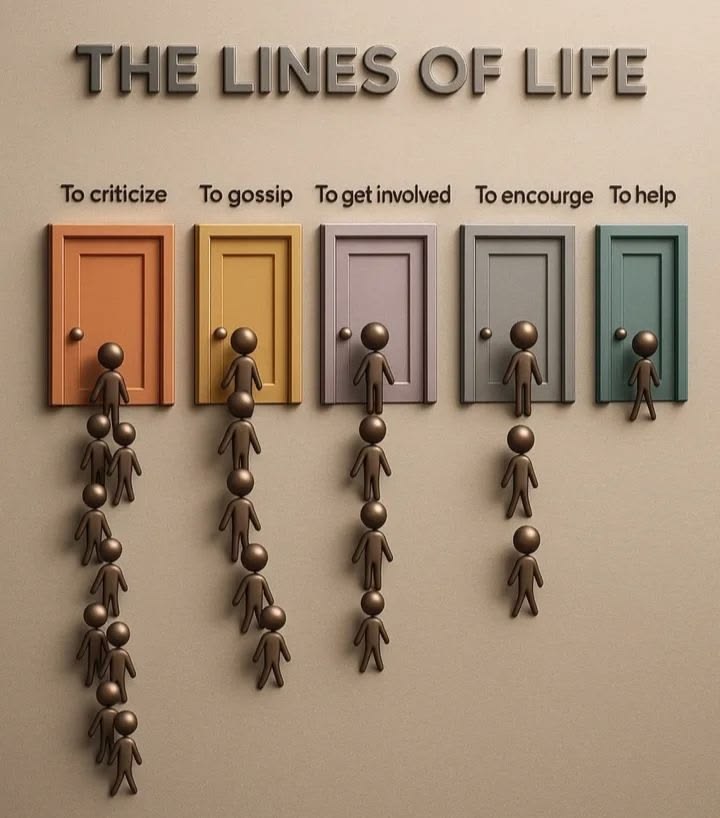
A striking minimalist graphic titled “THE LINES OF LIFE” displays five colored doors, each labeled with a specific human action, alongside queues of figure statues waiting outside:
-
“To criticize”: The longest, most crowded line stretching far out.
-
“To gossip”: A very long, dense line of eager figures.
-
“To get involved”: A moderate line of interested people.
-
“To encourage”: A short line with only three figures.
-
“To help”: The shortest line, with just a single person standing at the door.
In this guide, we break down the psychological reasons behind these queue sizes, examine why destructive habits attract crowds, and explore how to step out of negative lines into constructive action.
Visual Metaphor Breakdown
The artwork highlights how low-effort, negative reactions naturally draw larger crowds than active, effort-demanding support:
                          [ THE LINES OF LIFE ]
                                    |
      --------------------------------------------------------------
     |                                                              |
 [ LOW-EFFORT / PASSIVE QUEUES ]                 [ HIGH-EFFORT / ACTIVE QUEUES ]
 • "To criticize" (Longest line)                 • "To encourage" (Very short line)
 • "To gossip" (Long line)                       • "To help" (Single person line)
 • Requires zero personal investment             • Requires active empathy & energy
1. The Crowded Doors (Criticism and Gossip)
The doors for criticism and gossip have the longest lines because judging others or talking behind their backs requires minimal effort, zero accountability, and offers instant conversational connection. It is easy to point out flaws from the sidelines without risking anything yourself.
2. The Empty Doors (Encouragement and Help)
The doors labeled “To encourage” and “To help” are almost completely deserted. Offering genuine help requires real time, physical or emotional energy, and active commitment. Encouraging someone demands empathy and selflessness, qualities that require conscious effort to practice daily.
The 5 Doors of Human Interaction Compared
Understanding where society spends its energy helps us make more conscious personal choices:
| Door / Action | Queue Size | Required Effort | Impact on Self & Others |
| To criticize | Extremely High | Very Low | Spreads negativity and creates division |
| To gossip | Very High | Low | Destroys trust and misleads people |
| To get involved | Moderate | Medium | Curiosity-driven; can be positive or intrusive |
| To encourage | Low | High | Builds confidence, hope, and resilience |
| To help | Extremely Low | Very High | Solves real problems and creates lasting positive change |
3 Ways to Change Your Line in Life
-
Catch the Impulse to Criticize: Before commenting or complaining about a situation, pause and ask yourself if your words will construct a solution or simply add to the noise.
-
Shift from Spectator to Supporter: When you see someone struggling, move past curiosity (“getting involved”) and actively step into encouragement or tangible assistance.
-
Be the First in the Empty Line: Doing the right thing often means standing alone. Don’t wait for a crowd to start helping or lifting others up; lead by example.
Conclusion
The message behind “The Lines of Life” is a call to self-awareness. While it is easy to follow the crowd into criticism and gossip, real personal growth and positive community impact happen when we choose the quieter doors of encouragement and help.
Frequently Asked Questions (FAQ)
Why is it easier for people to criticize than to help?
Criticizing requires no personal risk, responsibility, or labor. Helping requires active effort, time, and emotional investment, which leads many people to default to passive judgment.
How can I practice being more encouraging every day?
Make a conscious habit of giving one genuine compliment, acknowledging someone’s hard work, or offering supportive words to a colleague, friend, or family member daily.